A cupboard full of pans can still make cooking awkward when the matching lid is hidden behind an unrelated stack. Start by identifying the combinations you actually use together. The aim is not to display every piece neatly, but to retrieve a useful pair without lifting half the cupboard first. A small change in grouping can make an ordinary cooking task easier while revealing which storage accessories, if any, would solve a real problem rather than add another layer to the arrangement.
Match the pieces before choosing storage
Take out a manageable group of pans and check which lids belong with them through their intended fit and the maker's information where needed. Do not assume a lid is suitable merely because it appears close in size. Keep uncertain combinations separate until you understand them. Identify the pairs used most often and those kept for occasional tasks. You can organise around current use without deciding immediately whether every less-used item should leave the home. First establish what the collection actually contains.
Follow the retrieval action
Notice how you normally reach for a pan: by its handle, from above or from a front-facing shelf. Then consider how the lid can be reached without moving the pan into an awkward position. The best arrangement depends on the cupboard and the person using it. A deep shelf may make front access important, while a drawer can offer a different view of the contents. Avoid copying a storage photograph without checking whether its retrieval movement works in your own kitchen.
Respect the cookware's care needs
Read the care and storage guidance for the materials and finishes involved. Some pieces may need appropriate protection when nested; others may not suit stacking in the way you imagined. Use only suitable separators or arrangements and avoid improvising with materials that could damage the surfaces. Do not treat a storage organiser as permission to force incompatible pieces together. The practical goal is easy access while preserving the cookware, not the smallest possible footprint at the expense of its condition.
Give handles a clear direction
Check that handles do not catch on the cupboard frame, interfere with closing or block access to another item. Arrange them so the pan can be lifted normally without dragging a neighbouring piece along. Keep the storage within the furniture's intended capacity and use. A crowded cupboard may need fewer contents rather than a cleverer stack. Test the arrangement with the door or drawer opening as it does in daily life, not while the whole kitchen is temporarily cleared for sorting.
Contain lids without hiding their identity
If lids are stored separately, make it easy to recognise the one needed for each common pan. A suitable rack or divider can help when it fits the pieces and the storage space, but it is not automatically necessary. Check that lids can be inserted and removed without scraping or an unstable lean. Avoid filling every slot simply because it exists. Leave enough room for a normal return when the pieces are clean and appropriately dry, including when another household member puts them away.
Keep the most-used pair straightforward
Choose an accessible position for the combination that supports an ordinary meal. Less-used cookware can sit elsewhere if that improves the daily route. Do not bury the useful pair beneath pieces kept mainly for a rare occasion. If the kitchen is shared, ask which pans others use regularly and agree on an arrangement everyone can understand. A system based only on one person's favourite meal may create inconvenience for the next person. The collection should reflect the household's actual cooking rather than a single ideal routine.
Test the return as well as the removal
Retrieve a pair, then put it back through the normal action. Notice whether you must hold several other pieces in place or align the lid with unusual precision. A storage arrangement that works only when assembled carefully after a full sort may be too demanding for daily use. Simplify before buying more accessories. The return is often the point where clutter begins, because a difficult arrangement encourages a pan to be left on a counter instead of put away.
Use the next cooking session as feedback
After an ordinary meal, note which part of the arrangement helped and which still felt awkward. Change one point at a time so you can recognise the effect. If a pan and lid never return together because their care routines differ, keep them in separate but clearly related positions. There is no need for every pair to follow the same storage rule. The successful cupboard lets you find what you need, use it and put it away without turning cookware into a puzzle before dinner begins.
Continue the practical edit
Related reading: A Temporary Working Row for Kitchen Bottles, Arranging Pantry Jars so Their Identity Stays Visible.
Editorial & photography notes
Practical editorial guidance for ordinary situations. This article does not claim product testing or report current offers. Follow the relevant maker’s instructions for the items you use.
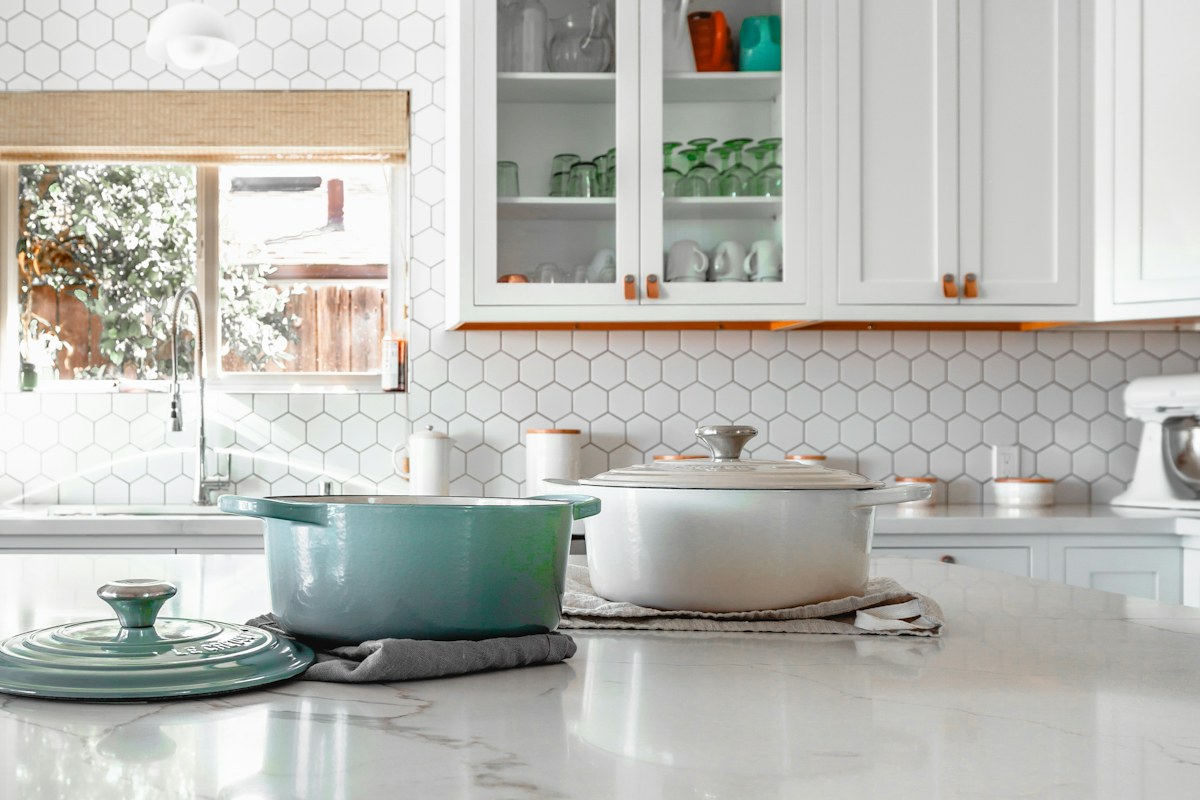
Illustrative stock photograph by roam in color: photo source. This scene does not identify our author or establish a product test.