Start with the ordinary moment
The front door opens onto a narrow strip of floor, shoes collect by the wall, and keys end up wherever a bag is first dropped. An entryway does not need much furniture to work better. It needs destinations that match the arrival sequence. Decide where each everyday item belongs before buying anything, and keep access to the door more important than the look of the storage.
Make the arrangement work before you shop
Walk through a normal arrival: unlock the door, put down a bag, remove shoes if that is your routine, and take off an outer layer. Give those steps a small repeatable sequence. Put keys in one reachable place, keep only frequently worn shoes near the door, and move occasional pairs elsewhere. Shared homes benefit from a clearly agreed arrangement rather than a tray that becomes everyone's miscellaneous drawer. Leave parcels in a temporary spot and process them promptly so they do not become permanent furniture.
Choose by the job, not the complete set
The arrival sequence determines the useful storage order. Keys should land before they disappear into a pocket, wet items need an appropriate place, and shoes should not spread across the walking route. Arrange these destinations in the order people naturally use them. A narrow entryway becomes easier to manage when each item has one simple home rather than several attractive but competing options.
Compare a shallow tray, shoe storage, and seating as separate purchases. A tray solves lost small essentials. Shoe storage addresses the pairs that actually belong near the door. Seating helps only if people need to sit and the hall can accommodate it. A coordinated entryway set can contain pieces that solve no problem in your particular layout. Buy the relevant part rather than accepting the whole furniture arrangement.
In a shared home, ask how everyone arrives before assigning spaces. One person may carry a work bag, another may need a place for cycling equipment, and someone else may use a mobility aid that changes clearance needs. The walking route and access come first. Any wall fixture must suit the surface, installation requirements, and intended load; household routines cannot compensate for an unsuitable mounting method.
Keep occasional objects from taking permanent ownership of the hall. Parcels, shoes awaiting cleaning, and bags for return can have a temporary destination with a clear next action. Review that spot regularly. If clutter returns, adjust the destinations or reduce the number of daily items before adding another cabinet.
Measurements and details to check
Measure the wall depth, door swing, and walking clearance. Check whether a bench would actually leave enough room to pass. Hooks and wall-mounted pieces need a suitable surface and appropriate installation. The height should work for the people using it, while household safety and accessibility needs come first.
Shopping paths and their tradeoffs
The retailer links below are starting points for comparing appropriate options, rather than a claim that every item in a collection will fit. These are editorial suggestions based on the intended use and the retailers' published categories. We have not performed hands-on product tests for this guide. Stock, specifications, shipping, and prices can change; check the selected product's current information.
The Container Store entryway ideas: Use the retailer's ideas to compare destinations for everyday arriving-home items. The tradeoff is straightforward: An idea page is a starting point, not a guarantee that a system fits your hall. If that limitation conflicts with the routine described here, continue comparing rather than accepting it for the look.
MUJI storage organizers: Explore a compact container for keys or small essentials. Keep this limitation in mind: Extra capacity can turn a useful tray into a clutter collection. A retailer with several suitable-looking choices still needs to be narrowed by the way your household uses the space.
IKEA home range: Browse shoe or hallway solutions once clearances are measured. Before committing, remember: Installation, door swing, and material care need checking for each item. Browse with a short list of requirements so a useful purchase does not become an unplanned bundle.
Care belongs in the purchase decision
Empty the key tray of receipts and loose objects regularly. Clean the floor underneath shoe storage rather than only wiping visible shelves. Allow wet outerwear and footwear to dry in an appropriate location before enclosed storage. Follow material care guidance, especially where umbrellas or rainy shoes introduce moisture.
What not to overbuy
Skip a deep console table if it crowds a narrow hall. A high-capacity shoe rack can become a place for every pair you own rather than the few you use daily. Do not buy decorative hooks before checking how they mount and what they are intended to hold. One simple tray may solve more than a coordinated furniture set.
Try it in an ordinary week
Set up temporary destinations using existing pieces for a week. If keys still land on the kitchen counter, move the tray closer to the natural arrival route. Observe whether shoes overflow because the storage is too small or because out-of-season pairs have not moved. Solve the actual behavior before buying extra capacity.
Questions worth answering first
What if there is no hallway? Use the nearest practical storage spot while keeping door access clear. Does everyone need a separate tray? Separate sections can help, but simple shared rules may be enough. Is a bench essential? Only if sitting to change footwear is useful and the space can accommodate it comfortably.
Options to consider
Use these retailer collections as starting points. Check the current product description, sizing, delivery and return terms before ordering; availability and prices can change.
Sources & further reading
Official information checked October 8, 2026. This guide presents research-based editorial advice, not a claim of hands-on product testing.
- The Container Store entryway ideas — official retailer
- MUJI storage organizers — official retailer
- IKEA home range — official retailer
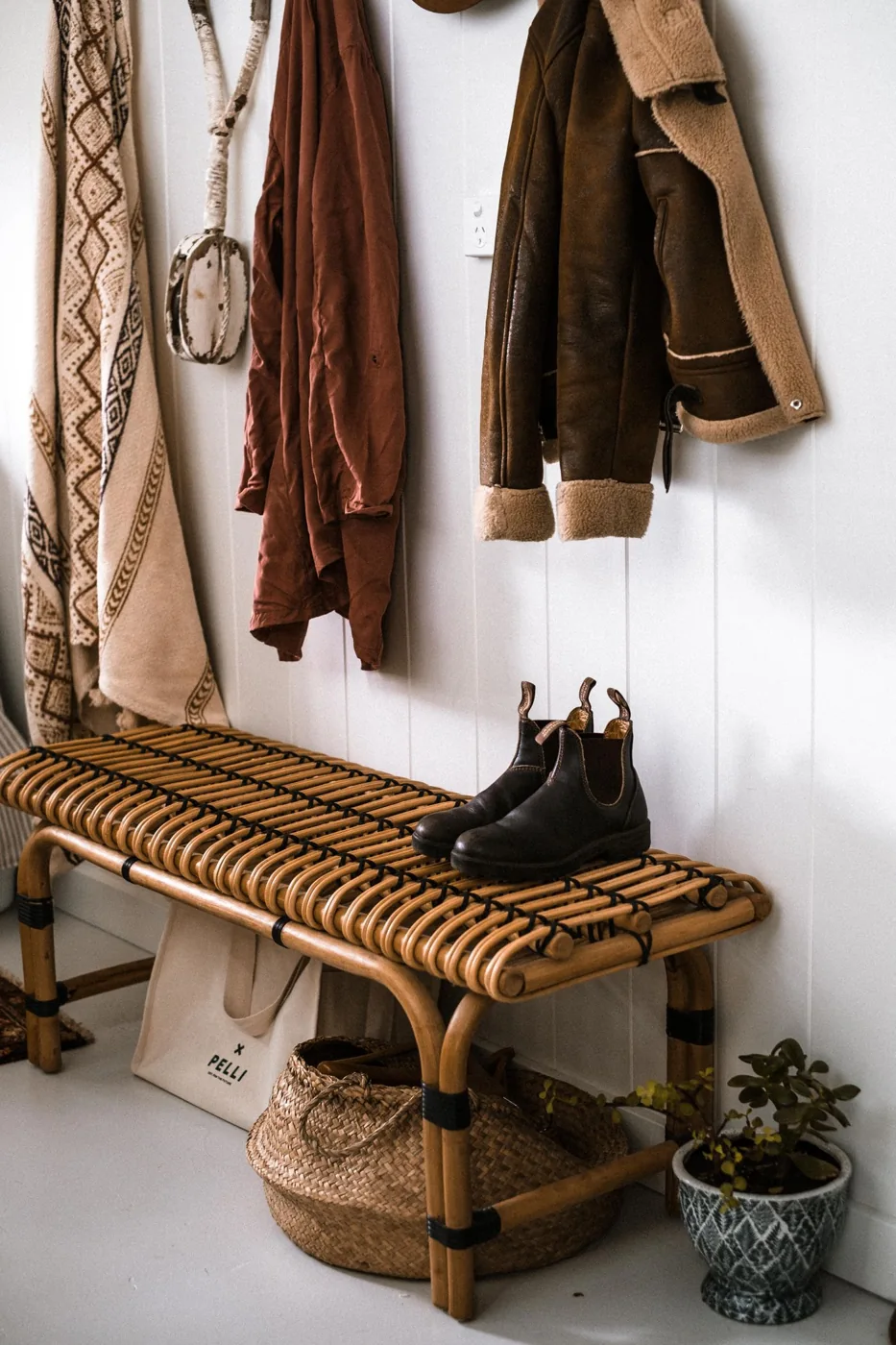
Illustrative stock photograph by Rachel Claire: photo source. This scene does not identify our author or establish a product test.