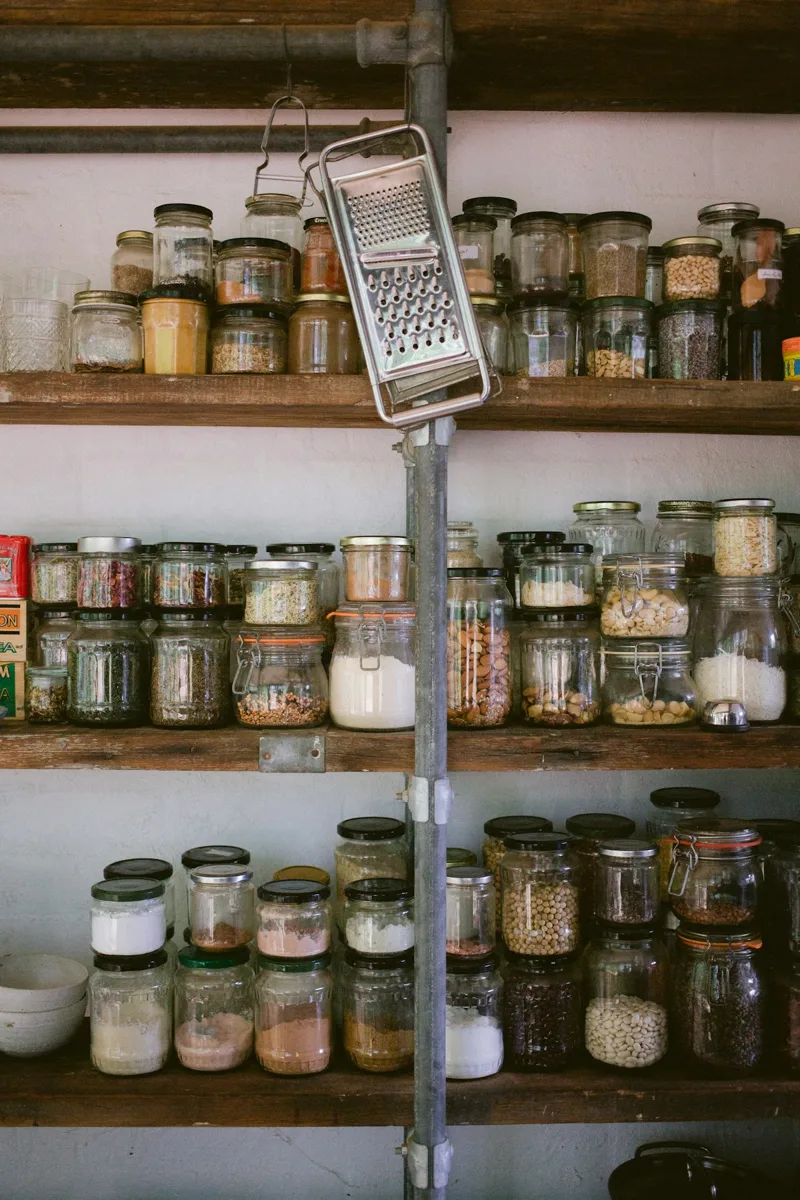
A shelf of matching jars can look calm while making everyday cooking more uncertain. The contents may be difficult to identify from the front, the original information may have disappeared, or the jar needed most often may sit behind several others. Begin with visibility and use rather than a new set of labels. The aim is to find the right item, understand the information that belongs to it and return the container without disturbing the whole shelf. A photographically uniform pantry is optional; a reliable working arrangement is more useful.
Decide which items belong on the shelf
Check each product's storage directions before deciding that it belongs in the pantry at all. The FDA specifically advises checking storage instructions on labels. A jar or a pleasing shelf arrangement does not change the requirements of its contents. Keep any item needing a different storage location where its actual instructions require it to be.
Choose containers intended for the relevant use and follow their own instructions. Do not treat a decorative vessel or an unknown secondhand jar as suitable food storage merely because it has a lid. If an item's intended use is uncertain, resolve that question before transferring food into it or building an organization system around it.
Keep identity separate from appearance
Write the product's actual identity clearly enough to distinguish it from similar-looking ingredients. A row of pale powders or small grains can be visually confusing, even when you expect to remember what each jar contains. Use the information supplied with the product rather than making an identification by appearance.
Retain the original product information in a practical way where it remains relevant, including instructions and other details you may need later. The decorative label on the front does not have to carry every piece of text, but the information should stay connected to the contents. A tidy jar should not create a memory test for another person using the kitchen.
Look at the shelf from the normal approach
Stand where you usually select an ingredient and notice which labels are actually visible. A label placed attractively near the top may be hidden by the shelf above, while a jar stored sideways can present a blank surface. Adjust the arrangement to the view you use rather than the view available when the shelf is empty.
If the shelf is deep, compare a smaller front group with a suitable clearly identified reserve area. Avoid packing every item into one dense display. The useful arrangement lets you identify the next jar without lifting several others just to read the name on the one at the back.
Give ordinary retrieval enough room
Take a frequently used jar out and return it as you would during preparation. Check the available hand space and the relationship between the lid and shelf above. A tall container can fit in a static photograph while being awkward to lift or open in its actual position.
Do not balance jars on unsuitable risers or improvise shelf fittings to gain a little extra visibility. Use storage equipment within its intended guidance and the shelf's requirements. A simpler arrangement with fewer items in the working area may solve the problem without adding another object that needs cleaning and repositioning.
Arrange by a real cooking sequence
Choose a small group based on how you actually prepare familiar meals. Ingredients used together can be convenient near one another, provided their storage requirements remain compatible. Alphabetical order may work for one household; another may find broad groups easier. Pick the system that makes the next selection clear rather than the system that looks most elaborate on a label sheet.
Keep a known return position for each working jar. If several people use the kitchen, make the grouping understandable without an explanation every time. The arrangement should survive an ordinary meal being prepared, not depend on one person restoring a highly specific display after every use.
Handle refills as an identity task
Before adding or replacing contents, check what is already present and follow the relevant product and container guidance. Avoid combining unidentified contents or losing the connection to their original information. A partly filled jar does not automatically need topping up simply because a fuller row looks more consistent.
Keep suitable reserve packages identifiable and distinct from empty packaging awaiting disposal. You should be able to tell what remains, what belongs in a working jar and what has already been used. A short shopping note is more useful than buying another package because the reserve area could not be understood quickly.
Choose labels only after the arrangement works
Once the jars have useful positions, decide whether the current labels are readable enough. A plain suitable label may be sufficient. Consider the surface, the container's care instructions and how the label will be changed when the contents change. Do not choose a permanent-looking system before you know which items the household regularly keeps.
Must every jar match? No; compatible practical containers can have different shapes. Does a handwritten name replace the original product information? Not necessarily; retain the details that still belong with the contents. Should every spare ingredient be displayed at the front? Only where that makes selection easier. The successful pantry shelf makes ordinary cooking clearer while respecting the actual requirements of the products and containers it holds.
Continue the practical edit
Related reading: A Coffee Corner for a Small Kitchen, An Open Shelf That Is Easy to Live With.
Sources & further reading
Official information checked October 15, 2026. This guide presents research-based editorial advice, not a claim of hands-on product testing. Event details and stock information reflect that check date.
Illustrative stock photograph by Stock photographer: photo source. This scene does not identify our author or establish a product test.