A cabinet can hold exactly what you need and still be frustrating if its door cannot open comfortably. A stool, a basket or a useful-looking counter accessory may occupy the space required for an ordinary retrieval. Look at the movement of the door before reorganising the contents behind it. The aim is to make the whole action easy: approach, open, take out the item, close and move away. Storage that works only when the kitchen is otherwise empty is not yet doing its everyday job.
Watch one normal retrieval
Choose an item you use often and follow the action without tidying first. Notice whether you shift a chair, move a bin or turn sideways to reach inside. Those small adjustments reveal where the arrangement creates friction. Do not force a door or hinge past its intended movement. If the hardware is damaged or not operating correctly, use the appropriate repair route. Organising around a fault can hide the problem temporarily while making the daily task more awkward than it needs to be.
Separate moving obstacles from fixed constraints
Identify what can reasonably move and what belongs to the kitchen's installed layout. A freestanding basket may have another suitable position; a wall or appliance requires a different assessment. Avoid altering hinges, fittings or cabinets without understanding the manufacturer's guidance and the work involved. The first useful change is often small and reversible. Move an unrelated object out of the door's path, then check whether access improves before considering a more substantial solution or buying an organiser to compensate for restricted movement.
Include the person standing there
An open door needs more than its own outline. You also need space to stand, bend or reach in the way that suits you. Consider anyone else who uses the cabinet regularly and ask how the action works for them. A clear path on a floor plan may still feel cramped when a person and a door occupy it together. If a particular access requirement matters, seek suitable advice rather than assuming a tidy arrangement alone will resolve it. The practical measure is ordinary use by the actual household.
Check neighbouring doors and drawers
Look at which parts of the kitchen may be open during the same task. A cupboard used while setting the table might interact with a cutlery drawer or the route to a nearby surface. You do not need every door open at once, but the common sequence should make sense. Avoid leaving one open as a permanent workaround if it obstructs movement. Sometimes moving the contents to a more accessible cabinet is simpler than insisting their original location must remain the right one.
Give frequently used contents a suitable position
Once the opening works, arrange the everyday items where they can be retrieved normally. Do not fill the most accessible area with occasional pieces simply because they fit neatly there. Keep heavy, fragile or awkward objects stored according to appropriate guidance and your own comfortable handling. A divider should make access easier rather than require another precise manoeuvre behind the door. Test the actual item instead of judging the interior only when it is empty or newly arranged for a photograph.
Look at handles and nearby textiles
Check whether a towel, bag strap or hanging item catches on the handle or enters the door's path. A small object placed for convenience can interfere repeatedly with closing. Give those belongings a suitable place rather than accepting the snag as part of the routine. Keep the cabinet operating as intended, without wedging or attaching improvised pieces to solve a layout issue. If the handle itself is unsuitable or damaged, follow the appropriate repair or replacement process instead of forcing each opening around it.
Test the shared busy moment
Try the arrangement while the kitchen is being used normally, not only during a quiet organising session. A second person may need the route behind you, or a chair may return to a position that blocks the door again. Discuss the shared pattern and choose a solution that does not depend on someone remembering an unusual rule. A slightly different storage location can be more durable than a carefully marked empty zone that conflicts with the room's ordinary activity. The kitchen should support overlapping tasks where practical.
Keep the change small enough to maintain
After a few uses, check whether the obstacle has returned and why. If it has no convenient home elsewhere, solve that destination rather than clearing the same path every day. Keep any useful improvement and stop when the cabinet can be used comfortably. You do not need to redesign every cupboard because one door was awkward. A successful change is almost invisible: you reach for what you need and the door no longer becomes a separate problem at the start and end of the task.
Continue the practical edit
Related reading: Organize a Closet Before Buying Organizers, A Temporary Working Row for Kitchen Bottles.
Editorial & photography notes
Practical editorial guidance for ordinary situations. This article does not claim product testing or report current offers. Follow the relevant maker’s instructions for the items you use.
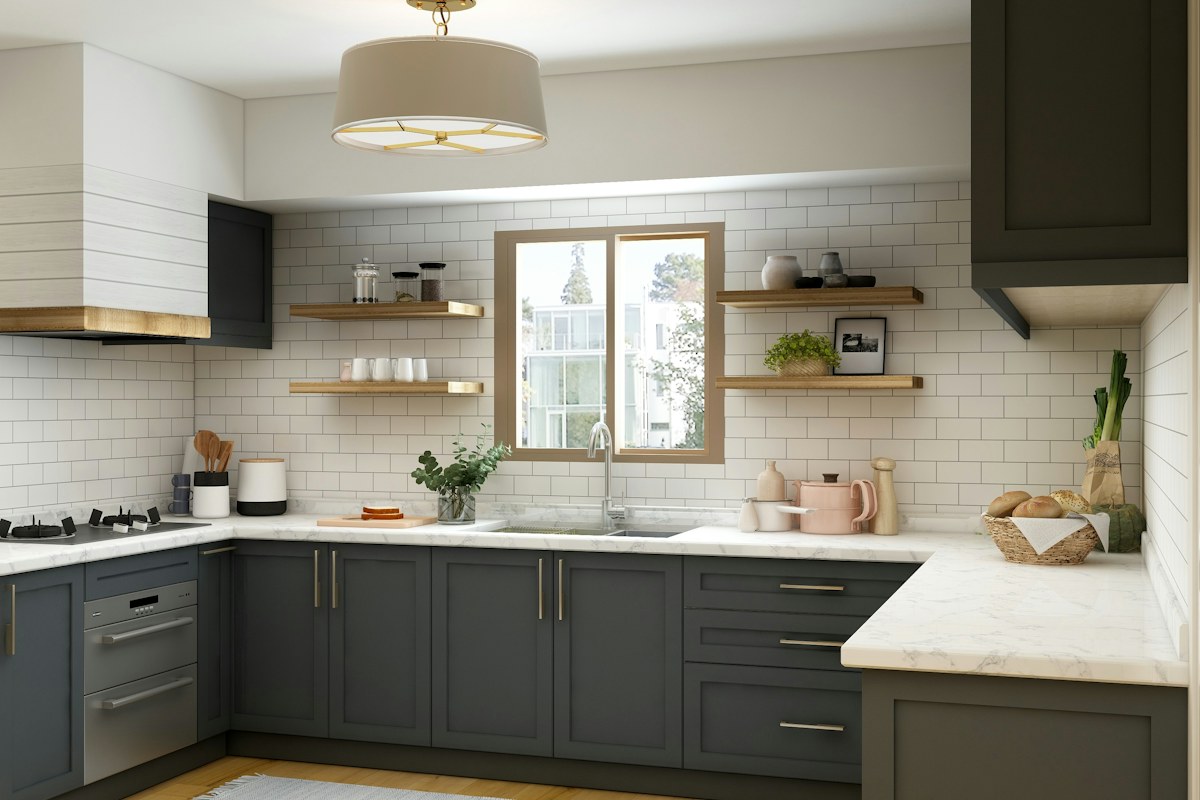
Illustrative stock photograph by Collov Home Design: photo source. This scene does not identify our author or establish a product test.