A travel wardrobe can grow quickly when every part of a trip is imagined as a separate outfit. Arrival needs one combination, a walk suggests another, dinner adds a third, and the return journey somehow requires more clothes again. Map the actual sequence before packing additional pieces. A repeated-outfit plan helps you see where familiar garments can serve more than one occasion, while keeping practical requirements and garment readiness explicit instead of assuming that every item will remain available in the same condition throughout the trip.
Write the real sequence of activities
List the activities you expect to undertake in ordinary terms: travel, an informal meal, walking, a planned visit or time indoors. Keep possible extras separate from confirmed requirements. A vague thought that you might want a completely different outfit is not the same as an activity with a clear clothing need. Include any relevant requirements supplied by the actual venue or provider, and check current arrangements directly when they matter. The planning sheet should reflect your trip rather than a generic image of what holidays are supposed to contain.
For a short hypothetical trip, the first row might describe arrival and an informal evening, the next a daytime outing and meal, and the final row the journey home. Those rows do not automatically require three unrelated outfits. They give you a sequence against which to compare the pieces you already wear. Mark the practical differences that really matter, such as needing a particular layer or footwear suitable for an activity, rather than treating a change of date as a clothing requirement in itself.
Give each proposed garment a clear role
Lay out a small set of familiar pieces and write their names beside the activities they can reasonably serve. A pair of trousers may belong to the travel and meal combinations, while two tops offer different arrangements over the same base. Use actual garments rather than descriptions such as versatile top. Their fit, sleeves, neckline and relationship to the layer are what make the combinations workable. A theoretical capsule can look efficient on paper while relying on pieces you do not enjoy wearing together.
Identify an item that appears on only one row and ask why. It may have a real purpose that justifies its space, or it may be a speculative extra attached to an imagined occasion. Keep the distinction clear without making minimum quantity the only goal. A specialised item can be worth carrying when the activity requires it. Another decorative option may be enjoyable but optional. The plan helps you choose deliberately, rather than declaring that every single-use piece is a mistake.
Try the repeated combinations before packing
Put on the proposed outfits with the actual shoes and bag. Move normally, sit and include the layer you expect to need. A shirt that technically coordinates with every bottom may still be awkward under the chosen jacket, while a dress may work well on its own but feel different with the footwear needed for the day. Resolve those relationships at home instead of using the trip as the first occasion on which the entire combination is worn together.
Record the important arrangement in plain words. You might note which top is tucked, which layer stays open or which shoes belong with a particular hem length. Those details explain why the combination worked and help you repeat it without reconstructing a photograph. If a piece only works after continual adjustment, reconsider whether it deserves a central role in the plan. Familiar comfort can be more useful on a journey than an apparently efficient garment whose behaviour you have not yet understood.
Keep readiness separate from intention
A plan to wear something again is not proof that it will be ready for another use. Consider the actual activities, personal needs and the garment's appropriate care requirements. Do not build the entire wardrobe around an assumed opportunity to wash or dry an item unless you have established that the arrangement is suitable and available. You can make a conservative alternative plan without assigning a universal number of wears to any garment. Readiness is a real condition to assess, rather than a promise created by the packing list.
Mark any dependency that could affect the return journey. If the same trousers or layer are planned for the final day, decide what suitable alternative exists if that item is no longer ready. The answer may be another piece already included for a different purpose, or it may justify an additional item. Keep the reason visible. A deliberate contingency differs from adding several unrelated outfits just in case, because it answers a named gap in the actual sequence.
Check the packed arrangement against the plan
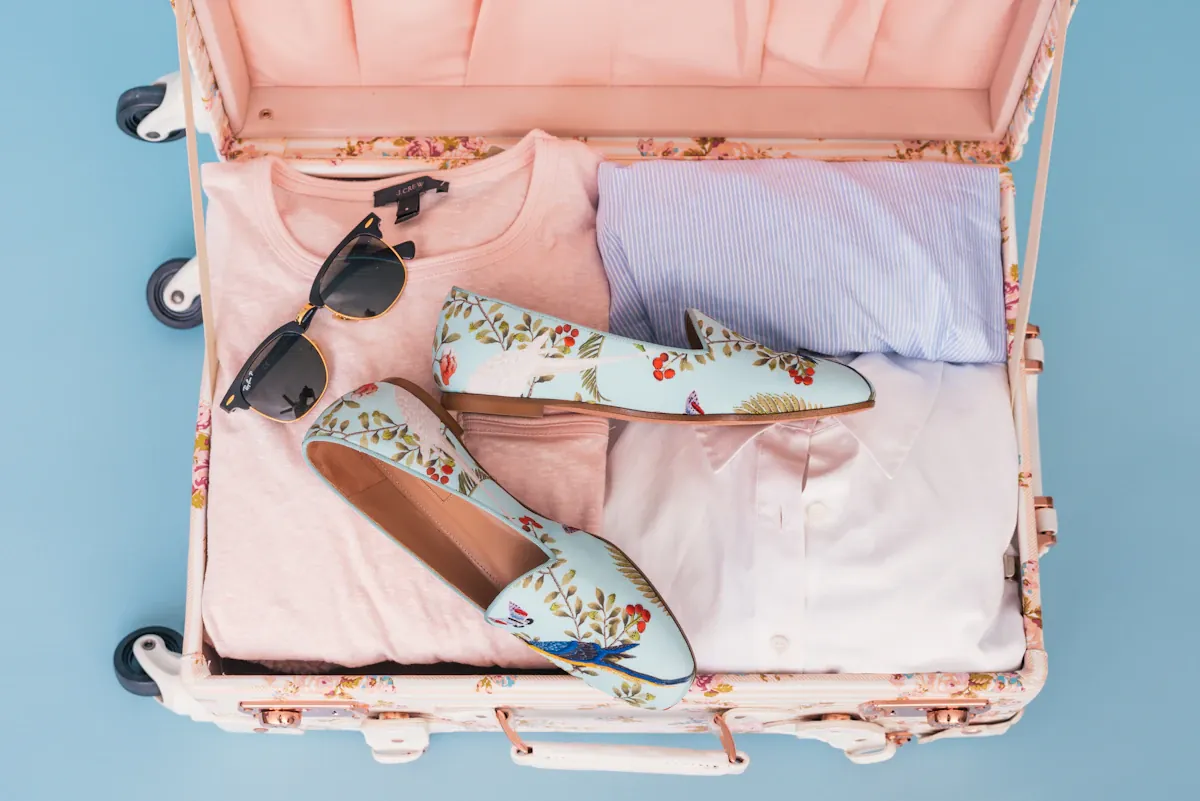
Pack the selected pieces in an appropriate way and compare the case contents with the clothing map. Check that accessories, necessary parts and the garments themselves are present, and that the first required combination can be retrieved without an unnecessarily disruptive search. Keep any relevant product handling guidance in mind for the items you carry. The visual packing arrangement should serve their use, rather than force them into unsuitable shapes merely to achieve a tidy photograph of the open case.
After the trip, note which planned repetitions actually worked and which assumptions needed revision. Perhaps one top was unnecessary, or the return outfit needed a clearer alternative. Record that specific lesson before the details fade into a general impression that you packed too much or too little. Over time, the plan becomes a reference grounded in your own ordinary use. Its value lies in understood combinations and visible dependencies, allowing a smaller or larger wardrobe to be chosen for a reason instead of assembled as a collection of separate imagined days.
Related reading
Is It a Wardrobe Gap or a Shopping Mood?, Inspecting a Suitcase Zip before Packing Becomes the Test.
Editorial & photography notes
Practical editorial guidance for ordinary situations. This article does not claim product testing or report current offers. Follow the relevant maker’s instructions for the items you use.
Illustrative stock photograph by Arnel Hasanovic: photo source. This scene does not identify our author or establish a product test.