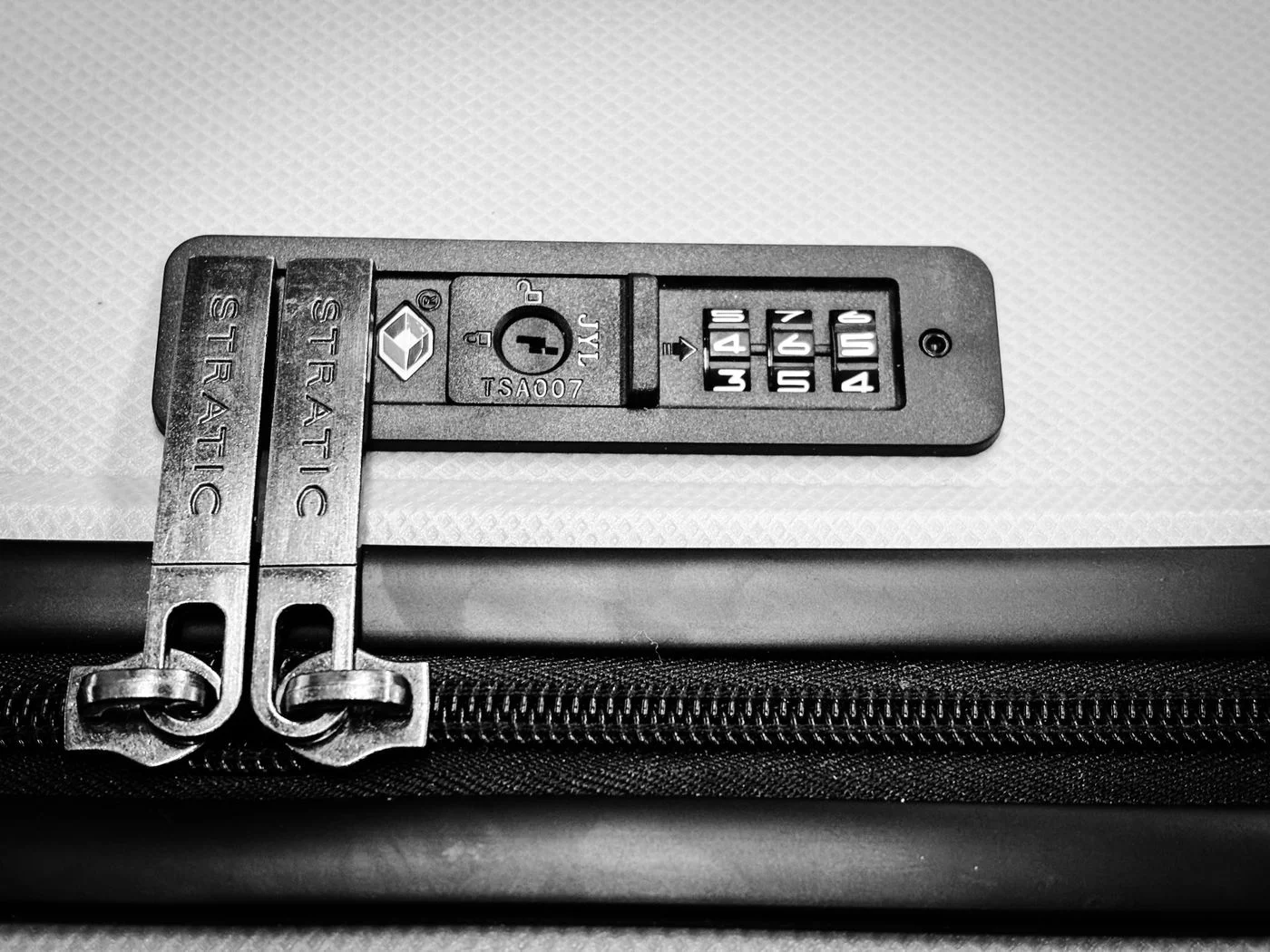
A suitcase zip is easy to overlook while comparing colours, wheels and interior pockets. It becomes much harder to ignore when the case is packed and the two sides will not meet comfortably. Give the closure a calm inspection before the next journey turns into its first practical assessment. Work from the maker's instructions, the actual packing arrangement and the condition of the item. The aim is to understand whether it operates as intended, not to perform an improvised durability test or claim that one type of lock guarantees protection.
Identify the closure you are inspecting
Check the exact suitcase model and its instructions. Similar-looking cases can use different pullers, expansion sections or locking arrangements. Establish which zip closes the main compartment and which, if any, serves an expansion feature or separate pocket. Do not assume that every visible zip changes the usable capacity of the case.
If a lock is fitted, understand its intended operation before using it. Obtain the relevant instructions from the maker rather than guessing a reset procedure or forcing a component that seems unfamiliar. The label or appearance of a lock does not replace the need to understand the particular mechanism supplied with the item.
Begin with the case empty
Where the purchase conditions or ownership of the item allow it, operate the main zip gently on the empty case. Guide the sides together as intended and observe the action around corners. Notice any place where lining or another loose component enters the closure path. Keep fingers and fabric clear and avoid pulling harder simply because a point feels resistant.
An empty inspection helps separate a packing problem from a question about the closure itself. If the zip does not operate as described without contents, ask the seller or appropriate product support about it before assuming that a different packing technique will resolve the issue.
Inspect what is visible without pulling it apart
Look at the pullers, surrounding fabric and visible attachment points. On a previously used case, note changes in condition that deserve attention before travel. On a potential purchase, compare the delivered item with its description and ask about anything uncertain. A visual inspection can identify a question; it cannot establish a lifespan or prove resistance to rough handling.
Avoid scratch tests, deliberate overloading or attempts to detach a component. Those actions can damage the item while providing little useful information about ordinary use. If a fault or repair need is suspected, use an appropriate repair service or the maker's support route instead of treating household tools as a substitute for instructions.
Pack the case for a realistic comparison
Use a modest arrangement representing the contents you actually expect to carry, within the suitcase's stated guidance. Keep items away from the closure path and arrange internal straps or panels as intended. Notice whether a bulky object creates pressure near an edge even when the rest of the compartment seems to contain spare room.
The useful question is not whether the case can hold the most possible items. It is whether the chosen contents can be arranged so that the case closes normally. If the two halves need to be compressed aggressively, remove or redistribute items before blaming the zip for a packing arrangement it was not intended to accommodate.
Give the corners and lining time
Close the case slowly enough to notice where resistance begins. Check for a caught lining, a loose strap or an object placed near the edge. Open the case again as instructed when something appears to interfere, and resolve that specific obstruction rather than dragging the puller through it.
A repeated problem at the same point, after obvious interference has been removed, deserves an appropriate condition check. Do not keep repeating a forceful action in the hope that it will improve. A case that closes comfortably at home provides a more useful starting point than one that only closes after a sequence you cannot reliably repeat during the journey.
Treat expansion as a separate feature
If the suitcase includes an expansion section, read its instructions and understand how it changes the case. Expanded capacity can affect the external shape and the way contents meet the main closure. It does not make every overfilled arrangement appropriate, and it does not establish that a particular transport provider will accept the resulting dimensions.
Check the actual travel requirements separately with the relevant provider when planning a journey. Keep that decision distinct from the mechanical inspection. A suitcase can operate correctly and still be the wrong size or format for the particular booking, just as an accepted size does not establish that a damaged zip is ready to use.
Keep instructions and repairs connected to the case
Save the model information and a reliable route to its instructions. If service is needed, describe the visible issue and the circumstances in which it occurs. The maker's care guidance, such as Samsonite's official product-care information for its own products, can be a starting point; apply advice only where it is relevant to the actual item.
Should a zip need force to prove it is secure? No; use its intended operation. Does an integrated lock settle every security question? No guarantee should be inferred from appearance. Can expansion replace a packing decision? Not automatically. The worthwhile result is a case whose closure you understand, whose condition has been assessed appropriately and whose ordinary packing arrangement can be repeated without a struggle.
Continue the practical edit
Related reading: A Simple Kit for a Walk and a Few Errands, Choosing an Everyday Bag by What You Carry.
Sources & further reading
Official information checked October 15, 2026. This guide presents research-based editorial advice, not a claim of hands-on product testing. Event details and stock information reflect that check date.
Illustrative stock photograph by Patrick / Pexels: photo source. This scene does not identify our author or establish a product test.