A sideboard drawer can become the place where objects disappear because they have no better destination. Keys, spare cables, envelopes and tiny household pieces accumulate until opening it reveals several unrelated jobs. Give one drawer a clear purpose before buying dividers. The useful question is not how much it can contain, but which everyday action it should support. A drawer for items used at the dining table needs a different arrangement from one holding occasional household paperwork.
Choose one action to support
Name the task in ordinary words: setting the table, writing a card or putting away a particular group of small belongings. Keep the purpose narrow enough that you can decide whether a new object belongs. Avoid a label such as miscellaneous, which makes every future decision harder. If the drawer already holds several necessary groups, choose the one most closely connected to the room and find suitable places for the others. You do not need to solve the entire home in the same session.
Empty the drawer onto a contained surface
Take out the contents and keep them within a manageable area. Check for objects caught at the back or under a liner, following the furniture's intended use. Do not remove fittings or force the drawer beyond its designed travel. Separate items to keep, items that belong elsewhere and things requiring a decision. Put the elsewhere group in a container for a later return rather than walking away after every object. That keeps the task focused and prevents the sorting from spreading through several rooms.
Check the opening space
Before arranging the contents, open the drawer normally and notice what happens around it. A chair, rug edge or decorative object may make access awkward even when the interior is tidy. Leave enough room to stand and retrieve what you need without moving a collection of belongings first. Follow the furniture maker's guidance for stability and installation where relevant. Storage should be usable in its intended position, not only while the room is temporarily cleared for an organising project.
Group by retrieval rather than by appearance
Put together the objects used in the same action. Card-writing supplies may belong as a small set, while table items may work better in separate easy-to-lift groups. Avoid arranging everything by colour if that makes it harder to find a useful pair. The drawer does not have to resemble a shop display. It needs to let you retrieve and return the contents without dismantling the arrangement. Keep frequently used objects accessible and leave occasional pieces somewhere appropriate to their actual role.
Add only the containment the contents need
Use a suitable existing box or tray if it keeps small items from drifting. Check that it fits with the drawer closed and does not catch on the frame or hardware. Leave enough space around it to lift or reach the contents comfortably. There is no advantage in filling every gap with a divider before you know how the drawer will be used. A little unassigned room can make returning things easier and reveal when the contents are growing beyond the purpose you chose.
Keep the top surface connected to the drawer
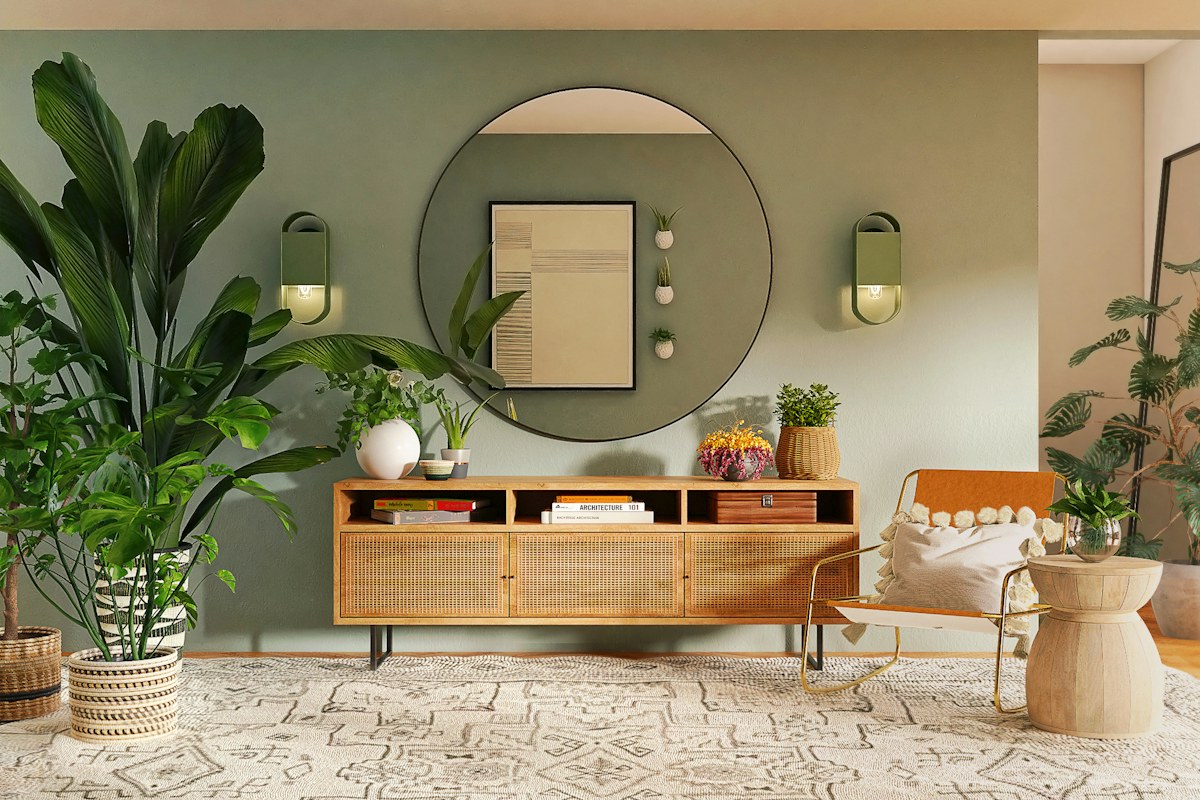
If the sideboard top receives objects during the day, decide which of them may move into the drawer and which belong elsewhere. Avoid clearing the surface by pushing everything out of sight. A small temporary landing place can work when there is a clear next action, but it should not quietly redefine the drawer as overflow storage. Decorative pieces on the top should also leave practical access to handles. The whole piece of furniture works better when its visible and hidden surfaces have compatible jobs.
Review after ordinary use
Use the drawer for a few normal occasions before changing the arrangement again. Notice whether the same item is difficult to reach or whether unrelated objects keep appearing. Adjust the purpose or the return routine rather than immediately buying more organisers. If a household member uses the drawer differently, discuss the shared need. A simple arrangement everyone understands is more durable than a precise system that only makes sense to the person who created it and requires constant correction from them.
A small reset is enough
When the drawer becomes untidy, remove what does not belong, regroup the useful contents and stop. There is no need to empty every sideboard compartment each time. If the chosen job no longer suits the room, change it deliberately and move the old contents to an appropriate place. The aim is a drawer that helps an ordinary action happen smoothly. Success looks like finding the needed object, using it and returning it without turning a small household task into another organising project.
Continue the practical edit
Related reading: An Open Shelf That Is Easy to Live With, A Weeknight Table You Can Set in Ten Minutes.
Editorial & photography notes
Practical editorial guidance for ordinary situations. This article does not claim product testing or report current offers. Follow the relevant maker’s instructions for the items you use.
Illustrative stock photograph by Spacejoy: photo source. This scene does not identify our author or establish a product test.