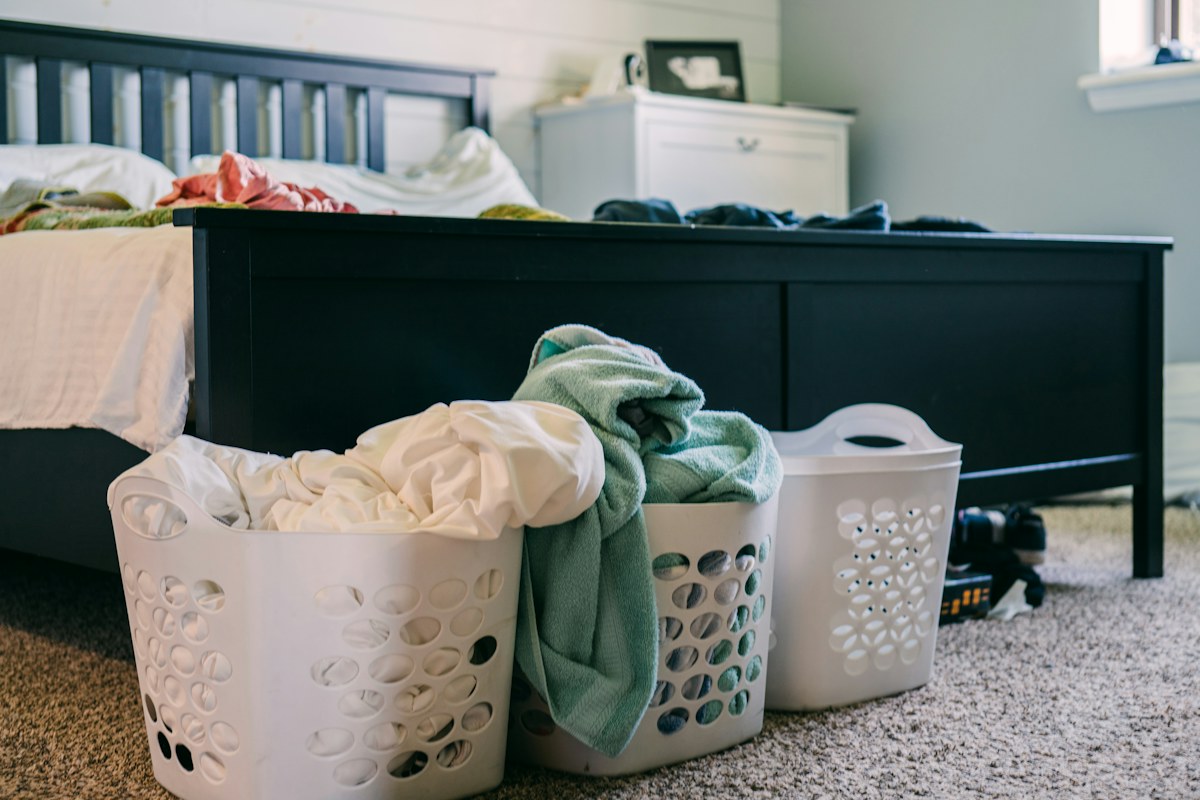
A laundry basket is often chosen while empty, standing neatly beside several attractive alternatives. Its daily job is less still. It has to leave a bedroom, pass a doorway, reach the washing area and return somewhere useful. Start with that carrying route before deciding on material or colour. A basket that suits the floor space but is awkward to move can add a small inconvenience to every load, while a simpler shape may work quietly for years.
Describe the route before measuring the corner
Walk from the place where used clothes collect to the place where you sort or wash them. Notice narrow doors, turns, stairs and any point where you normally need a free hand. Include the return journey with clean clothing rather than considering only the trip to the machine. You may need a basket that can be held close to the body, or several smaller containers instead of one large one. Let the real route establish the questions you ask in a shop.
Check the handles as part of the shape
Look at how the handles attach and where your fingers sit. Smooth edges and a comfortable opening matter more than a handle that simply looks substantial. Where a shop permits, hold the empty basket in the position you would use at home. Do not load or test a display beyond what the seller allows. Read any stated care or use instructions, and avoid assuming a decorative woven container is intended to carry the same load as a purpose-made laundry basket.
Imagine the load without packing it tightly
Think about the clothing that usually makes one journey: a few light garments, bulky towels or bedding. A large basket can encourage a load that is uncomfortable to carry even when it fits the space. Choose a manageable amount rather than using maximum capacity as a goal. If you share the task, discuss what works for everyone who will lift the container. The person who carries it should have a say in the shape and size, not only the person arranging the room.
Consider visibility while moving
Hold the basket in a way that leaves the route visible and lets you move comfortably. If its height hides steps or door thresholds, reconsider how much it should hold or whether another design is more suitable. Do not balance extra clothing on top to avoid a second trip. A smaller load can be the more convenient routine when it keeps movement straightforward. The basket's usefulness lies in completing the task, not in winning a competition to move everything at once.
Give the basket a return position
Choose where the empty basket belongs after the washing is put away. It should be easy to return without blocking a doorway or taking over the only chair. If two baskets nest, check that separating them is straightforward rather than a daily struggle. A lid may suit a bedroom collection point while becoming unnecessary on a carrying basket. Decide which job you are buying for. One object does not have to collect, sort, carry and conceal every load if those roles demand different arrangements.
Plan for ordinary care
Consider how lint, dust and occasional marks will be dealt with using the maker's guidance. A textured basket can look warm and appealing while requiring a different cleaning approach from a smooth one. Keep damp clothing from sitting in an unsuitable container for extended periods and follow the care needs of both garments and basket. Do not choose solely on the assumption that a material will be easy to wipe without checking its finish. The practical care routine should fit the attention you are willing to give it.
Use a short buying checklist
Before buying, ask whether the basket fits its storage position, passes the narrowest relevant doorway and can be held comfortably for the intended load. Check that the handles feel appropriate and that the care instructions are clear. If you are replacing an existing basket, name the problem the new one solves. A different colour is a valid preference, but it should not disguise the same awkward carrying arrangement. Where possible, keep the old basket briefly until the new routine has proved useful through ordinary use.
What if the basket is already awkward?
Try reducing the load and changing the collection routine before purchasing another container. Separate sorting from carrying if that makes the task easier. A basket that is unsuitable for transport may still have a useful stationary role, provided it suits the contents and space. If a handle is damaged, follow appropriate repair or replacement advice rather than trusting an improvised fix with a heavy load. The right choice is the one that makes a recurring household journey simpler, with no need to think about the basket each time.
Continue the practical edit
Related reading: A Laundry System for a Small Home, An Entryway That Catches Everyday Clutter.
Editorial & photography notes
Practical editorial guidance for ordinary situations. This article does not claim product testing or report current offers. Follow the relevant maker’s instructions for the items you use.
Illustrative stock photograph by Jessica Lewis 🦋 thepaintedsquare: photo source. This scene does not identify our author or establish a product test.