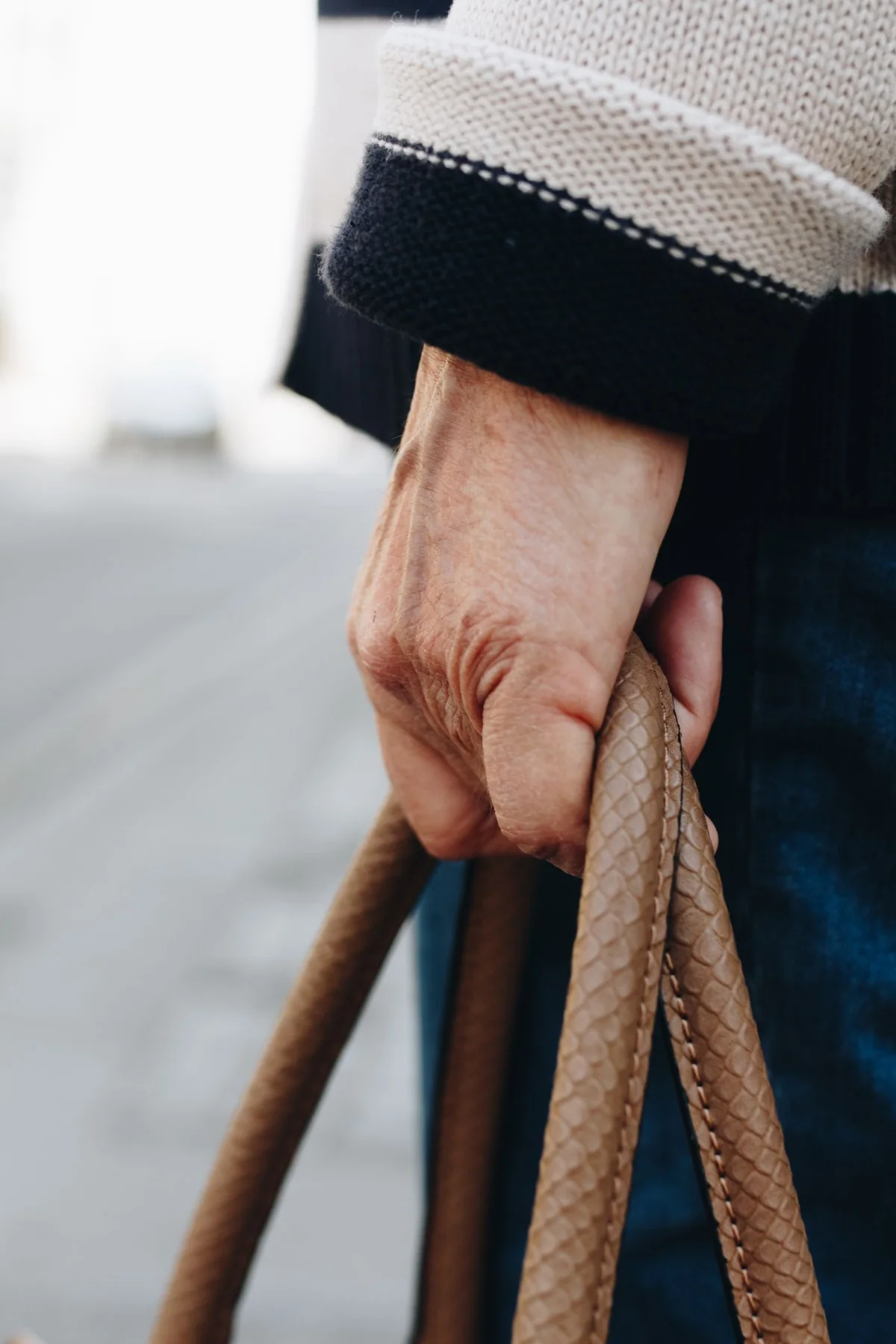
The space between a handbag's handles and body can determine how comfortably it works with your everyday layers. A bag may sit neatly over a thin sleeve but become awkward over a coat, or fit in the hand while refusing the shoulder position you expected. Check the actual carrying arrangement before deciding that the shape suits your life. The useful question is not whether the handles look generous, but whether you can use the bag naturally with what you wear and what you need to carry.
Choose the intended carrying position
Decide whether you mainly want to hold the bag, place it on your forearm or use it on a shoulder where the design allows. Those positions are not interchangeable simply because a photograph shows the bag near an arm. Read the maker's description and use the handles or strap as intended. If a particular carrying method is essential, make it a clear buying criterion rather than an optimistic possibility. A bag that works beautifully in another position may still be the wrong choice for your ordinary route.
Try the thickest regular layer
Wear the coat or knit that is most likely to make the handle space restrictive. Check the bag with that layer before judging it over a light top. Notice whether the fabric bunches, the handle presses uncomfortably or the bag sits too high for your arm to move naturally. Avoid compressing the sleeve into a position you cannot maintain. If the bag works only in warmer weather, that may be perfectly acceptable, but recognise the seasonal role rather than expecting the same fit all year.
Include a realistic load
Where a seller permits, assess the bag with a suitable representation of the belongings you will carry, without exceeding any stated use or loading a display without permission. At home, use the actual contents before deciding whether a recent purchase works for you. Weight and distribution can change how handles feel and how the bag hangs. Remove unnecessary items if the load is uncomfortable, but do not pretend the essentials will disappear. The carrying arrangement should support the job you are buying the bag to do.
Check ordinary arm movement
Walk, sit and reach for something nearby through normal comfortable movement. A handle can fit around a shoulder while still holding the bag where it interferes with your arm. Notice whether you repeatedly lift a shoulder or press the bag against your body to keep it in place. There is no need to find a universal ideal position. Your own comfort and the design's intended use provide the practical test. A bag should not require a styling pose to remain usable once you leave the mirror.
Retrieve the contents in that position
Open the bag and take out the item you use most often, then close it again. Check whether the handles obstruct the opening or whether the bag must be removed every time. That may suit an occasional evening bag and feel inconvenient during errands. Decide according to the day you are planning. A comfortable handle drop and an accessible opening need to work together. Do not assess them as separate attractive features and assume the complete action will be equally straightforward.
Look at construction and care information
Inspect the handles and their attachment through the normal viewing and handling allowed by the seller. Read the material and care details rather than assuming a leather-like surface or a thick seam establishes a particular quality. If something feels loose, damaged or unclear, ask before buying. Avoid inventing a repair plan for a new purchase simply because the overall shape appeals to you. The handle is a working part of the bag, and its condition matters alongside the visual proportions you first noticed.
Compare with a bag that already works
Use an existing comfortable bag as a reference for your own needs, without assuming its measurements guarantee the same result in another design. Shape, stiffness and handle placement can all change the experience. Notice what the familiar bag makes easy and what you want the new one to improve. If the prospective purchase repeats the same difficulty in a different colour, pause. A clear comparison can help separate a genuine practical addition from the understandable pleasure of seeing a new shape in a shop.
Decide the role before keeping it
Check the seller's current return arrangements and complete your assessment within the permitted conditions. If the bag suits one specific use, decide whether that role earns its place in your collection. It does not have to be an all-purpose bag, but the purpose should be real. A successful handle choice lets you carry, retrieve and put the bag down without continually adjusting the outfit around it. The appearance can then be enjoyed because the ordinary mechanics already support the day.
Continue the practical edit
Related reading: Choosing an Everyday Bag by What You Carry, Inspecting a Small Bag Closure before the Outfit Decides.
Editorial & photography notes
Practical editorial guidance for ordinary situations. This article does not claim product testing or report current offers. Follow the relevant maker’s instructions for the items you use.
Illustrative stock photograph by João Jesus / Pexels: photo source. This scene does not identify our author or establish a product test.