A household preference about outdoor shoes can become awkward when it is first revealed to a guest standing in the doorway with a coat, bag and nowhere convenient to sit. Explain the preference in advance where it matters, and make the arrival arrangement practical. A clear welcome gives guests a chance to understand the home and tell you about any needs that affect the plan. It should not turn an ordinary visit into a test of manners that only the host knows how to pass.
State the preference plainly
If you ask visitors to remove outdoor shoes, mention it with the practical information for the visit. Use ordinary language and avoid presenting a personal household arrangement as a universal rule that every considerate person already follows. Guests may come from homes with different customs. A straightforward note gives them the information without inviting a debate about whose routine is more correct.
Distinguish a preference from a specific requirement that has been established for the home. Do not invent health, material-care or safety claims to make a personal choice sound authoritative. Where a relevant professional or product instruction applies, communicate the practical implications accurately. The invitation should tell guests what they need to know, with room to discuss an arrangement that works for them.
Invite a private practical question
Someone may have a reason that makes changing or removing footwear difficult or inappropriate. Invite them to tell you what arrangement would help, without requiring a public explanation at the door. Do not infer the need from age, appearance or the kind of shoes someone wears. The person is better placed to explain what they can comfortably do and what assistance, if any, they want.
Keep any personal information they share limited to the people who need it for the visit. An agreed alternative should not become a story told to other guests. If you cannot accommodate an important requirement, discuss that honestly beforehand and consider another meeting arrangement. A warm welcome depends on the actual person's access and comfort as well as the host's preferred routine.
Check the place where shoes will change
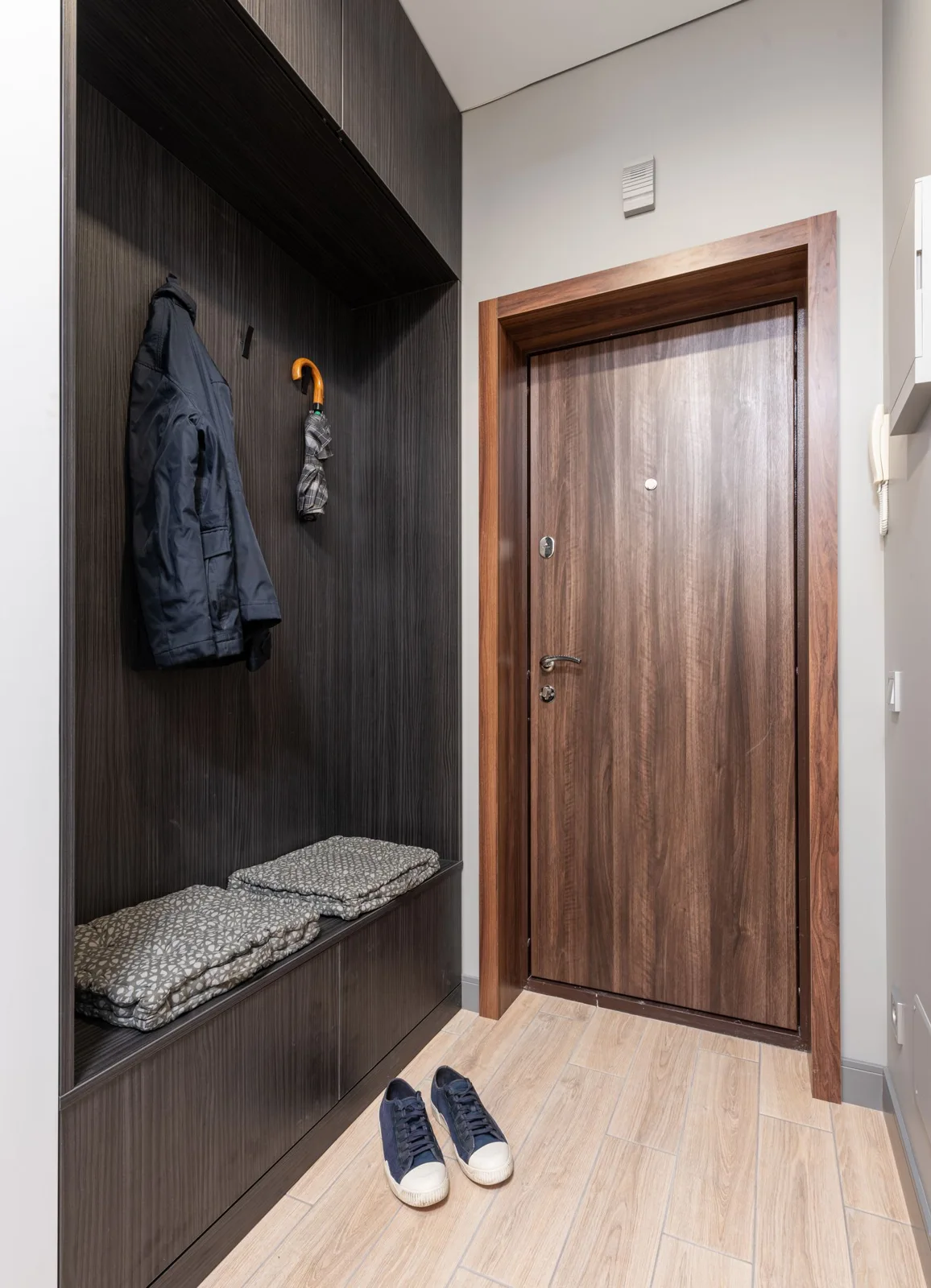
Look at the doorway as guests will encounter it, including bags, coats and other arrivals. Keep required access and routes clear. If a suitable seat is part of the arrangement, make sure it is appropriate for its intended use and does not need to be cleared of household storage at the moment someone arrives. Follow furniture guidance rather than improvising a perch from a box or unstable stack.
The guide to an entryway that catches everyday clutter offers a broader starting point. For visitors, the important distinction is between a usable arrival place and an attractive photograph. A small entry can work well if the sequence is clear, while a large one can remain awkward if coats, shoes and bags have no understandable place.
Explain any alternative footwear without assumptions
If guests may bring their own suitable indoor footwear, say so in advance. Do not assume everyone owns the same kind of slipper or wants to borrow a communal pair. If you offer footwear, explain it as an option and handle its care appropriately. Avoid making unsupported claims about hygiene, fit or suitability simply because an item is intended for visitors.
Consider what happens if someone arrives without having seen the note. Welcome them first and explain the arrangement calmly. An unexpected requirement can be inconvenient even when the host has a clear preference. Offer the practical options you have actually agreed or can provide, rather than treating a missed message as evidence that the guest has deliberately ignored the household.
Give shoes a recognisable temporary place
Show guests where their shoes can remain without obstructing the room or being mixed into unrelated household storage. Keep pairs associated and avoid moving a visitor's belongings to a hidden place without telling them. A guest should not have to search through a cupboard at the end of the visit or ask several people who tidied away their shoes.
If several guests bring similar footwear, a simple arrangement may be enough to prevent confusion. Ask before attaching labels or placing shoes into a container that might not suit them. The guide to keeping shoes as pairs explains a related everyday problem, but a visit does not require a new permanent sorting system. Make the temporary arrangement easy to understand and easy to reverse.
Let departure complete the welcome
Make the same practical space available when guests leave. Return coats and bags in an order that lets people get ready without an avoidable pile-up at the door. Offer help where it is wanted and do not assume that someone who managed an arrival will need exactly the same arrangement at departure. A simple question is usually more useful than taking over.
Afterwards, keep any useful observation about the space rather than judging guests by how smoothly they followed an unfamiliar routine. Perhaps the seat needs to remain clear or the advance message could be simpler. A household preference works best when it is communicated respectfully and supported by a practical welcome, leaving the visit itself free to be about spending time together.
Editorial & photography notes
Practical editorial guidance for ordinary situations. This article does not claim product testing or report current offers. Follow the relevant maker’s instructions for the items you use.
Illustrative stock photograph by Stock photographer: photo source. This scene does not identify our author or establish a product test.