Rearranging a room can reveal a better way to use furniture you already own. It can also erase a useful starting point before you know whether the new arrangement works. A return record is a small set of notes or photographs that explains how the room functioned before the change. It is especially useful when several people share the room or when moving one object requires moving several others. The record makes a reversible experiment easier to finish.
Name the problem the rearrangement should solve
Write down the particular difficulty you want to address. Perhaps a chair interrupts a familiar route, a table is inconvenient for a regular activity, or a room has become organised around something no longer used. A clear reason gives the experiment a practical measure of success. It also helps distinguish an actual improvement from the temporary appeal of seeing the same furniture in a different order.
Do not attempt a furniture move simply because a photograph makes another arrangement look possible. Consider the object's weight, condition and any assembly, anchoring or installation requirements. Follow the manufacturer's instructions and obtain appropriate help where needed. A return record supports planning; it does not make an unsuitable move safe or replace competent assistance with heavy or fixed items.
Record relationships rather than every centimetre
Before anything moves, take a straightforward view showing the objects in relation to doors, windows and one another. Include the ordinary access points that may disappear from a decorative photograph. Where a distance is important, measure it and identify what the measurement refers to. A number without a clear starting and ending point may be impossible to interpret after the room has changed.
Keep the record proportionate. You do not need a complete architectural survey to try a different position for a movable chair. Note the relationships you would find difficult to reconstruct, such as which side of a table provides normal access or how far a cabinet sits from an opening door. Avoid recording unrelated personal possessions or sharing room photographs more widely than the task requires.
Include the furniture in use
A room is not fully described by objects pushed neatly into place. Show the chair pulled back for sitting, the cupboard door open or another ordinary action that matters. Keep required exits, access routes and equipment clear in accordance with applicable guidance. Do not treat an arrangement that looks spacious while everything is closed as proof that it will work when someone uses it.
The guide to a desk chair's return position offers a related example of recording movement as well as appearance. For this room experiment, note the actions that the proposed change is meant to improve. If the change helps one task but makes another awkward, that tradeoff should remain visible rather than being dismissed because the new layout photographs well.
Agree what can change in a shared room
Ask the people who use the space which arrangements they rely on. A surface that seems empty to one person may be where someone sets out a regular activity. A chair near a doorway may have a reason that is not obvious from its position alone. Explain the proposed experiment and agree what will happen to possessions temporarily displaced by it.
Choose a realistic point at which to assess the result together. Avoid leaving the room in an indefinite trial state with someone else's belongings in boxes. If an item is borrowed or belongs to a housemate, obtain their agreement before moving it. Keep the return record accessible to the people involved, without turning a simple rearrangement into a permanent shared surveillance album.
Change enough to answer the question
Where practical, try the smallest suitable change that addresses the identified problem. Altering every furniture relationship at once makes it harder to understand what helped. Keep temporary items clearly associated with their original places and avoid putting them somewhere that creates a new obstruction. Do not disconnect or improvise equipment arrangements merely to complete a decorative experiment.
Use the room for the relevant ordinary activity before deciding. Notice whether reaching, sitting, opening storage and moving through the space are actually easier. A new position may offer a benefit at one time of day and an inconvenience at another. Record that specific observation rather than declaring the whole room successful or unsuccessful on its first appearance.
Finish with either a new arrangement or a return
If the change works, update the small record to show the useful result and remove temporary notes that no longer help. If it does not, use the original information to restore the workable arrangement with appropriate help. Returning furniture is a valid outcome of an experiment. The pack-away workstation guide offers another way to think about a space that must support more than one purpose. A good rearrangement ends with a room people can use, rather than an unfinished promise to solve the layout later.
Editorial & photography notes
Practical editorial guidance for ordinary situations. This article does not claim product testing or report current offers. Follow the relevant maker’s instructions for the items you use.
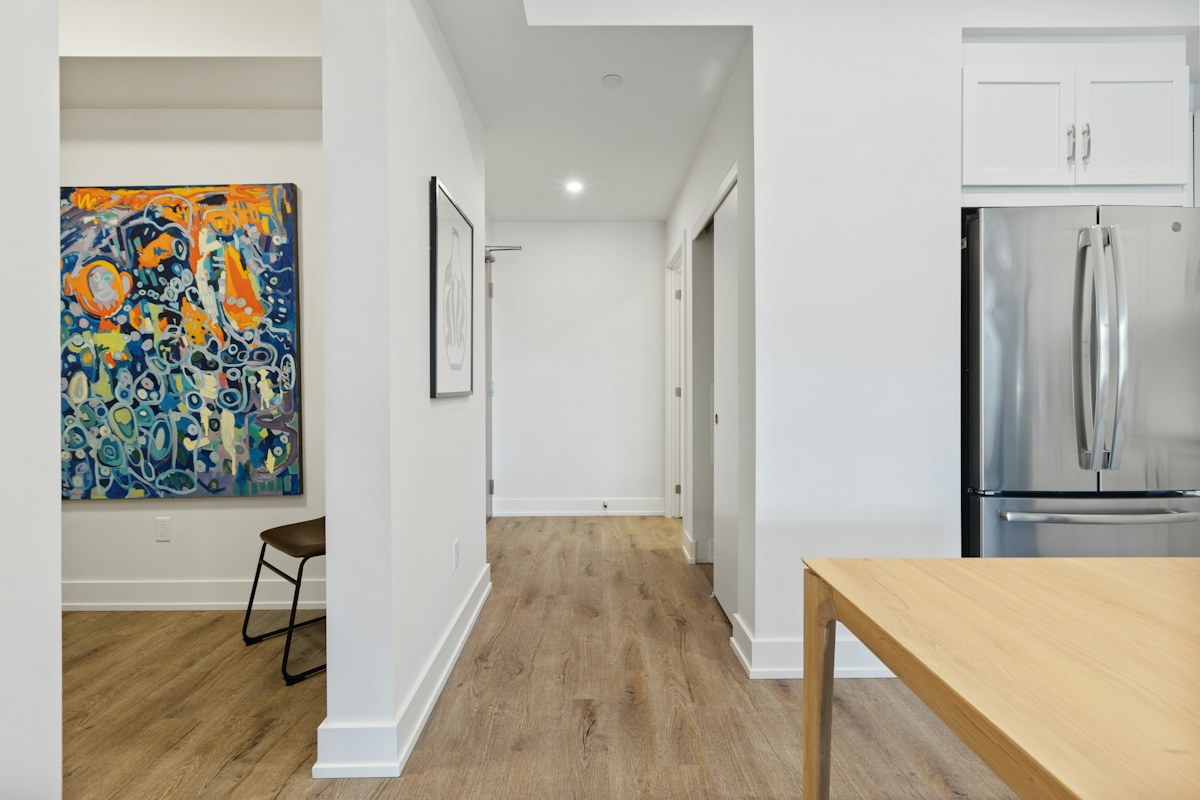
Illustrative stock photograph by Point3D Commercial Imaging Ltd.: photo source. This scene does not identify our author or establish a product test.