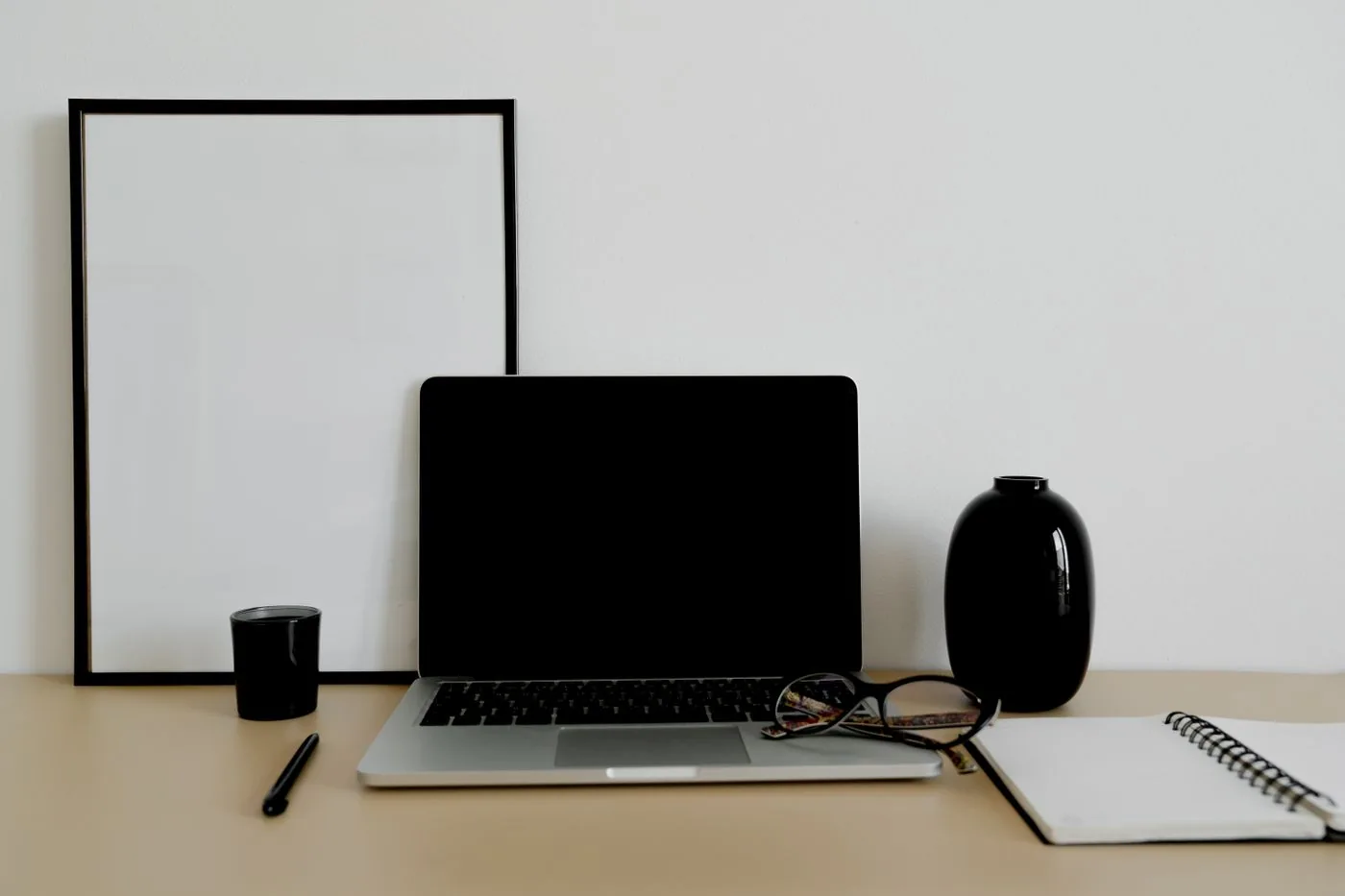
A small desk can fit neatly against a wall while its chair occupies the route through the room. The arrangement looks complete when the chair is tucked in, but a working session changes its footprint. A useful plan includes the chair pulled out, a person seated and the return movement afterward. Begin with the desk and chair you actually use. The question is whether the setup supports its ordinary task and can be left in an understandable state, rather than whether the empty desk fits an attractive corner.
Observe the working position first
Sit at the desk in your usual appropriate setup and notice the space the chair occupies. Include the items normally used for the task rather than evaluating an empty surface. Follow relevant product guidance and obtain appropriate advice where a setup or adjustment is uncertain; a furniture photograph cannot establish what is suitable for an individual user.
Identify the main activity and its duration in practical terms. A brief household paperwork task and a regular working session can ask different things of the space. Do not choose the chair's position solely around making the room look clear when nobody is using it.
Look at the route behind the chair
Consider the ordinary movement through the room while the desk is occupied. A door, cupboard or shared route may need space that the chair uses in its working position. Compare those actual tasks rather than assuming the chair can always be moved at the moment somebody else needs to pass.
Where the activities conflict, consider a different desk position, a different suitable room arrangement or a clearer time for using the space. The solution does not have to be a smaller-looking chair. A compact item can still occupy the same important route once someone is seated and using the desk normally.
Check whether the chair can return as intended
When the session is over, move the chair to the position you expect it to occupy. Notice whether the arms meet the desk, whether the back catches a shelf or whether the seat must be turned awkwardly to fit. Use the furniture within its intended design and avoid forcing one component under another.
An apparently tidy return position may be inconvenient if it requires lifting, twisting or repeatedly moving another object. Choose an arrangement that suits the actual furniture and users. A clear position just beside the desk can sometimes be more honest than a promise that the chair will always disappear beneath a surface that does not accommodate it.
Include drawers and nearby storage
Open the desk storage you ordinarily use with the chair in both working and return positions, following the product's instructions. A drawer may operate comfortably while you sit and become blocked once the chair is tucked away. A nearby cupboard can create a different conflict with the chair back.
Keep frequently needed materials in a suitable place that can be accessed without rebuilding the whole corner. This may mean changing what belongs in a particular drawer rather than buying another unit. The aim is to make the furniture's existing movements compatible with the sequence of the actual task.
Keep bags and loose equipment out of the return path
Decide where the work bag or household paperwork container will go during the session and afterward. If it is regularly placed where the chair needs to return, the arrangement has an unresolved destination rather than a simple tidiness problem. Give the item an appropriate place that supports the routine.
Manage equipment and cables according to their product guidance and the actual setup. Do not assume the chair can roll or slide freely through a space occupied by loose objects. A clearly understood return path is more useful than a photograph in which every practical item has been temporarily removed from view.
Compare a purchase with the complete movement
If replacing furniture, record the details relevant to the actual arrangement: the desk's usable opening, the chair's dimensions and adjustment features, and the surrounding route. Check the exact selected model rather than relying on the apparent scale in a product image. Seek clarification from the seller where an important dimension is missing.
Keep installation and use instructions attached to the decision. IKEA's official explanation of locating product assembly information is a useful example of finding relevant documents, but the requirements of the particular desk and chair must come from their own guidance. A nominal width alone does not establish that two pieces will work together.
End the session with a clear next beginning
Finish by putting the chair in its chosen suitable position and returning the small group of working items to their destinations. This should be a manageable sequence, not a second furniture arrangement that takes as long as the task itself. If the return repeatedly fails, revise the setup rather than expecting a more elaborate storage system to compensate automatically.
Must the chair fit entirely under the desk? Only if that is a practical and appropriate part of the plan. Does a smaller desk always create more usable room? Not when the chair and working route remain unresolved. Should a setup be judged while empty? Include actual use as well. A good desk corner has enough understanding of its everyday movements to make both working and stopping feel straightforward.
Continue the practical edit
Related reading: A Small-Space Workstation That Packs Away, Desk Essentials Without the Accessory Pileup.
Sources & further reading
Official information checked October 15, 2026. This guide presents research-based editorial advice, not a claim of hands-on product testing. Event details and stock information reflect that check date.
Illustrative stock photograph by Stock photographer: photo source. This scene does not identify our author or establish a product test.