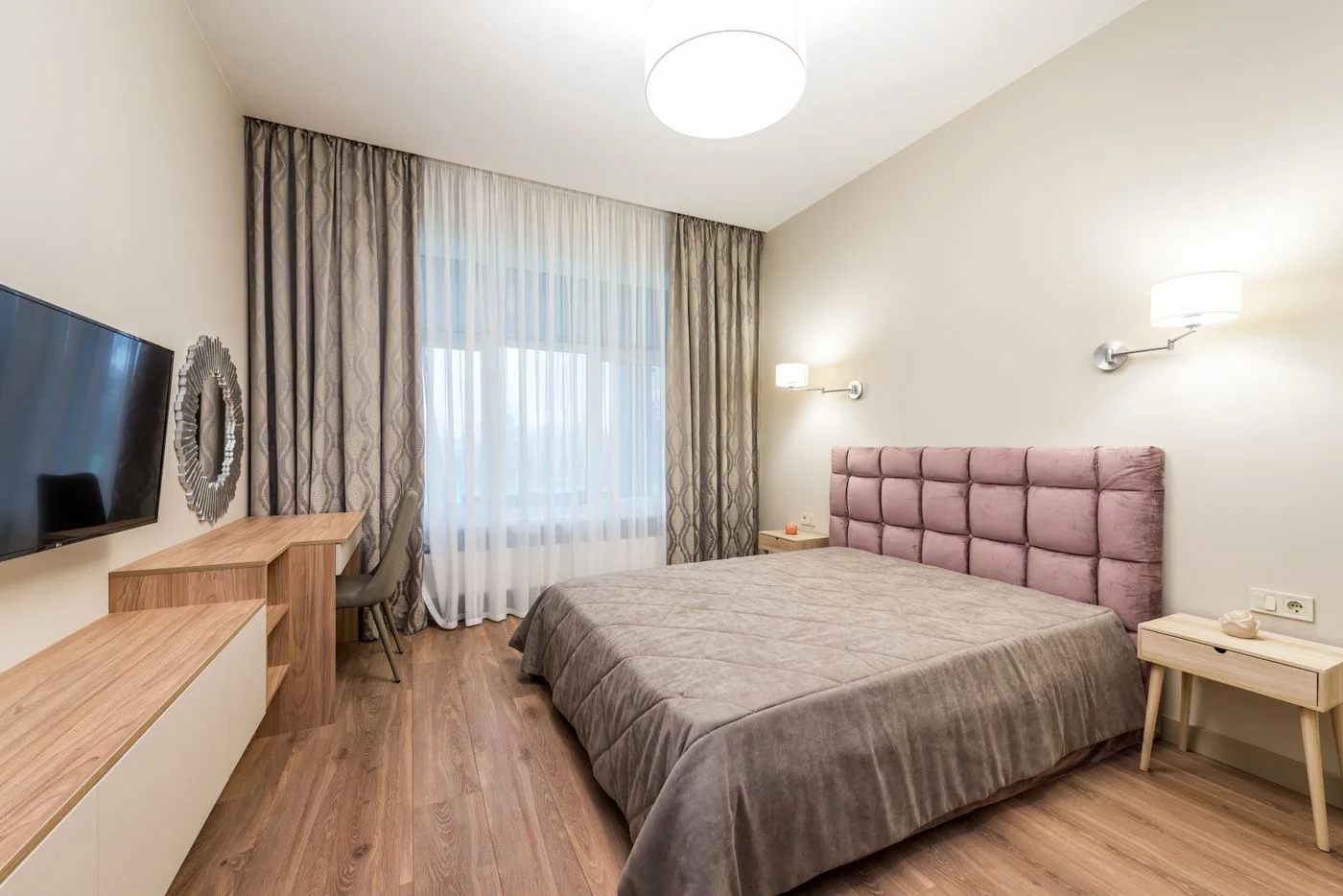
Curtains are often chosen while imagined fully closed: a colour across the window and a texture that belongs with the room. The open position can receive less attention, even though it may be the arrangement used for much of the day. Fabric can collect against furniture, hide a useful part of the window or make the opening action awkward from the place you can actually stand. Include both positions in the plan. The useful choice is a curtain arrangement that belongs to the room's ordinary routine, not only its evening photograph.
Observe how the window is used now
Notice when you open and close the existing covering and where you stand to do it. Include the room's ordinary furniture arrangement rather than temporarily moving a chair or bedside table out of the way. The route you use every morning provides specific information about what a replacement needs to improve.
Name the main purpose of the curtains in your own room. Privacy, managing the view and a preferred decorative outline can all matter, but they should be assessed with the actual product information. Do not assume that every fabric or lining will provide the same performance merely because it is described with an appealing colour name.
Give the open fabric a planned place
Consider where the curtains are intended to sit when open. The available space depends on the window, the selected system and its installation requirements. Use the actual product guidance and appropriate measurements rather than assuming that the fabric will disappear into an empty-looking strip of wall.
Look at nearby furniture in that open arrangement. A tall cupboard, a bedside surface or a chair may occupy the place where the fabric would otherwise rest. Resolve the relationship in the room plan before choosing the curtain width or system, and seek relevant product or professional advice where the requirements are unclear.
Compare the view with the normal room light
Observe the room in the light you use during the day and evening. Decide whether the open arrangement leaves the view and light you prefer, without treating a single bright photograph as a complete performance assessment. Fabric colour can also look different beside the actual wall, flooring and bedding.
Use a suitable sample when available and keep the comparison attached to the exact product and variant. A sample helps with appearance but does not establish every property of a finished installation. Read the product description and relevant guidance for features such as lining or intended use rather than inferring them from the visible surface alone.
Include the complete opening movement
Think through opening and closing the curtains from the place normally available. Follow the intended operation of the selected system. If furniture prevents appropriate access, revise the arrangement rather than making an awkward repeated movement part of the daily routine.
The curtains should not depend on a person standing in a place the room does not conveniently provide. A change to furniture position may be possible, or another suitable window-covering arrangement may serve better. Compare those practical alternatives before deciding that an attractive curtain fabric must be made to work at any cost.
Keep the product requirements connected to the room
Read the guidance for the curtains, supporting system and relevant nearby fixtures or appliances. Where a particular installation or clearance is required, follow the applicable instructions and obtain appropriate help if uncertain. Do not improvise a fixing or use a position that conflicts with the actual products' requirements simply because another room photograph shows a similar arrangement.
The decorative decision and the installation decision belong together, but they are not the same task. You can choose a preferred appearance while still needing suitable product or professional advice on how the actual system can be used in the actual space.
Decide what the lower edge will do
Consider the intended length in both open and closed positions. A curtain can meet the floor, window area or another boundary differently as it moves. Choose an arrangement suitable for the product and room use, including ordinary access and care. A length chosen only from a frontal image may create an inconvenient relationship beside a bed or frequently used surface.
If an alteration is needed, establish what is appropriate for the particular curtain rather than assuming every fabric can be shortened in the same way. Include any alteration decision in the plan before ordering. This helps keep a seemingly complete purchase from becoming an unresolved task waiting beside the window.
Make care part of the ordinary arrangement
Read the item's care information and understand what removal or maintenance involves for the actual system. Consider whether the household can manage that routine appropriately. A curtain arrangement should remain usable after the first installation, with a clear route to its instructions and any relevant product details.
Must the curtains cover the maximum possible wall area? No; choose the arrangement that suits the intended role and requirements. Is the closed view enough to decide? The open position and daily operation deserve equal attention. Should nearby furniture always move to accommodate a preferred fabric? Only when the resulting room still works. The successful plan gives the curtains a useful place throughout the day, rather than only when the room is prepared for a photograph.
Continue the practical edit
Related reading: A Bedside Table That Serves Your Evening, Choose Lighting for How You Use a Room.
Sources & further reading
Official information checked October 15, 2026. This guide presents research-based editorial advice, not a claim of hands-on product testing. Event details and stock information reflect that check date.
Illustrative stock photograph by Stock photographer: photo source. This scene does not identify our author or establish a product test.