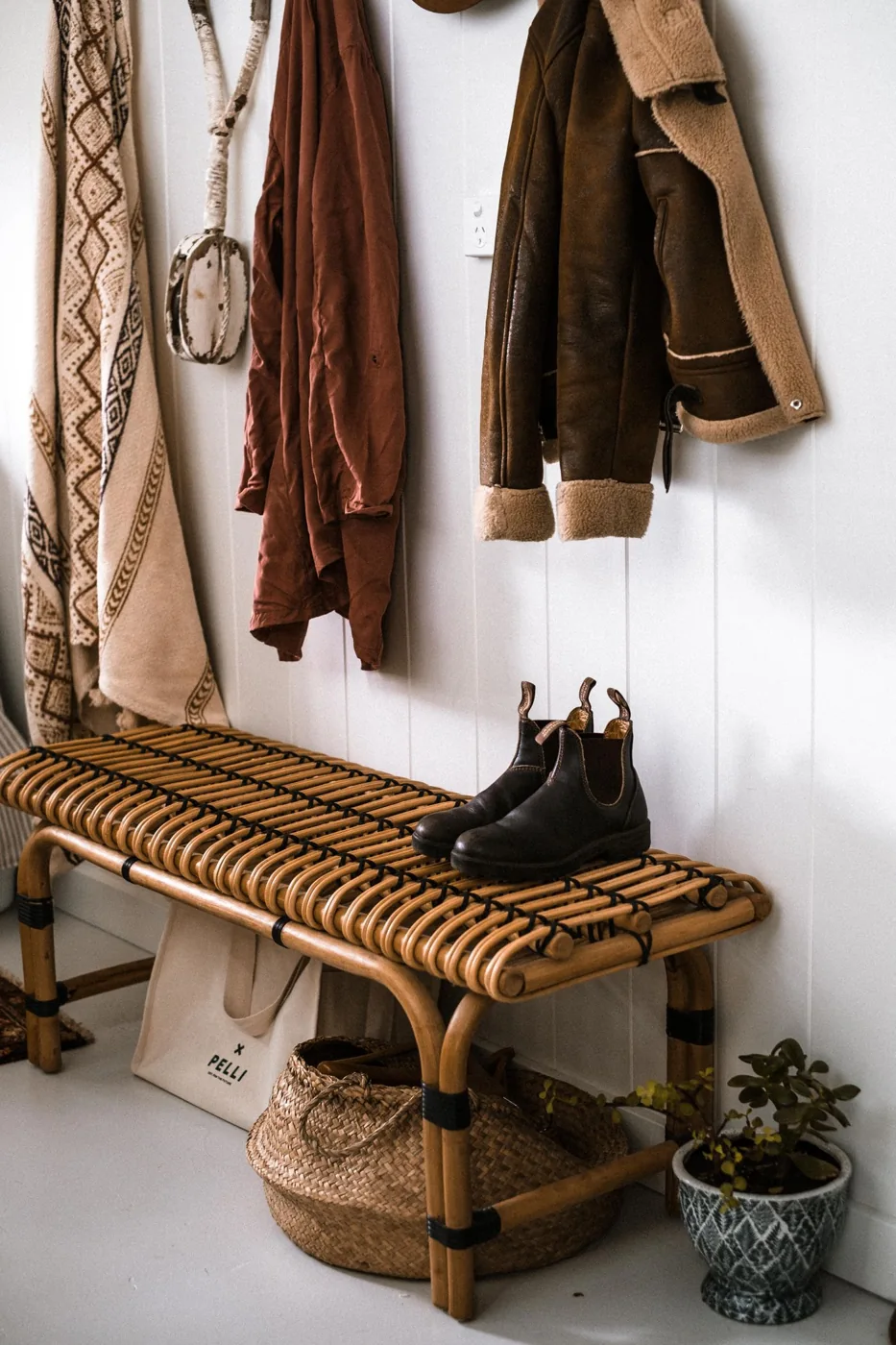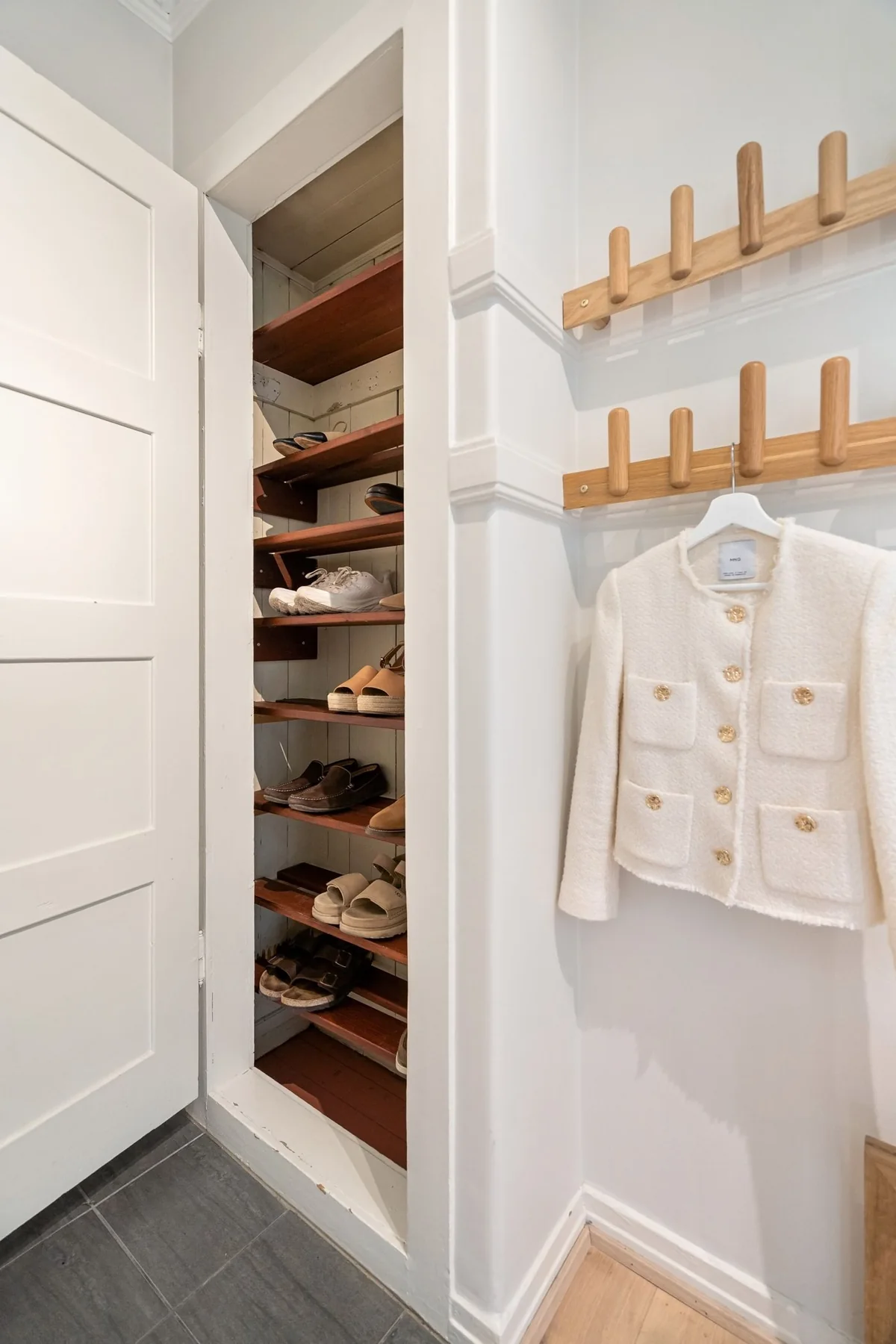
A hook rail can look generous while holding only a few coats comfortably. The problem is often the space around the garments rather than the number of visible hooks. Sleeves overlap, bags disappear underneath and the coat needed for the next outing is trapped behind someone else's layers. Begin with the items the household actually uses near the door. A useful rail gives those belongings a clear return position without pretending every hook can hold an unlimited collection of things at once.
Check the rail's intended use first
Read the maker's guidance for the rail, hooks and installation, including what the arrangement is designed to support. If you do not know how an existing rail was fitted, seek appropriate information before adding more weight. Do not infer capacity from the size of a decorative hook. Any installation or repair should follow the relevant instructions and suitable expertise. The organising task begins with equipment that is appropriate for the job, not a plan to make a doubtful fitting work through more careful stacking.
Gather the current everyday group
Choose the coats, light jackets and bags that genuinely belong near this entrance now. Seasonal or occasional pieces may have a better home elsewhere. Avoid turning the rail into storage for every outer layer the household owns. Ask each person what they use regularly rather than deciding from appearance alone. A small current group makes it easier to see the space each garment needs and leaves room to return items without pushing several others aside. The rail should reflect today's routine, not an imagined maximum collection.
Give each coat room to settle
Hang suitable garments using their intended hanging loops or appropriate support, following their care needs. Notice where shoulders and sleeves fall naturally. Two hooks may be too close for two bulky coats even when each can physically accept one. Leave a position unused if that improves access to the useful garments. The number of hooks is not a target to fill. A rail with breathing room can hold fewer items more effectively, making both removal and return easier during the busiest part of the day.
Keep bags from becoming hidden layers
Decide whether a bag belongs on the rail at all, considering its weight, strap and the support available. If it does, give it a position that remains visible and accessible rather than hanging it beneath a coat by default. Check that straps do not trail into the route or catch on nearby handles. A bag used for errands may have a separate landing place that works better. Do not ask one hook to support several unrelated objects merely because they all arrive at the door together.
Match positions to the people using them
Consider reach, comfort and the ordinary action of taking a coat down. The most accessible position should suit a regular user rather than be reserved for the garment that looks best from the hall. Include children or other household members in an arrangement they can manage themselves where appropriate. Avoid assumptions about who will collect or return another person's belongings. A shared entrance works more smoothly when each person understands their place and can use it without waiting for someone else to rearrange the rail.
Leave the surrounding route clear
Step back and look at the hanging garments with the door open and with the nearby storage in normal use. Sleeves can occupy more room than the empty rail suggests. Check that coats do not interfere with a bench, cupboard or walkway. If the arrangement remains crowded, reduce the group or choose another suitable location rather than compressing everything more tightly. The rail's footprint includes its contents. A tidy row of hooks is not useful if the actual coats make entering the home awkward.
Create a place for garments that need attention
A damp coat, a damaged loop or an item awaiting care may need a different temporary arrangement consistent with its instructions. Do not bury it among ready-to-wear pieces simply to clear the floor. Keep the next action visible without turning the entrance into a general holding area. Once the item is ready, return it to its usual position. The rail should mainly hold belongings that can leave the house again, while unfinished care tasks have a suitable place and a clear route back.
Reset by season and by real use
When the weather or routine changes, review the small group rather than adding new coats on top of the old ones. Move pieces no longer needed to their appropriate storage and check the rail's condition through its normal care guidance. If clutter returns quickly, ask which item lacks a convenient destination. A useful hook rail is not a permanent display of perfect spacing. It is a practical return system that keeps the next coat visible, the route clear and the household's ordinary departures a little easier.
Continue the practical edit
Related reading: An Entryway That Catches Everyday Clutter, A Garment-Care Kit for a Small Apartment.
Editorial & photography notes
Practical editorial guidance for ordinary situations. This article does not claim product testing or report current offers. Follow the relevant maker’s instructions for the items you use.
Illustrative stock photograph by Lisa Anna / Pexels: photo source. This scene does not identify our author or establish a product test.