
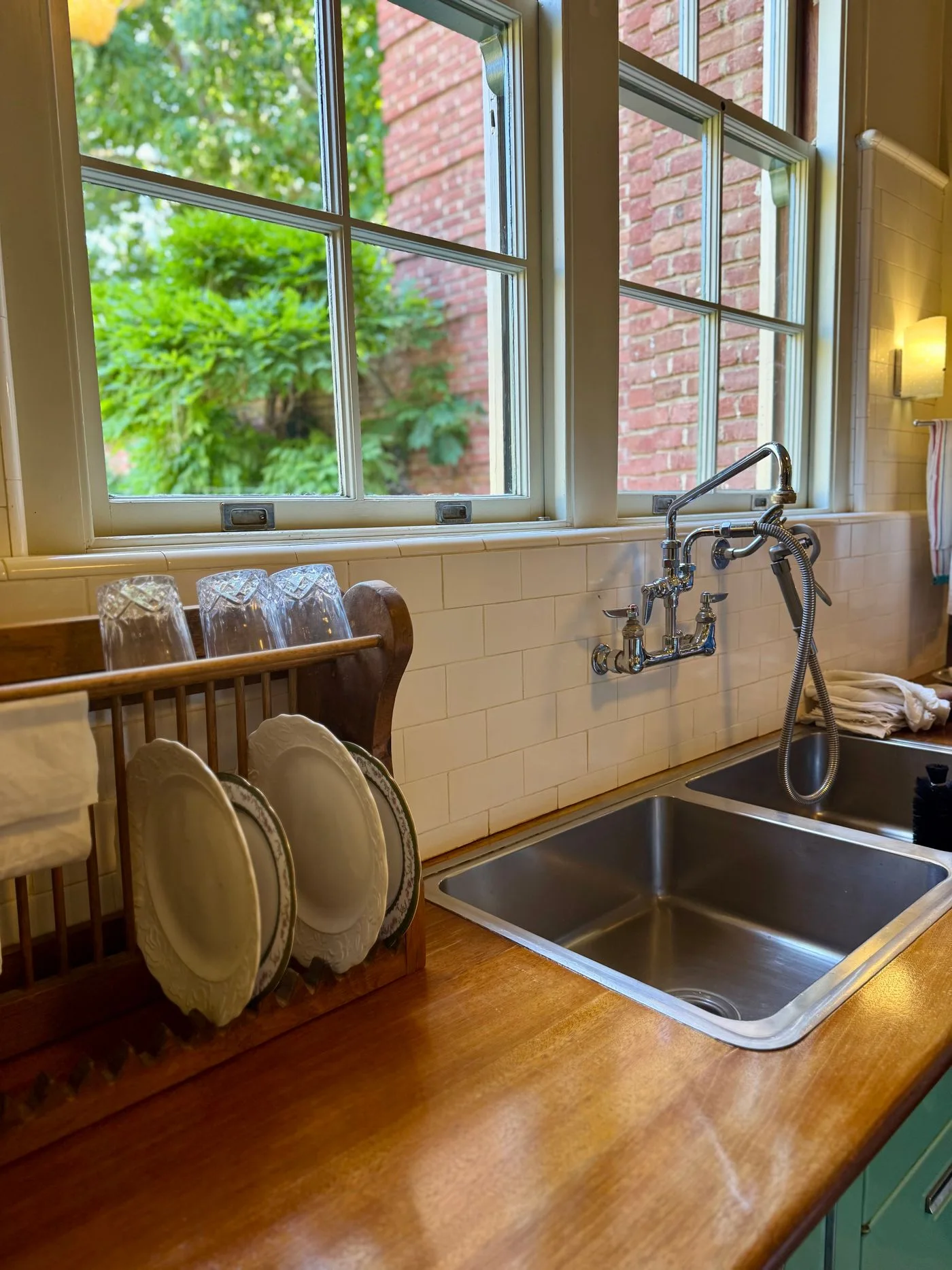
In a shared kitchen, finished washing-up can mean different things to different people. One person means that the sink is empty, another expects dry dishes to be put away and a third is still waiting for a pan that needs separate care. A clear handover helps people coordinate without turning every meal into an argument about standards. Describe the actual tasks and agree what will happen when something cannot be completed immediately.
Start with the ordinary sequence
Look at how dishes move from use to cleaning, drying and storage in the actual kitchen. Include any equipment and the instructions that apply to it. Some items may require a different care method, so avoid assuming every object can follow the same route. The useful agreement describes the real collection of cookware and tableware rather than an imagined set in which everything is identical.
Ask each person what they understand by the usual household phrases. Clear the kitchen may include surfaces for one person and only their own dishes for another. Translate those broad phrases into recognisable actions. You do not need a formal contract; a short conversation can prevent a repeated misunderstanding that otherwise appears to be carelessness or unwillingness.
Distinguish ownership from the task
Discuss whether people clean only what they use, share a meal-related task or take turns on an agreed basis. Avoid silently treating one person's cookware as communal simply because it is left in a shared cupboard. Where a borrowed or privately owned item needs particular care, its owner should explain the relevant instructions before another person handles it.
Do not infer that an unlabelled item has no owner or no care requirements. If you are uncertain, ask and keep it appropriately separate until the question is resolved. An efficient-looking handover that damages someone else's belongings is not a successful arrangement. The aim is to make responsibility clear enough that people can help without guessing about objects they do not know.
Include the space dishes need after cleaning
A drying area can become the point where an otherwise clear routine stops. Agree what the available space is intended to hold and how finished items return to storage. Follow suitable hygiene and care guidance for the materials and equipment involved. Do not assume that an overloaded rack or a makeshift surface is acceptable because a household has used it before.
If the existing space is consistently insufficient, identify whether the issue is the quantity of dishes, the timing of tasks or the way finished items are put away. Buying a larger rack may help a defined problem, but it may also occupy a preparation area or make access worse. Compare the actual space and supported use before adding equipment to a shared kitchen.
Explain an unfinished task plainly
Sometimes an item cannot be cleaned or put away at the same time as everything else. Say what remains and who will complete it, with a realistic arrangement rather than an indefinite promise. Keep any note near the shared planning system or communicate directly. Avoid placing a message where it could be mistaken for an instruction about food or equipment operation.
Do not treat leaving an item in water or near the sink as a universal signal that everyone understands. Different materials have different care needs, and another person may not know whether the item is waiting, finished or available to move. Follow the item's actual guidance and use clear communication to explain the remaining task instead of relying on a household code that has never been agreed.
Make room for different schedules
A shared routine may need to accommodate people who cook or return home at different times. Discuss how the kitchen can remain usable for the next person without requiring identical meal schedules. Identify the surfaces and equipment that must be available and decide how to communicate a temporary conflict. A considerate handover is about access as well as appearance.
The guide to one clear kitchen landing surface offers a related example of keeping a practical space available. Apply that idea to the agreed routine rather than expecting an entire kitchen to look unused at every moment. A functioning shared room can show ordinary activity while still making the next person's task possible.
Review the repeated difficulty, not the person
If the same problem returns, describe the specific point where the handover fails. Perhaps clean dishes remain because their storage place is unclear, or an item is repeatedly left because no one knows its care instructions. Solve that concrete issue before adding another general rule. Avoid using a small kitchen disagreement to make assumptions about someone's character or intentions.
The shared shopping-list guide offers another way to make an ordinary household task understandable to someone else. Keep the washing-up agreement equally clear and proportionate. Once the routine works, let it remain ordinary. The goal is a kitchen people can use and a handover they can understand, with enough flexibility to discuss the occasional exception directly.
Editorial & photography notes
Practical editorial guidance for ordinary situations. This article does not claim product testing or report current offers. Follow the relevant maker’s instructions for the items you use.
Illustrative stock photograph by Stock photographer: photo source. This scene does not identify our author or establish a product test.