
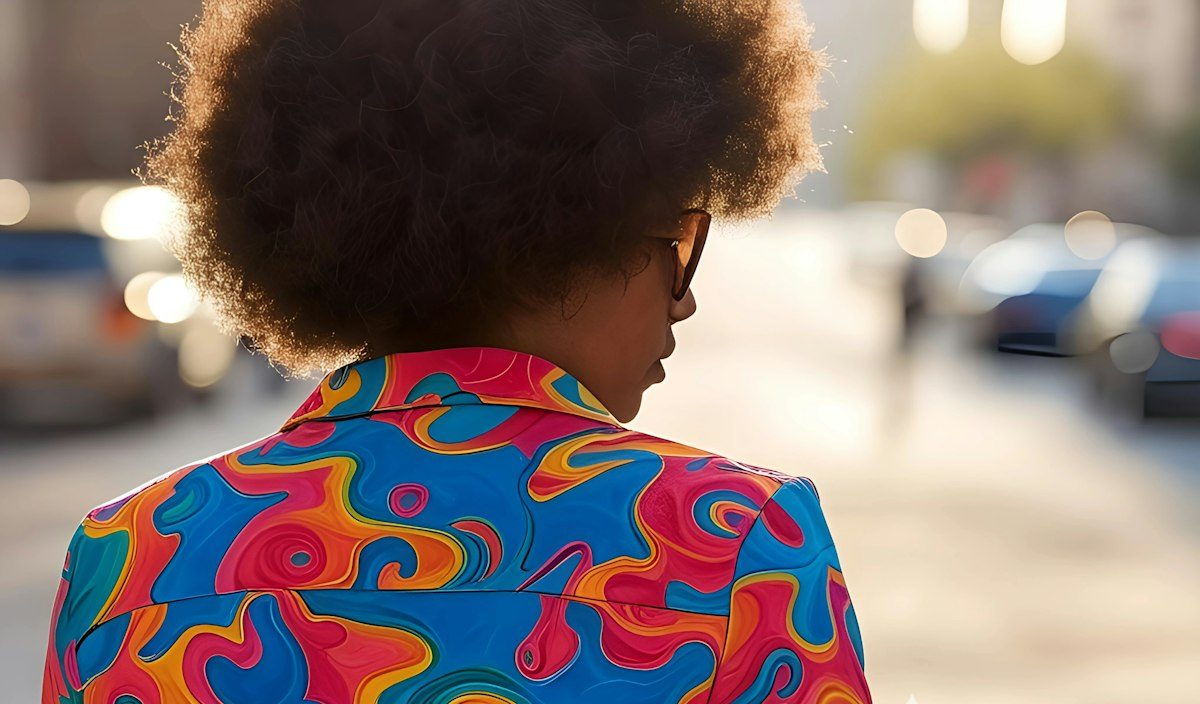
A brightly printed shirt can feel easy to admire and surprisingly difficult to put on. Several colours compete for attention, and every plain garment in the wardrobe starts to look either too dull or slightly wrong. Begin with a smaller decision: choose one plain bottom that lets you see the shirt clearly. You are building a wearable combination, so the useful question is how the colours and shapes work together in movement, rather than whether every detail matches a colour in the print.
Choose the part of the print you want to notice
Lay the shirt flat and step back far enough to see the overall effect. A print with tiny red flowers may read mainly dark blue from across a room. Another shirt may look almost solid at a distance until a bright collar or sleeve becomes visible. Name the colour that occupies the largest area and the accent you enjoy most. They are two different starting points, and either can guide the outfit without requiring you to repeat every colour.
Use an existing plain bottom for the first comparison. Dark trousers can connect to a dark background in the print; pale jeans can make the whole outfit feel lighter. If the shirt is mainly warm orange with small blue details, compare a quiet dark bottom with a muted blue one before choosing additional accessories. These comparisons reveal more than holding five unrelated garments beside the shirt at once. Keep the other variables steady until you can explain the difference you prefer.
Compare the amount of plain colour
Put on the shirt and the first bottom with ordinary shoes. Look at how much of each garment remains visible. A long untucked shirt may leave only a narrow section of trousers showing, while a full tuck creates a stronger division between print and plain colour. Neither arrangement is automatically better. Choose the one that gives you the balance you want and works for sitting, reaching and walking. A styling choice should survive those ordinary actions without continual rearrangement.
Try a second arrangement by changing only the shirt position. If you like the plain bottom but the outfit feels busy around the waist, leave the shirt untucked and compare the full shape. If the lower half disappears, try a normal tuck and check the side view. Avoid relying on a tiny front tuck that looks pleasing while standing but needs constant attention. The right amount of visible plain fabric can quiet a print without introducing another purchase or a complicated set of rules.
Let one accessory answer a specific question
Choose the bag you need for the day before choosing a decorative accent. Its size, strap position and colour will affect the outfit even if you wish it would disappear. A plain bag can provide a useful resting place beside a busy shirt. A coloured bag can repeat an accent when that is the effect you want. Put it on your shoulder and see where the strap crosses the pattern; a dark diagonal line may change the overall impression more than its colour alone suggests.
Now decide whether anything remains unresolved. Perhaps the outfit feels too dark at the face, or the shoes create a separate bright patch that you dislike. Answer that particular issue with an item you already own. Small earrings might finish the neckline, but a necklace, belt, scarf and coloured bag do not all need to prove that they understand the print. Try removing an accessory as readily as adding one. The shirt can remain the main visual interest while the outfit still feels complete.
Check the layer you will actually carry
Add the cardigan or jacket you expect to need. An open layer breaks a large printed area into a narrower central panel, which can make a shirt feel quite different. A closed coat may hide everything except the collar and cuffs. Check those smaller visible sections together instead of judging the outfit only with the coat off. If a brightly patterned cuff becomes the only accent, you may prefer quieter shoes or a different bag than you selected for the full shirt.
Think about the point in the day when the layer comes off. You should still like the underlying outfit, rather than depending on the jacket to cover a combination you find uncomfortable. Equally, the shirt does not have to show its complete design all day to justify being worn. A sleeve, collar or moving front panel can be enough. Let the actual indoor and outdoor arrangements guide the final choice, and keep both versions simple enough to manage without another mirror check.
Keep a useful record for next time
After an ordinary wear, write a short outfit note if the combination worked. Record the bottom, shoes and layer, plus the shirt position you used. A note such as dark straight trousers, plain shoes, open cardigan is easier to repeat than a photograph that depends on a particular pose. Add one specific observation if something needed adjustment: the bag strap covered the favourite part of the print, or the sleeves were awkward under the chosen layer. That gives the next attempt a clear starting point.
You can then try a second plain base without rebuilding everything. Keep the successful shoes and bag, change the trousers, and compare the result. This turns one printed shirt into a small set of understood combinations rather than a wardrobe puzzle that starts again each morning. Matching remains available if you enjoy it, but you do not need to extract an exact colour from every small motif. A clear plain starting point gives the print enough room to be worn in your own way.
Related reading
Adding Color Without Replacing Your Wardrobe, Is It a Wardrobe Gap or a Shopping Mood?.
Editorial & photography notes
Practical editorial guidance for ordinary situations. This article does not claim product testing or report current offers. Follow the relevant maker’s instructions for the items you use.
Illustrative stock photograph by Ampli Ficador: photo source. This scene does not identify our author or establish a product test.


