
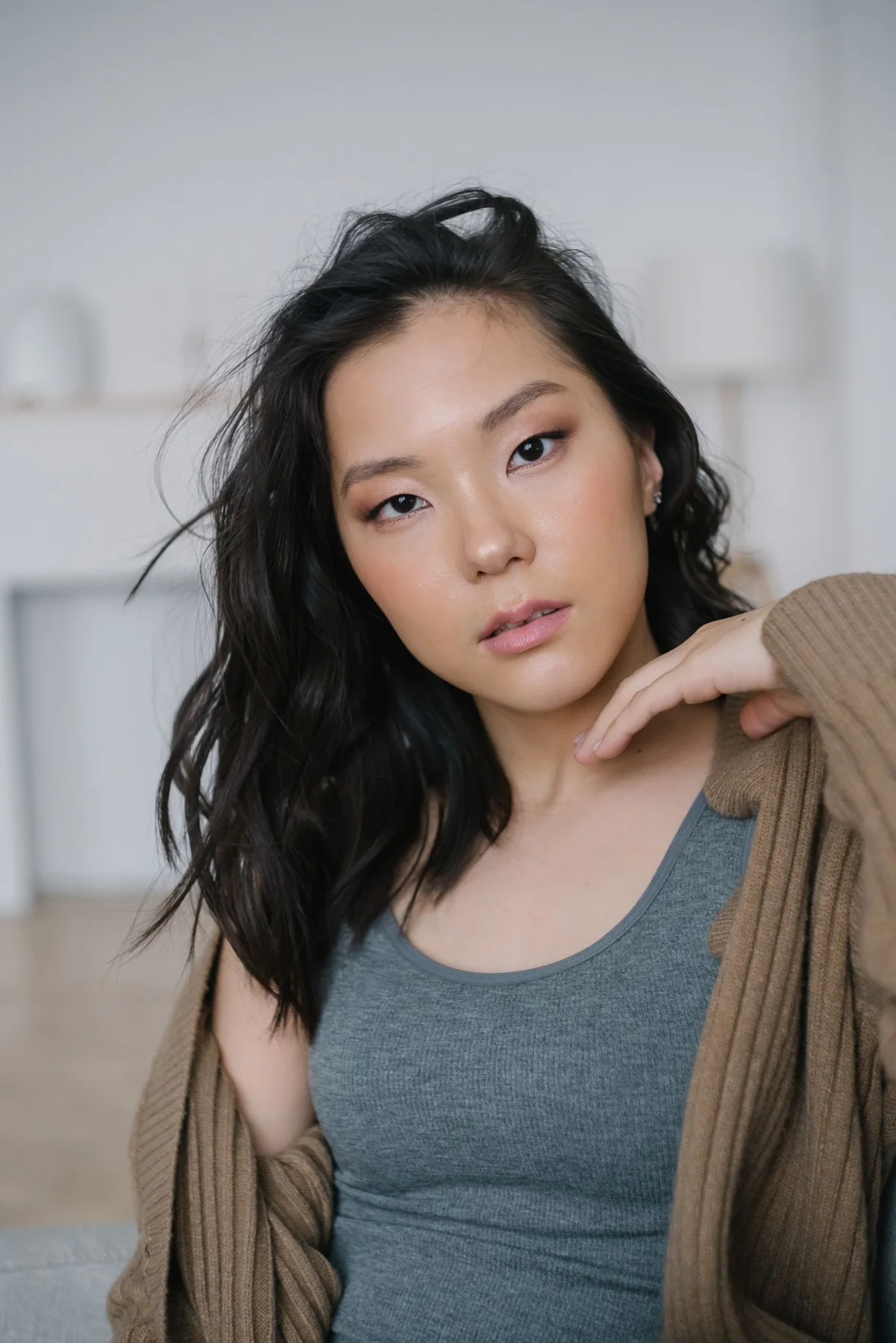
An open cardigan can be useful precisely because it does not need fastening. It can also become frustrating when its front edges slide away from the position you prefer and you spend the day drawing them together. Before searching for a clip or pin, establish whether the garment's intended shape matches the job you want it to do. A cardigan designed to hang open will not necessarily behave like one designed to close. Begin with the actual construction, the base top and the ordinary movements of your day.
Name the role you need from the cardigan
Decide whether it is providing a light indoor layer, a visible outfit detail or coverage during a particular part of the day. These roles can overlap, but they do not all require the front edges to meet. If you need a reliably closed front, compare a cardigan designed with that feature before asking an open style to perform it.
An open layer may work particularly well when the base outfit already feels complete. You can put it on or remove it without rebuilding the neckline. If the base top only feels wearable while hidden, that is a different outfit decision, and an unfastened layer may not provide the consistency you are looking for.
Let the shoulders settle first
Put the cardigan on without immediately pulling its front edges forward. Notice where the shoulder area settles and whether the back hangs comfortably. A deliberate relaxed shape can feel different from a garment that repeatedly slips out of position. Give the fabric a chance to rest before deciding which behaviour you are seeing.
Move gently through familiar actions such as reaching for a bag or sitting down. If the garment consistently travels backward or falls away from one shoulder, compare another size or cut where available. Continual adjustment may indicate that this particular shape is not the best match for the use you have in mind.
Choose a base layer that can stand alone
Look at the top underneath from the front and side while the cardigan hangs naturally. Check its neckline, sleeve relationship and waistband arrangement. A simple tank, shirt or other familiar top can provide a clear base, but it should suit the temperature and setting on its own if the cardigan is likely to be removed.
The two garments do not have to share the same hem length. Decide whether their different edges create an arrangement you enjoy and can maintain comfortably. If you need to keep pulling one layer over the other, try another base before assuming that a new accessory will solve the problem.
Use seated comfort as a separate check
Sit in the sort of chair you expect to use. Notice where the front edges and hem land, and whether you are sitting on part of the garment. A longer cardigan can be comfortable when arranged sensibly, but it may not be the easiest option for frequent movement between chairs or a close workspace.
Stand again without rushing and see whether the cardigan returns to a useful position. If the hem continually catches on the chair or the front folds into your working area, a shorter or differently shaped piece may be more practical. This is a choice about the day, not a judgment that one cardigan length is universally better.
Add the bag you intend to carry
Put the bag on with its usual contents and strap position. A shoulder strap can hold one side of an open cardigan differently from the other, while a crossbody strap may press the front edges into a new arrangement. Compare that version with the cardigan worn without the bag, particularly if you will be carrying it for much of the day.
Use the strap as intended and avoid making it excessively tight merely to keep knitwear in place. A different carrying position may help if the bag is designed for it. Otherwise, pair the cardigan with another bag or save it for a day when the competing layers are not required.
Treat extra fastenings as a separate decision
Do not assume that a pin, clip or improvised tie is suitable for the fabric simply because it appears to hold the edges together. Check the cardigan maker's advice and the fastening's intended use. Raised details, pressure and repeated contact can behave differently on different textiles, and an added closure can change the way the whole garment hangs.
If you want a permanent alteration, seek advice from an appropriate clothing professional before changing the piece. It may be simpler to use a cardigan designed to close. An open style does not need to be modified to justify its place in a wardrobe; it needs a role that suits the way it was made.
Keep the useful pairing ready
Read the item's care label. After suitable care and storage, keep a note of the base layer and bag that worked with it. The most helpful outfit memory includes those practical relationships, rather than only the colour of the cardigan. You can then reach for a known combination when the day calls for an easy removable layer.
Must an open cardigan meet at the front? No, unless that is part of its intended design. Can a belt change the silhouette? It can, but comfort and fabric suitability still need checking rather than assuming every cardigan should be belted. Is repeated slipping something to accept automatically? No; compare another cut or role. Choose the arrangement that lets you get on with the day without constantly holding the garment in place.
Continue the practical edit
Related reading: Desk to Dinner Without a Complete Outfit Change, Organize a Closet Before Buying Organizers.
Sources & further reading
Official information checked October 15, 2026. This guide presents research-based editorial advice, not a claim of hands-on product testing. Event details and stock information reflect that check date.
Illustrative stock photograph by Mikhail Nilov: photo source. This scene does not identify our author or establish a product test.


