
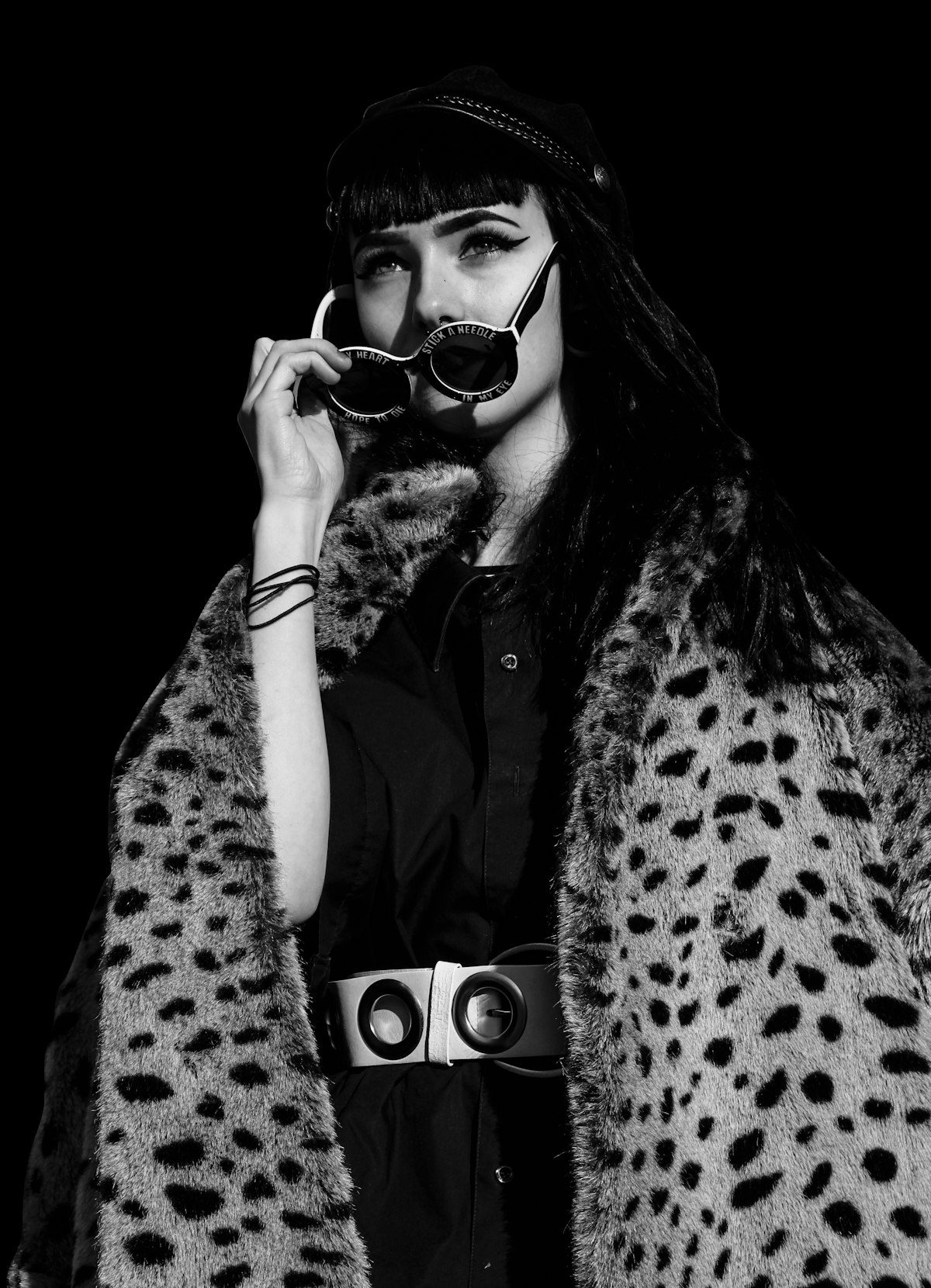
A leopard-print coat can provide most of an outfit's visual interest before a bag or piece of jewellery is added. That does not mean every other item must disappear. It means the coat gives you a clear starting point for deciding what the supporting pieces should do. Begin with a familiar plain outfit, then compare the accessories you actually use. The aim is a combination that remains easy to understand when the coat moves, closes or comes off, rather than a collection of quiet objects chosen only because the print feels bold.
Choose a base that works without the coat
Put on a simple top and bottom that you would happily wear indoors. They might be related dark colours, a light top with dark trousers, or a plain dress. Keep the base comfortable and complete before adding the coat. If the only reason you like an outfit is that the coat covers it, the indoor version may become an inconvenience. A useful starting combination should survive an ordinary visit, journey or meal when the outer layer is no longer needed.
Add the coat open and look at how much of the base remains visible. A dark central panel may make the print feel more concentrated at the sides. A pale top may draw attention to the neckline, while a contrasting bottom creates another clear division below. Choose one effect that you enjoy instead of trying to make the coat suit every possible base at once. This small comparison lets you separate a dislike of the underlying colour arrangement from a dislike of the printed coat itself.
Look at the neckline before adding jewellery
Notice the collar, the opening of the coat and the top underneath as one area. A coat with a broad collar already creates a strong frame around the face. A high plain neckline may make that frame feel clear; an open shirt collar may introduce a second set of edges. Compare the two if both are comfortable options you own. The most useful question is whether the lines sit together without continual adjustment, rather than whether the top is theoretically neutral.
Try the outfit without a necklace first. If you want another detail, add one familiar piece and see what changes from an ordinary viewing distance. A small pendant may almost disappear against the print, while a visible earring can add interest without crossing the coat opening. You may prefer either result or no jewellery at all. Choosing restraint can be a positive preference, but there is no need to remove everything by rule if a particular piece makes the outfit feel more like your own.
Give the bag a practical and visual role
Choose the bag according to what the day requires, then put it on as you will carry it. A dark plain bag can provide a clear shape beside the coat, while a coloured bag creates a deliberate second point of interest. Look at the strap as well as the bag itself. A wide strap across the front changes the visible print and may cover the part you enjoy most. A short handle creates a different relationship at the side of the body.
If you have two suitable bags, compare them without changing the base. One may be easier to manage but more visually noticeable; another may sit quietly while offering less useful capacity. Name that tradeoff rather than assuming the quieter one must be better. You can choose a more visible practical bag and keep other accessories simple. A real outfit should accommodate what you need to carry, rather than depend on a tiny decorative bag that leaves the ordinary contents to someone else.
Compare one accessory change at a time
Keep the coat, base and bag fixed while you try a scarf, hat or pair of sunglasses you already use. A second pattern can be enjoyable, but its scale and visible area matter. A small patterned scarf partly tucked inside the coat creates a different effect from a large printed panel across the chest. Begin with the simpler arrangement if you are uncertain, then add the second pattern deliberately. You will understand the result more clearly than if several accessories appear at once.
Pay attention to what remains visible when the coat closes. The neckline and accessories may become the main details above a broad printed area. A hat that felt like a small addition with the coat open can become a strong part of the closed silhouette. Check that version too, especially if it is how you will spend most of the journey. You do not need the open and closed outfits to look identical, but both should be combinations you are comfortable wearing.
Keep the successful version repeatable
Move through a few ordinary actions with the complete outfit: walk, sit, take the bag off and put it back on. See whether the accessories stay manageable and whether the coat returns to a comfortable position. An arrangement that requires you to hold a collar or keep a bag strap in one precise place may be less useful than a simpler option. Choose according to the real sequence of your day, and remove an accessory when it complicates that sequence without adding something you enjoy.
Finish with a short description of the version you liked: plain dark base, open coat, familiar side bag, one visible earring. The description helps you repeat the balance without copying an exact pose or shopping for a collection of matching items. On another day you can change one supporting piece and see whether you prefer it. The print remains a clear starting point, while the rest of the outfit develops through choices that serve both your taste and your ordinary needs.
Related reading
Adding Color Without Replacing Your Wardrobe, Choosing an Everyday Bag by What You Carry.
Editorial & photography notes
Practical editorial guidance for ordinary situations. This article does not claim product testing or report current offers. Follow the relevant maker’s instructions for the items you use.
Illustrative stock photograph by Philipp Arlt: photo source. This scene does not identify our author or establish a product test.


