
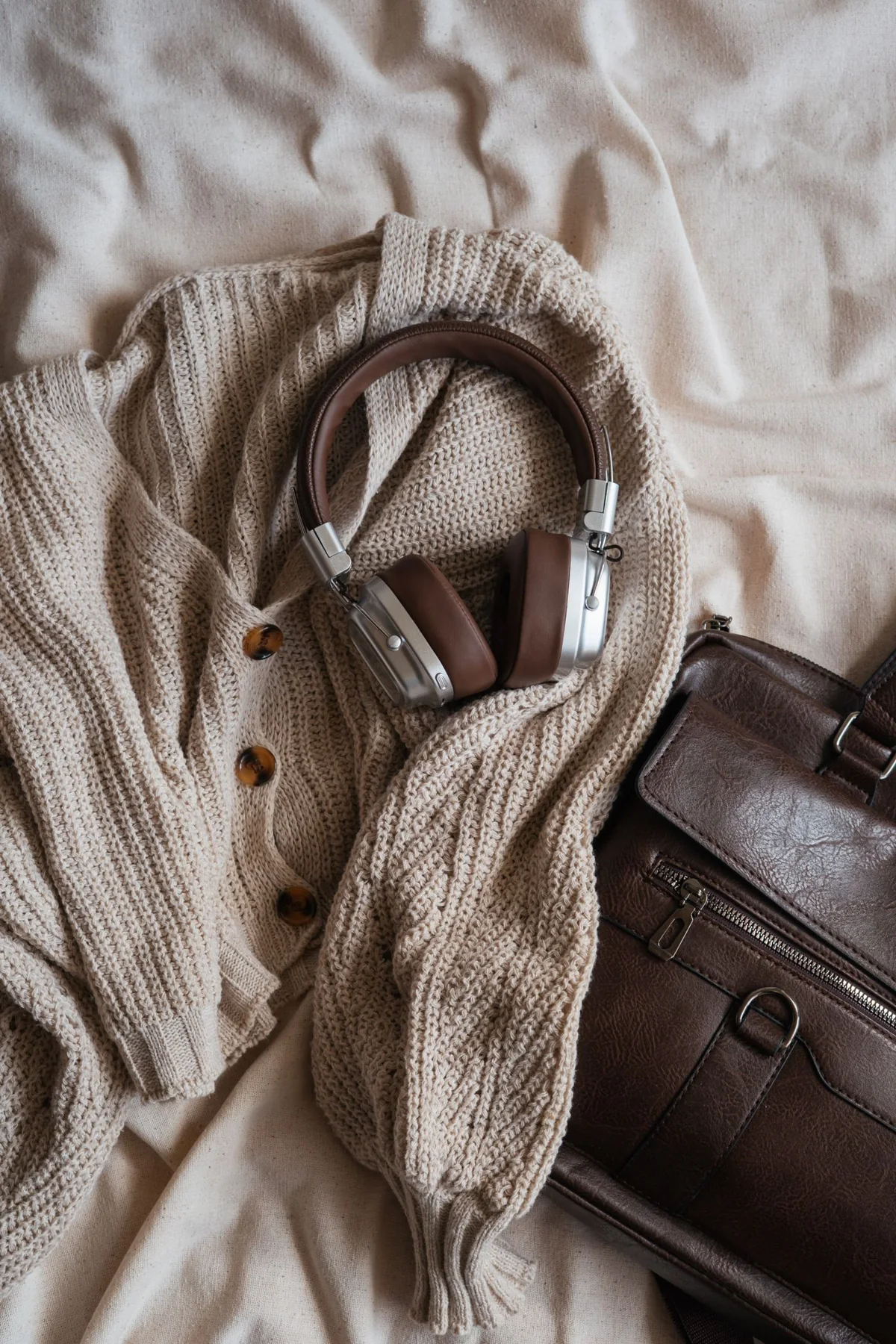
A knit top can feel comfortable on its own and become awkward when a bag enters the outfit. A cuff catches on a chain, a sleeve gathers beneath a strap or the shoulder repeatedly slips out of place. Try the combination with the bag you will actually carry rather than treating accessories as a final decorative decision. The useful check is about ordinary movement: reaching inside, putting the bag down and carrying it again without giving the knit constant attention throughout the day.
Start with the real bag contents
Pack the belongings that normally travel with you, keeping the load manageable for your own comfort. An empty bag can sit differently from a full one and may hide a strap problem. Put on the knit and any outer layer planned for the outing. Check the combination while standing naturally, without lifting a shoulder to keep the strap in a more flattering place. The outfit should support a relaxed posture, not depend on a pose you cannot maintain while walking or completing errands.
Look at the cuff where your hand works
Reach for the bag's opening and notice whether the cuff meets a zip, clasp or decorative fitting. A loose sleeve may be comfortable until it passes over a fastening repeatedly. Do not pull the fabric through a snag or keep testing a combination that catches. Separate the pieces carefully and follow their care guidance if anything is damaged. The aim is to identify an unsuitable pairing before it becomes a repair problem, not to prove that a delicate knit can tolerate every accessory in the wardrobe.
Check the strap across the sleeve and shoulder
Notice where the strap rests and whether the knit bunches underneath it. A wide sleeve or dropped shoulder can change that position compared with a fitted shirt. Adjust the bag through its intended fittings and see whether the movement improves. Avoid adding improvised attachments or forcing a strap into a position that makes carrying uncomfortable. If another bag already works well with the knit, try it before buying something new. A small change within your own wardrobe may solve the practical conflict.
Practise putting the bag down
Take the bag off and put it on again as you would at a table or shop counter. Check whether the cuff catches when your arm passes through the strap or whether the sleeve needs rearranging each time. The combination may be perfectly workable with one carrying method and awkward with another. Choose the method that suits the bag's design and your comfort. There is no need to insist on wearing it exactly as shown in a styling photograph if another intended arrangement works better in ordinary use.
Include the coat rather than checking it later
If you expect to wear a coat, repeat the useful movements with it on. A sleeve that feels easy beneath an open jacket may gather when the outer layer closes. Consider what happens when the coat comes off indoors and the bag returns to the knit directly. The day's outfit has several versions, and the useful pairing should work across the ones you will actually use. Test the common transitions rather than only the finished outdoor appearance beside the mirror before leaving home.
Keep a sleeve adjustment realistic
You may prefer to fold or push a cuff back, provided that suits the garment and feels comfortable. Try it through movement and see whether it stays in place without constant correction. Do not stretch or force the knit to make a temporary styling idea hold. If the cuff repeatedly falls into the same awkward position, choose a different sleeve or bag for the activity. A practical adjustment should reduce attention, not become a new task you perform every time you reach for your phone.
Decide which piece leads the outfit
When the pairing remains awkward, identify what matters most for the day. A bag needed for a specific load may deserve priority, while a favourite knit can lead an outing with fewer belongings. Neither piece has failed simply because they do not work well together. Keep a note or a quick outfit photograph if that helps you remember a successful combination. Avoid turning one incompatibility into a reason to replace several useful items. The wardrobe can contain different working partnerships for different ordinary situations.
Use comfort as the final styling check
Walk, sit and retrieve the item you use most often before deciding the outfit is ready. Notice whether the sleeve and strap stay out of each other's way without repeated lifting or pulling. If they do, leave the arrangement alone and enjoy wearing it. The strongest accessory choice is often the one that lets the clothing behave naturally. A knit cuff does not need to be perfectly displayed; it needs to let your hands do the day's work while the bag carries what you brought.
Continue the practical edit
Related reading: Choosing an Everyday Bag by What You Carry, A Garment-Care Kit for a Small Apartment.
Editorial & photography notes
Practical editorial guidance for ordinary situations. This article does not claim product testing or report current offers. Follow the relevant maker’s instructions for the items you use.
Illustrative stock photograph by hello aesthe / Pexels: photo source. This scene does not identify our author or establish a product test.


