A cookbook can be open on the counter and still be inconvenient to follow. The page closes when you look away, a photograph resembles the neighbouring recipe or a bookmark marks the book rather than the precise instructions you need. Before buying a stand, make the recipe easy to identify and consult in the actual preparation space. The useful arrangement keeps the right information findable without putting the book or the cook into an unsuitable working position.
Identify the complete recipe before beginning
Check where the instructions start and finish. A recipe may continue across a page turn, refer to a separate component or require information in another section of the book. Read that structure before preparing ingredients. A bookmark at the opening photograph does not guarantee that all the relevant instructions will remain visible when you start cooking.
Keep the title and page reference clear enough to distinguish the recipe from a similar one. If several people are helping, show them the actual instructions and explain which version is being followed. A shorthand name such as the usual cake may be understood differently by another household member. Avoid beginning with competing references that leave people uncertain about which quantities or steps belong to the agreed preparation.
Choose a suitable position in the real kitchen
Consider where you will consult the page in relation to the preparation task, while following the relevant equipment instructions and kitchen-safety guidance. Keep the book out of inappropriate heat, water and food-handling areas. Do not squeeze it into a gap that obstructs an appliance, a required route or a surface needed for the actual work. A visible recipe is useful only if its position also suits the kitchen.
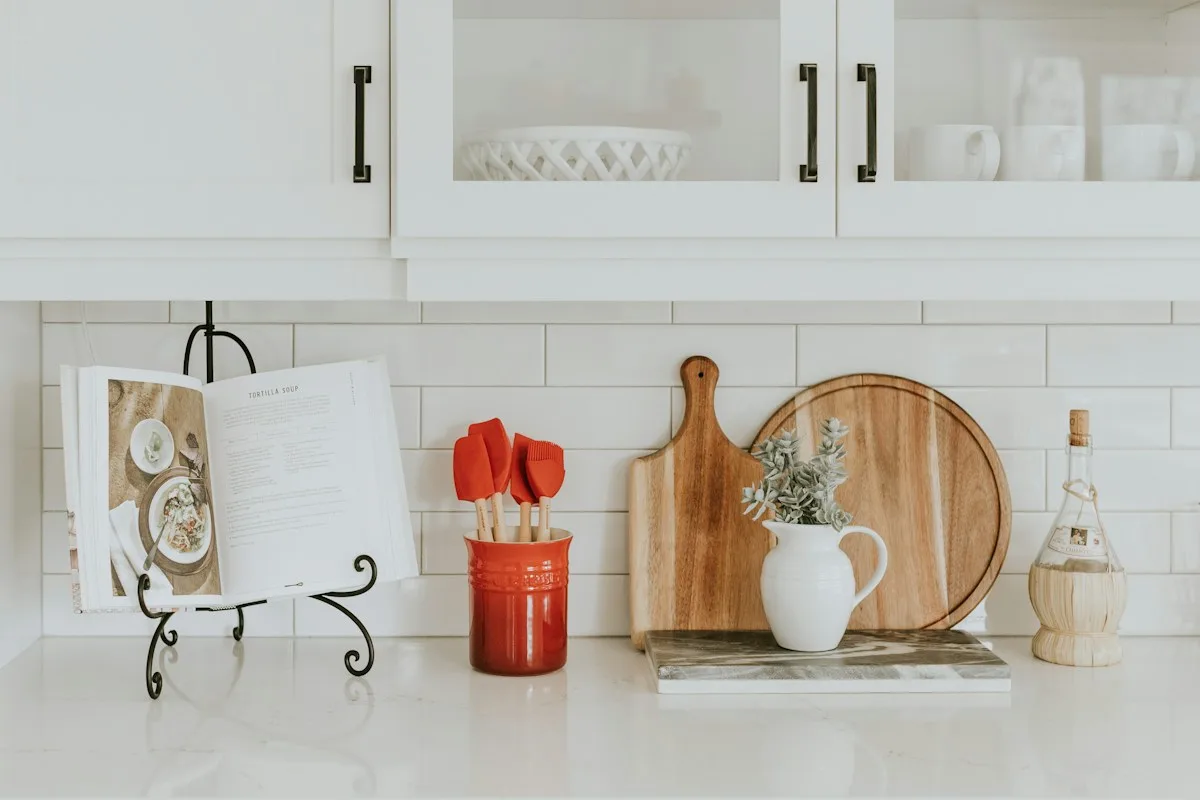
The guide to a clear kitchen landing surface offers a broader way to think about working space. For the cookbook, try a suitable existing position before adding equipment. You may find that a nearby surface provides a clearer view than the crowded counter where the book usually lands. Do not assume a staged kitchen photograph demonstrates a safe or usable arrangement.
Check how the book behaves when opened
Open the actual book at the chosen recipe and see whether it stays in a usable position. Its binding, page size and thickness may behave differently from another cookbook. Avoid forcing the spine or using an improvised weight that could damage the book or create a hazard. Follow any relevant care information, especially for a borrowed or valuable copy.
If a stand is needed, compare its supported book sizes, contact points and stability with the actual volume. Check that it does not cover important text or require an awkward page turn. A holder that looks elegant with a thin display book may be inconvenient with a heavy cookbook. Keep any purchase tied to that specific problem rather than the general idea of a more organised kitchen.
Mark the reference without obscuring it
Use a suitable removable place marker that does not damage the pages or hide an ingredient or instruction. If the recipe continues elsewhere, give that reference a distinguishable marker too. Keep the number of active markers low enough to understand at a glance. A book filled with identical tabs can make a simple page search more confusing than an ordinary page number.
Do not write permanent notes in a borrowed book or apply adhesive without the owner's agreement. Where you want to retain a personal adjustment, keep it separate from the original instructions and identify it accurately. A casual note should not silently change what another cook believes the author intended. The page marker's job is to find information, not to blur its source.
Plan a page turn before hands are occupied
Notice any point where you will need to consult another page while handling the preparation. Arrange a practical pause or another suitable way to access the reference, following appropriate hygiene and equipment guidance. Avoid relying on a rushed search through several pages while an active step needs attention. If the recipe's structure is awkward for the available space, choose a different preparation plan rather than improvising under pressure.
If you use an authorised personal note instead of the book at a particular stage, make sure it is accurate and complete for that purpose. Do not omit a safety instruction or a qualifying detail just to shorten the page. Respect the source's permitted use and avoid sharing copied recipe material beyond what is allowed. A convenient reference should remain a faithful one.
Return the book ready for another use
After the preparation, handle and store the cookbook appropriately for its condition and material. Remove temporary markers that no longer serve a purpose, and preserve any useful personal note in a clearly identified place. If the book belongs to someone else, the borrowed-book return guide explains why its ownership and return agreement should remain visible.
Keep one concrete observation for next time if it helps: a page-turn reference, a stand limitation or a better reading position. There is no need to document every movement in the kitchen. The goal is to consult the right recipe confidently, finish the task and leave the book as a usable source rather than another object that needs sorting before it can be opened.
Editorial & photography notes
Practical editorial guidance for ordinary situations. This article does not claim product testing or report current offers. Follow the relevant maker’s instructions for the items you use.
Illustrative stock photograph by Stock photographer: photo source. This scene does not identify our author or establish a product test.