
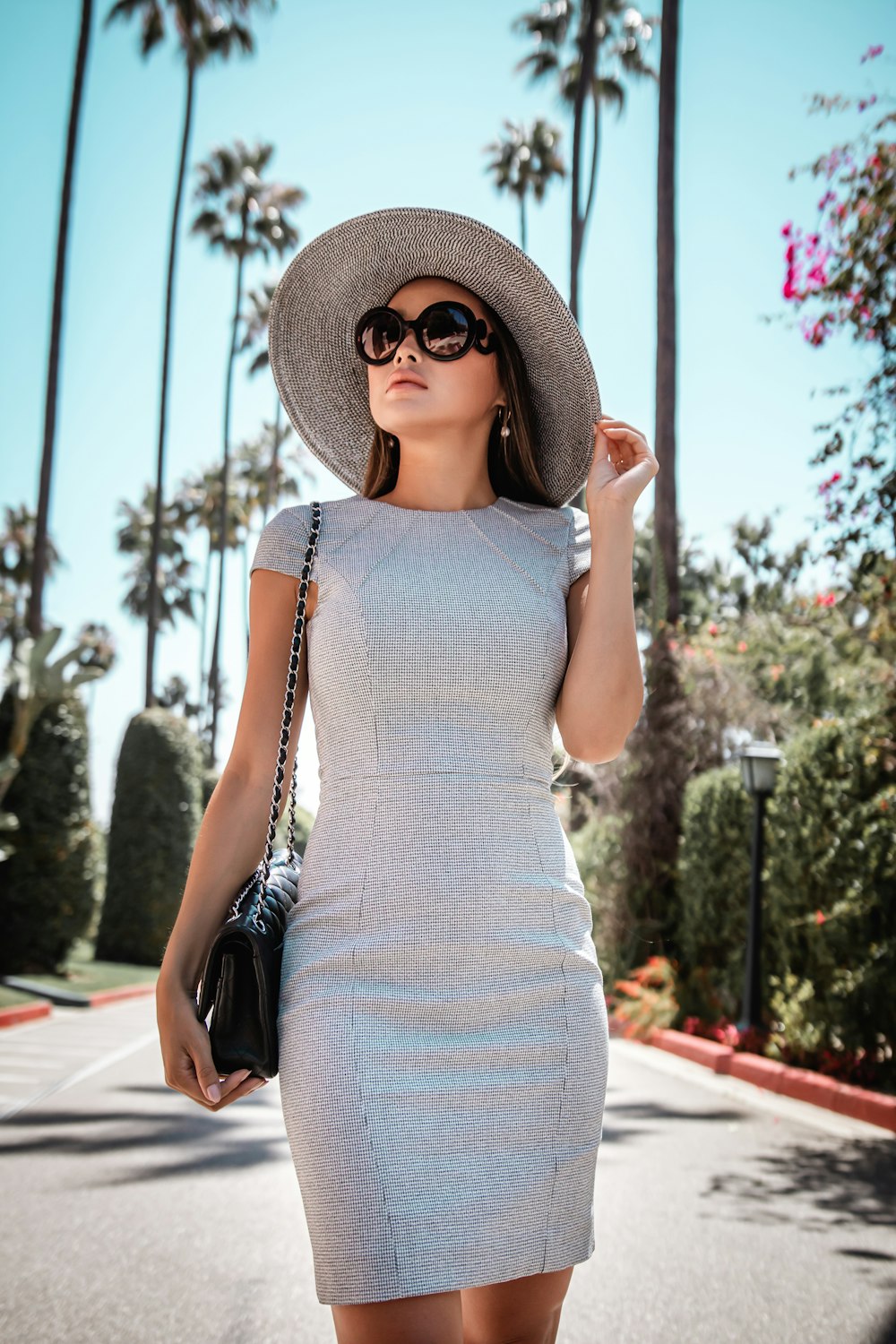
A simple dress and a sunhat can make an easy warm-weather outfit, but the two shapes need to be considered together. A broad brim changes the outline above the shoulders, while a high neckline, collar or fuller sleeve adds its own visible edges. Start with a hat that fits comfortably and suits the intended activity, then compare it with a dress you already wear. This is a styling exercise about the complete arrangement, so you can leave claims about a product's performance to its actual documented information.
Establish the dress on its own
Put on the dress with the shoes you plan to wear. Notice the neckline, the width of the shoulder area and any visible pattern or trim near the face. A plain sleeveless dress offers a different starting shape from a collared dress or one with gathered sleeves. Neither needs to be corrected. You are identifying what is already present so you can see what the hat adds, rather than assuming that every simple dress creates the same visual outline.
Choose one clear question for the comparison. You might want a quiet everyday combination, a more noticeable hat-led outfit, or an arrangement that remains easy to manage through a walk and a seated visit. Those are different priorities. A hat with a decorative band may provide all the detail you want beside a plain neckline, while a more understated hat can leave the dress pattern central. Naming the intended effect makes it easier to choose between options without relying on broad rules about proportions.
Look at brim and shoulders together
Put on the hat in its normal, comfortable position and let your shoulders relax. Look at the outline from the front, then turn slightly to see the side. Notice how far the brim appears to extend relative to the visible shoulder line and whether you enjoy that relationship. Avoid moving the hat into an impractical angle purely to improve a photograph. The useful version is the one you can see and move in normally during the activity for which you selected it.
Compare another familiar hat if you have a suitable one. Keep the dress, shoes and hairstyle arrangement reasonably consistent so the change remains understandable. A different brim or crown can make the same neckline look more open or more enclosed to you. You may prefer the first option once the entire outfit is visible. You may also find that one hat belongs with this dress while another works better with a shirt. That gives each item a practical role without requiring a new purchase.
Decide which neckline detail should remain clear
Look at the space between the hat and the dress neckline. A high plain neckline can create a continuous quiet area beneath a noticeable brim. A lower neckline can introduce more open space, while a collar creates extra edges. Choose the relationship you like rather than treating any one neckline as necessary. If a collar and hat band feel busy together, compare the collar in another normal arrangement or try a different dress you already own.
Add jewellery only after this comparison. A necklace may become less noticeable beneath a broad brim, or it may introduce a useful detail at a plain neckline. Earrings can also affect the overall balance, especially when the hairstyle leaves them visible. Try one familiar option and then look again without it. This small change is easier to judge than adding a necklace, large earrings and several bracelets together. The hat and dress may already provide enough interest for the outfit you want.
Include sunglasses and the bag you need
If you will wear sunglasses, try the actual pair with the hat. Check their practical fit together and whether the arms, hat position and hair feel manageable. Do not judge sunglasses by appearance alone or use a styling comparison to establish their suitability for your needs. Once you have suitable items, look at the combination as a whole. A strong frame and decorative hat band may create two noticeable details, which you can either enjoy or simplify according to your preference.
Put on the bag as you intend to carry it. A wide shoulder strap introduces another shape near a sleeveless neckline; a hand-carried bag keeps that area different. Choose according to the day's real carrying needs, then decide whether the colour and scale suit the outfit. A bag does not need to imitate the hat material to belong in the combination. Plain familiar pieces can work together through the overall colour relationship without becoming a matching set.
Check the transitions in the day
Think about sitting down, entering a room and taking the hat off. Decide where it can go without being crushed, forgotten or left where it inconveniences someone else. If you expect to carry it for much of the visit, that handling requirement may matter more than the initial mirror view. Consider the complete sequence rather than only the moment outdoors. A simpler hat or a different outfit may be easier for a day with repeated changes of setting.
Finally, check the dress without the hat again. You should still enjoy the underlying outfit when the accessory comes off. Record the combination if it worked, including the neckline, the bag arrangement and any jewellery you chose to leave out. That gives you a repeatable starting point for another warm day. The strongest pairing is the one whose shapes and practical details you understand, with enough flexibility to suit ordinary movement rather than a single carefully arranged pose.
Related reading
Warm-Weather Coverage Without Heavy Layers, What to Wear to a Backyard Celebration.
Editorial & photography notes
Practical editorial guidance for ordinary situations. This article does not claim product testing or report current offers. Follow the relevant maker’s instructions for the items you use.
Illustrative stock photograph by Corey Saldana: photo source. This scene does not identify our author or establish a product test.


