
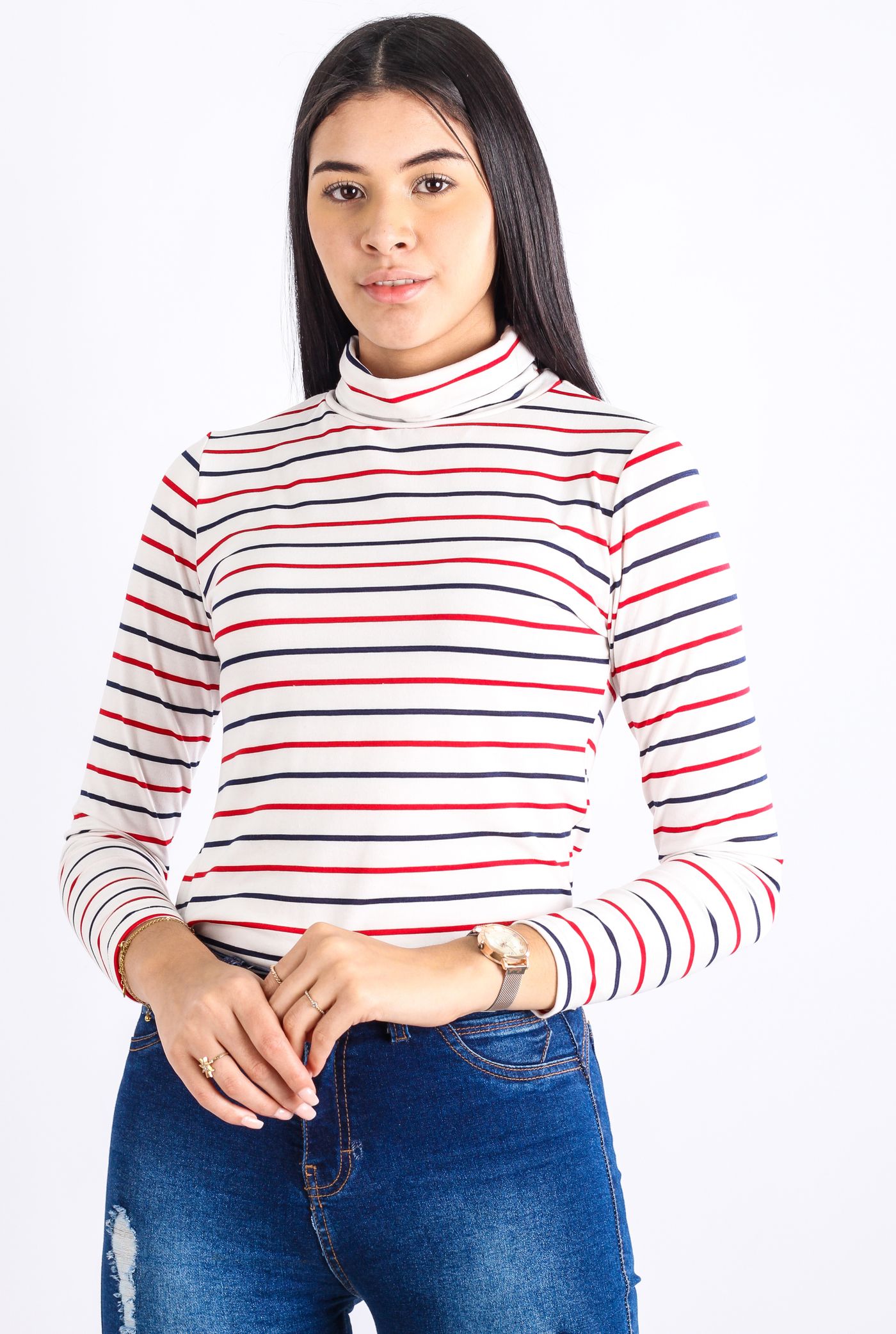
A striped top and jeans can be an easy combination, but photographs often make it look more automatic than it feels in a wardrobe. The stripe colours may not be what you expected, the neckline may introduce another strong line, or an added jacket may leave only a small uneven patch of pattern visible. Start with the top and denim you own. The aim is an outfit whose details feel clear to you, rather than a supposedly correct balance based on a fixed rule about the direction or width of stripes.
Identify the colours that are really present
Look at the top in ordinary daylight. A stripe that seemed black on a screen may be navy, while a pale background can be cream rather than white. These differences do not make the garment less useful, but they can change which familiar accessories you prefer beside it. Compare the actual pieces together instead of trying to remember their colours while shopping elsewhere.
Choose one colour relationship to begin with. You might repeat a darker stripe in a bag or keep the rest of the outfit quieter. An exact match is not required. The first comparison simply gives you a clear starting point, after which another colour can be added deliberately if you enjoy it.
Read the neckline as part of the pattern
A striped neckline, contrasting collar or wide ribbed edge can become a visible detail of its own. Put the top on and notice where the pattern ends around the neck. A high neckline and a lower scoop do not provide the same space for jewellery or an outer collar, even when the stripe repeat is similar.
Try the outfit without an additional necklace first. This makes it easier to see what the garment already contributes. If you add jewellery, compare it as a separate choice rather than assuming that a simple outfit must always have another focal point. A neckline that feels complete can be left alone.
Choose the denim shape for the activity
Use jeans suitable for the actual day, including the shoes and amount of sitting or walking involved. Straight, wide or more fitted denim can all work with stripes. What matters is the comfort and outline of the particular pairing, not a universal instruction to offset one direction of line with another.
Check the waistband with the top worn as intended. A tuck can expose more of the denim shape, while a top left out can create a different relationship between the hems and pockets. Try both where the garment's construction allows, then sit and stand before deciding which version you want to maintain.
Check what the sleeves are doing
Full-length sleeves create another area of pattern, particularly when the top is worn under a jacket or cardigan. Notice whether the visible stripes at the wrists feel intentional and whether the sleeves move comfortably inside the layer. The practical sleeve relationship deserves attention before the visual one.
If you prefer a cuff turned back, make sure the arrangement is comfortable and appropriate for the garment. Do not keep a tight roll simply because it shows the same amount of pattern on each side. Small differences during movement are normal; repeated pressure or adjustment is a more useful reason to choose another arrangement.
Add one outer layer at a time
Compare the jacket or cardigan you actually need. Look at the stripe area left visible when it is open, and at the neckline when it is closed. A layer can frame the pattern clearly or make it a quieter part of the outfit. Both results can work, provided the clothes remain easy to wear together.
Avoid collecting a series of alternative layers around the mirror without a purpose. If one is needed for weather or a particular setting, give that option priority. An attractive lighter layer can remain a separate outfit for another day, rather than competing with the practical garment that will ultimately leave the house.
Let the bag and shoes support the day
Start with a bag that carries what you need and shoes suitable for the activity. Their colour and texture can then be assessed beside the striped top. A quiet accessory may keep the combination simple; a different colour or texture can make it feel more personal. There is no obligation to turn every accessory into a matching set.
If another pattern is already part of a favourite bag or scarf, compare the actual pieces rather than rejecting the idea automatically. You may like the combination, or prefer to save that accessory for another outfit. The decision can be personal and reversible, without becoming a general rule about which patterns are allowed together.
Keep online comparisons tied to the exact garment
When considering another striped top, check the selected colour, fabric information and product photographs for that version. A listing can contain several variants. Record the details that matter to your intended pairing rather than assuming every photograph shows the item currently selected. The FTC's online-shopping guide offers further reading on evaluating descriptions and keeping useful purchase information.
Do horizontal stripes need a particular denim cut? No; compare the garments and your preference. Must the background of the top match the shoes? No. Should you replace a useful top because its stripe colour differs from a saved image? Only if the actual garment fails the role you need. A successful striped outfit is one you can repeat comfortably with the clothes and details that belong to your own day.
Continue the practical edit
Related reading: Adding Color Without Replacing Your Wardrobe, A Simple Kit for a Walk and a Few Errands.
Sources & further reading
Official information checked October 15, 2026. This guide presents research-based editorial advice, not a claim of hands-on product testing. Event details and stock information reflect that check date.
Illustrative stock photograph by Gustavo AC / Pexels: photo source. This scene does not identify our author or establish a product test.


