
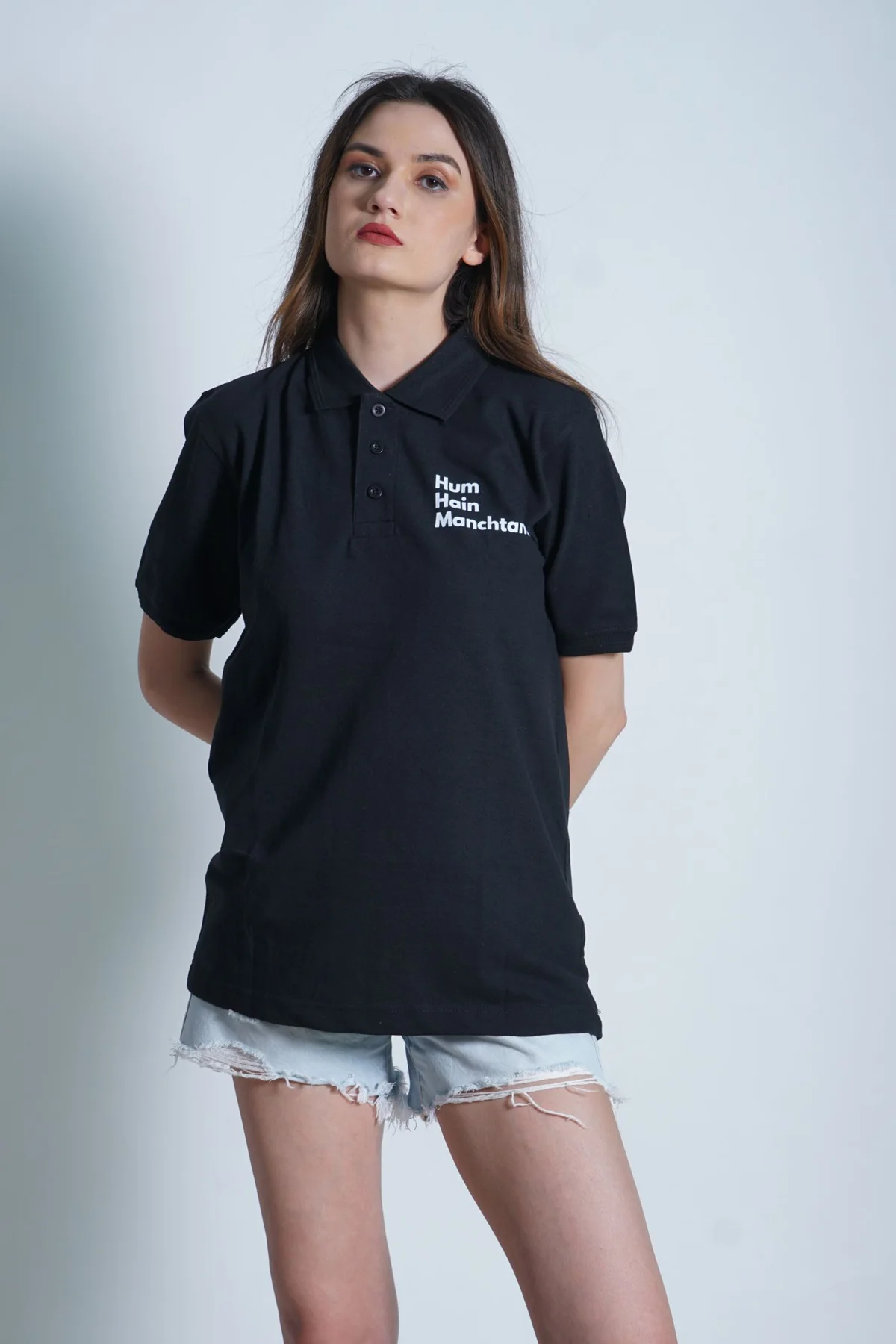
A polo shirt sits somewhere between a familiar T-shirt and a more structured top, but its collar changes how an outfit behaves. It can look tidy by itself and bunch under the layer needed for a cool morning. The useful question is not whether a polo is generally smart or casual. It is whether this particular collar, fabric and shape work with the trousers, jacket and movements of your own day. Begin with the complete combination and give the neckline as much attention as the colour.
Decide which layer has the main job
Choose the outer layer first when it serves a clear practical purpose. A jacket for a commute, a cardigan for an indoor room and a light overshirt for a changing afternoon create different amounts of space around the neck and shoulders. Put the polo underneath the one you expect to use, rather than choosing a photographically appealing pairing that will be replaced before leaving.
Notice whether the outfit needs to work both with and without the layer. If the jacket will stay on all day, the neckline relationship matters throughout. If it will be carried after arrival, give the polo's own shape a separate look. Both versions can be considered without adding another accessory to fill every visible space.
Let the collar sit before adjusting it
Arrange the collar as its design intends and allow the fabric to settle. Check whether its points lie smoothly, turn upward or disappear unevenly under the outer neckline. Some combinations simply provide too little space. Repeatedly pressing the collar into a preferred position is not a reliable substitute for a pairing that settles comfortably on its own.
A soft collar does not have to imitate a crisp shirt collar. You may prefer its relaxed outline. Similarly, a more substantial collar can be the detail that makes the polo feel complete. Evaluate the actual garment rather than expecting every item sold under the same name to behave identically.
Use the fastening as part of the neckline
Try the button arrangement you would normally wear. The opening changes the visible shape and can affect how the collar rests under another garment. Stay within the polo's intended design and choose the position that feels comfortable when seated. You do not need a formal rule about how many buttons should be fastened for every setting.
Look for pulling around the placket, especially after putting on the outer layer. If the fabric strains or the opening repeatedly twists, reassess the fit or the combination. A necklace or scarf cannot correct tension in the base garment; it may only make the area busier and harder to understand.
Check shoulder and sleeve space together
Move your arms through ordinary gentle actions such as reaching for a bag or sitting at a table. The polo should not become difficult to arrange every time the outer layer moves. Notice whether the sleeves collect under a jacket armhole or whether the shoulder seams of the two garments compete for the same position.
A heavier polo and a close-fitting jacket can be a poor pairing even when each item works separately. A roomier outer layer may solve the problem, while a different base top may be the simpler answer. Choose from what you own before assuming that the polo itself needs replacement.
Decide what happens at the waistband
Compare the polo with the trousers or skirt intended for the day. If the hem is designed to be worn out, observe where it rests after sitting and standing. If you prefer a tuck, check whether the fabric creates more bulk than you want. Avoid forcing a thick hem into a close waistband simply to reproduce an outfit seen elsewhere.
The lower half can provide contrast without turning the collar into a statement. Denim, tailored trousers and a relaxed skirt ask different things of the same top. A quiet base can make the polo easy to wear; a more structured lower half can give it a different role. Use the option that supports the actual appointment or activity.
Keep the care decision connected to the garment
Read the care label before deciding how the polo will fit into a routine. Fabric appearance alone cannot establish washing, drying or ironing requirements. GINETEX's care-labelling information helps explain why the instructions belong to the particular textile item. Follow those instructions and the maker's additional advice rather than trying to reshape an unfamiliar collar with improvised heat.
After appropriate care, inspect the collar and placket before putting the garment away. Store it in a suitable way that keeps the next wearing straightforward. If the collar consistently behaves differently after laundering, consider whether the garment's care needs and your available routine remain a good match.
Finish the outfit with the real departure check
Put on the bag and outer layer together. Check whether a shoulder strap presses the collar into an uncomfortable position or catches a sleeve. A small adjustment to strap placement may be enough, but an outfit that needs continual management may be better saved for another day. The useful final check is about ordinary handling, not a rigid pose.
Can a polo replace a shirt in every setting? The expectations of the particular occasion decide that. Must its collar remain visible under a cardigan? No; the combination can be quieter if you prefer. Should you buy a new layer to support one difficult top? First compare other combinations already available. Keep the polo pairing that makes getting dressed easier after the first impression has passed.
Continue the practical edit
Related reading: Relaxed Tailoring for an Ordinary Weekend, Warm-Weather Coverage Without Heavy Layers.
Sources & further reading
Official information checked October 15, 2026. This guide presents research-based editorial advice, not a claim of hands-on product testing. Event details and stock information reflect that check date.
Illustrative stock photograph by addy bronzzz: photo source. This scene does not identify our author or establish a product test.


