
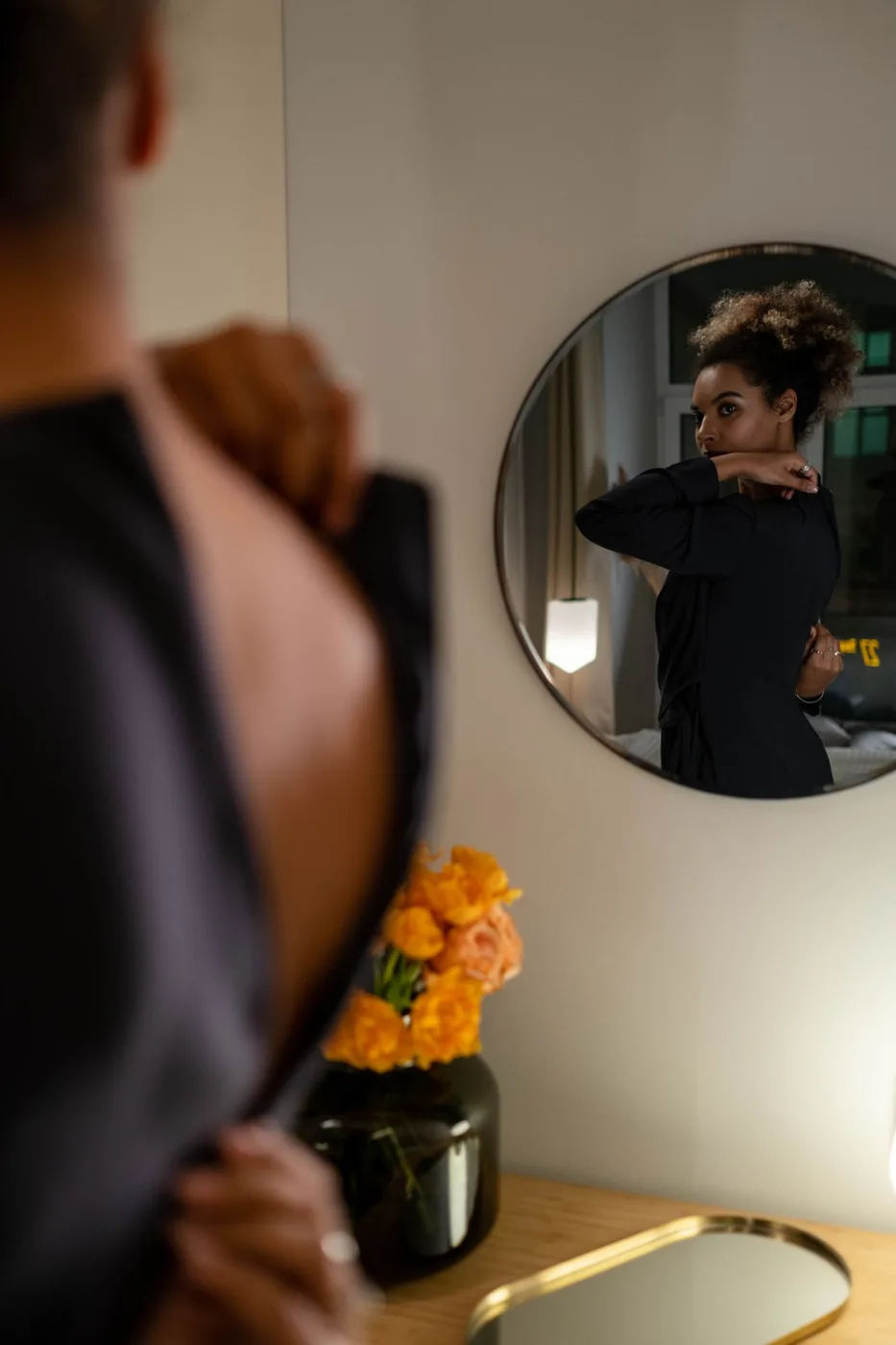
The back of an outfit can reveal a simple practical issue that is easy to miss from the front: a twisted collar, a caught hem or a bag strap pulling a layer out of place. A brief check can help, but it should not become a search for a perfect view of your body. Choose the information you need before turning towards a mirror. The useful result is an outfit that sits comfortably and lets you move, not a pose that has to be recreated throughout the day.
Name the practical question
Decide what you are checking. Perhaps a shirt has gathered under a jacket, a skirt fastening needs attention or a scarf sits differently than expected. A specific question keeps the process short and useful. Avoid beginning with the assumption that the back view must contain a problem simply because you cannot normally see it. Familiar clothing may need no more than a quick look after dressing. The check should serve an ordinary task rather than introduce a new standard of appearance you feel obliged to meet.
Choose a comfortable way to see
Use a suitable mirror arrangement that lets you look without twisting into an uncomfortable position. Keep the floor and surrounding space clear. If another person is helping, explain the practical detail you want them to check rather than inviting a broad judgement of the outfit. A simple description may be enough. There is no need to climb, balance equipment or rearrange heavy furniture for a better angle. If the available view is limited, work with a straightforward method that respects the room and your comfort.
Let the clothing settle naturally
Stand as you normally would and allow the garments to fall without pulling them into a flattering shape. Notice whether seams, collars and layers are sitting as intended. If something is caught, adjust it and look again briefly. Do not confuse ordinary fabric movement with a defect. Clothing changes as people move, and a perfectly still image cannot establish how an outfit will behave during a whole day. The practical question is whether the pieces cooperate without requiring continual attention from the person wearing them.
Include the outer layer and bag
Put on the coat or jacket and the bag you expect to carry. Check whether a strap lifts a hem, a hood bunches or one layer catches inside another. Try the combination with the outer layer open and closed where relevant. A back-view issue may come from an accessory rather than the main garment. Solve the interaction before deciding the clothing needs replacing. Moving a strap through its intended adjustment or choosing another familiar bag can be a simpler answer than buying a new outfit around an avoidable conflict.
Move before making the final judgement
Walk a little, sit and stand again, then check only the detail that concerned you. A hem may settle after movement, or a layer may repeatedly catch in a way that affects comfort. Use those observations to decide whether the combination is practical. Avoid repeating the movement solely to capture an ideal image. If the outfit feels comfortable and the issue is an ordinary fold, you may not need to change anything. The purpose is to understand use, not to eliminate every sign that fabric is being worn.
Separate a dressing adjustment from a fit decision
A twisted collar can be corrected while a garment that consistently pulls or restricts movement may need another kind of assessment. Consider appropriate alteration advice where useful, or choose a different piece for the day. Do not rely on repeatedly tugging the fabric into place if it immediately returns to an uncomfortable position. Equally, do not assume every crease requires tailoring. Name the effect on comfort or function first. That distinction makes any later decision about care, alteration or replacement more proportionate and easier to explain.
Keep photographs optional and private
If a photograph helps you understand a detail, use it deliberately and handle it according to your own privacy preferences. It is not necessary to document every outfit or compare the result with someone else's image. Camera position and lighting can affect what you see, so avoid treating one picture as an absolute verdict. A useful photo answers the practical question and then has done its job. The check should leave you with less uncertainty, not a growing collection of angles that create new reasons to hesitate before leaving.
End with the outfit in motion
Once the collar, hem or layering issue is resolved, return to a normal position and move on with the day. If a piece needs later attention, record that task briefly and wear a suitable alternative now. There is no requirement to solve every wardrobe question before breakfast. A good back-view check is modest and kind: it catches a real dressing detail, helps the clothes function and then stops. Your outfit should support the person moving through the day, without asking that person to remain a carefully arranged picture from behind.
Continue the practical edit
Related reading: When Tailoring Makes More Sense Than Replacing, Desk to Dinner Without a Complete Outfit Change.
Editorial & photography notes
Practical editorial guidance for ordinary situations. This article does not claim product testing or report current offers. Follow the relevant maker’s instructions for the items you use.
Illustrative stock photograph by cottonbro studio / Pexels: photo source. This scene does not identify our author or establish a product test.


