A few fresh herbs can turn a small kitchen task into a surprisingly scattered one. The packet is near the sink, the board is occupied by another job, the recipe is open across the only clear surface, and the prepared herbs have nowhere convenient to go. Before taking out another bowl, make a simple route from the ingredient to its intended dish. A clear preparation space does not need a large kitchen or a matching set of accessories. It needs appropriate handling, room for the actual task and a destination that is ready before you begin.
Confirm the task before arranging the counter
Read the recipe or plan for the meal and establish what the herbs are meant to do. A final garnish, a roughly prepared addition and a component used earlier in cooking can require different timing and amounts of handling. Identify the relevant part of the task rather than preparing the whole packet simply because it is open.
Keep the needed instructions where you can refer to them without covering the working area. A recipe on a phone, a printed page or an open book should have a suitable place away from the food-preparation surface. This reduces the need to move the same object repeatedly while your hands are occupied.
Use official handling guidance as the starting point
Follow the product's directions and the relevant food-safety guidance. The FDA advises washing produce under running water before preparing or eating it and does not recommend soap, detergent or commercial produce wash for this task. Its guidance also explains appropriate storage and the importance of clean hands and preparation surfaces.
Keep those handling decisions distinct from the organization of the counter. A neat arrangement does not establish that an ingredient is suitable to use. Where the product's condition, storage history or instructions are uncertain, resolve that question appropriately rather than treating a chopping board and a clear bowl as an answer.
Give the board a usable position
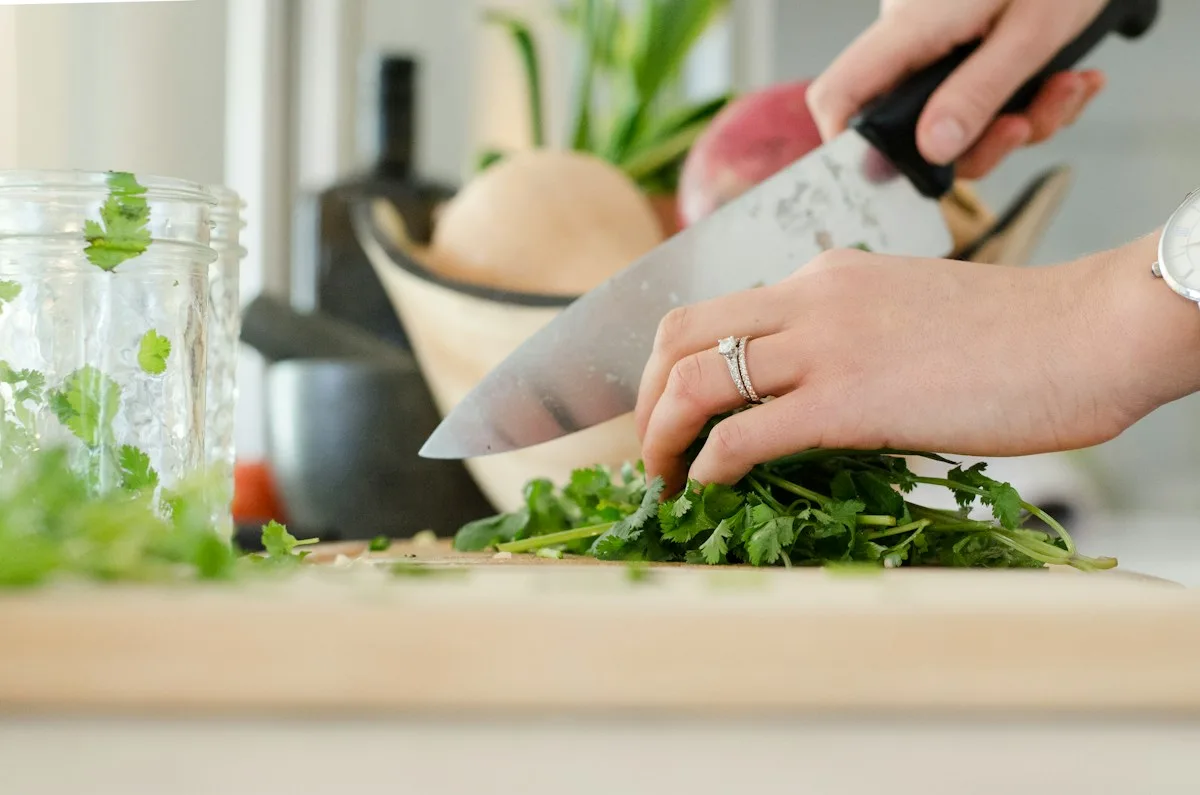
Choose a suitable clean board and place it where you can work comfortably within your normal kitchen arrangement. Follow the equipment's instructions and your familiar appropriate preparation method. Keep the space around it clear enough that a utensil, packet or other object does not have to be balanced along the edge.
Check the actual route between the sink and board. If it crosses another active food task, arrange the sequence so that jobs do not interfere with one another. Appropriate separation and handling still matter in a small kitchen. Completing one modest stage before starting another can be simpler than making every surface do several jobs at once.
Prepare the destination before chopping
Decide where the prepared herbs will go next. It may be an appropriate clean small container, a dish being assembled or the next stage described by the recipe. Put that destination within a manageable reach without crowding the board. The aim is to avoid finishing the preparation and then searching through a cupboard with food and utensils already occupying the available space.
Use only as much equipment as the task needs. A separate bowl can be helpful when the next cooking stage is not ready, but another bowl is not automatically an improvement. Choose a suitable destination based on timing and handling rather than the appearance of a fully laid-out preparation scene.
Keep packaging and unused ingredients identifiable
Give the opened packaging an appropriate temporary place where it will not cover the working area or be confused with waste. Keep relevant product information available, and return unused herbs to storage according to their instructions and appropriate food-safety guidance. Do not leave the whole packet on the counter merely because only a small portion was needed.
If the meal uses several similar-looking ingredients, keep their identities clear through the sequence. This can be as simple as arranging the suitable containers in the order you will use them. The purpose is to understand the task at a glance, not to create a permanent labeling system for one brief preparation stage.
Make the transfer part of the plan
Use an appropriate method to move the prepared herbs to their destination. Keep the action within the equipment's intended use and your normal competent handling. Clear the route before moving a container, and avoid carrying several unrelated items together simply because they all need to leave the board.
Notice whether the destination was genuinely convenient. If you repeatedly reach across another task or move the recipe to make room, adjust the arrangement for next time. A useful kitchen improvement can be a different order of actions rather than another purchase. The modest task gives specific information about where your current setup works and where it becomes awkward.
Finish with a manageable reset
Clean and put away equipment appropriately after the task, following relevant food-safety and product guidance. Restore the counter so that the next part of the meal has a clear beginning. A board left in place may still be needed, but that should be a deliberate decision about the next task rather than a forgotten end to the previous one.
Do fresh herbs need a special preparation station? Usually a suitable clear working area and correct handling are the more useful starting point. Must every ingredient have a separate decorative bowl? No; use equipment appropriate to the task and timing. What if the counter keeps becoming crowded? Review the sequence and destinations before buying more storage. A good landing space makes the ordinary meal easier to prepare while keeping the ingredient's actual handling needs in view.
Continue the practical edit
Related reading: A Weeknight Table You Can Set in Ten Minutes, A Small Dinner Party That Starts With What You Own.
Sources & further reading
Official information checked October 15, 2026. This guide presents research-based editorial advice, not a claim of hands-on product testing. Event details and stock information reflect that check date.
Illustrative stock photograph by Stock photographer: photo source. This scene does not identify our author or establish a product test.