
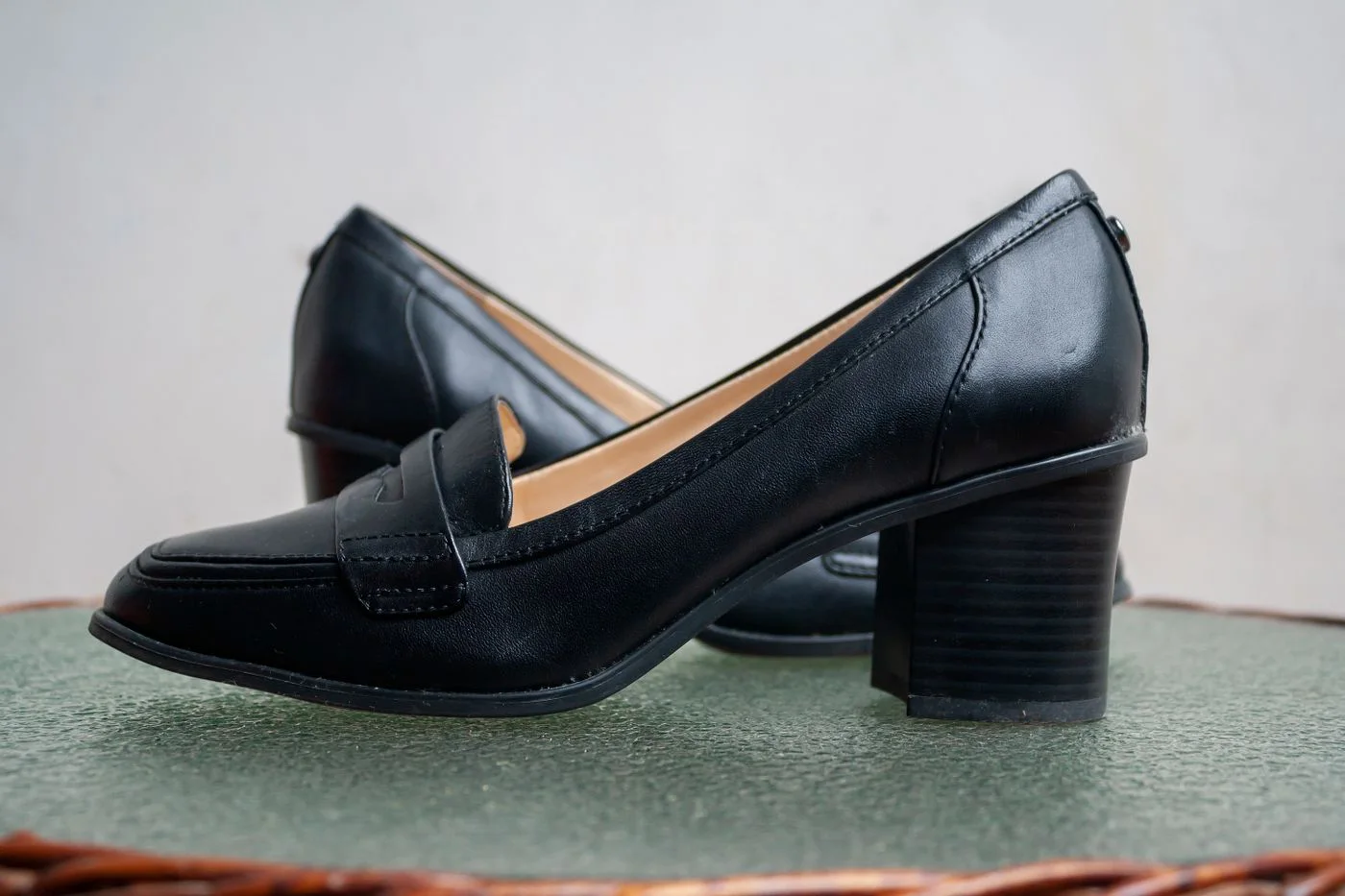
Two pairs of dark loafers can give the same outfit very different characters. One may look neat beneath straight trousers, while another feels more substantial with jeans or a short skirt. Colour alone does not explain the difference. The toe, sole, heel and amount of visible upper all contribute to the complete outline. Compare those features with clothes you actually wear before deciding that you need a smarter pair or a more casual pair. A useful description of the difference will make the next choice much clearer.
Begin with an outfit you understand
Choose a familiar combination and put on the first pair of shoes. Keep the trousers or skirt in its normal wearing position and include the socks or hosiery you intend to use. An empty space at the ankle, a dark sock and a pale sock can each change the impression, so decide which arrangement you are comparing. The shoes should already be suitable and comfortable for the intended use. This exercise concerns their place in an outfit, and cannot establish fit or replace a proper footwear decision.
Stand in an ordinary position and look at the complete lower half. Notice how much of the shoe appears beneath the hem. Wide trousers may leave only the toe and front edge visible; cropped trousers may reveal most of the upper. A detail that looks important when you hold a shoe may almost disappear once it is worn. That observation can help you decide which features matter for your wardrobe and which are mainly enjoyable details on the shoe itself.
Compare the toe as part of a continuous line
Look at the outline where the trouser leg leads into the toe. A rounded toe can create a different ending from a squarer or more tapered shape, even when the shoes have similar heels. You do not need to assign a universal meaning to each shape. Instead, name what you see in this particular combination. Perhaps the broader toe makes a narrow trouser leg feel more grounded to you, or a neater toe gives a wide hem a clearer finish.
Try the second pair without changing the clothes. Look from the same position and compare the visible length and width of the shoe below the hem. If possible, judge both complete pairs rather than wearing one different shoe on each foot and treating the uneven view as the final answer. The latter can reveal colour or construction differences, but a full outfit comparison is more useful for deciding what you want to wear. Walk a little between comparisons so the trousers settle naturally.
Notice the sole and heel together
Check the side view. A thicker sole can make the shoe more visible from the side, while a lower-profile sole may create a quieter transition from trousers to footwear. A block heel contributes another shape behind the upper. Look at those features together rather than labelling a shoe formal or casual from one detail. A polished upper over a substantial sole can combine contrasting qualities, and that contrast may be exactly what you enjoy in an everyday outfit.
Return to the activity ahead. A visually appealing shoe is only useful if it is appropriate for the walking, surfaces and conditions you expect. Do not infer performance from a thick-looking sole, a low-looking heel or a product photograph. Keep those practical suitability checks separate from the visual comparison. Once you have suitable options, you can choose between their different outlines without asking a styling preference to answer questions it cannot establish.
Give the trouser hem one deliberate comparison
If both pairs are suitable but neither looks quite right, compare another familiar trouser shape with the same top. A straight hem, a wider leg and a cropped cut expose different amounts of a loafer. You may discover that one shoe is useful with the jeans you wear often while the other suits your work trousers. That is a valuable distinction. A pair does not have to serve every possible outfit to have a clear role in a small wardrobe.
Check that the trouser length works with the selected shoe during normal movement. A hem that drags or catches needs a practical solution rather than a more flattering pose. If you are considering an alteration, discuss the actual shoes you plan to wear with an appropriate tailor before making the change. You can also keep a different pairing instead. Do not shorten a useful garment solely to rescue an outfit experiment unless the new length serves the way you will really wear it.
Decide how much coordination you want
A dark loafer can connect quietly to dark trousers or stand apart from a pale lower half. Both effects can be intentional. With a light outfit, check whether the dark shoe feels balanced by a bag, belt or visible layer you already need. You may enjoy that repetition, or you may prefer the shoe to remain the single dark detail. Compare a simpler arrangement before adding several accessories merely to justify the footwear.
Finally, give each successful pair a practical description: neat dark loafers for straight work trousers, or substantial slip-ons for cropped jeans and an open layer. The description is a memory aid, not a rule that prevents further experiments. It helps you recognise the role already filled before buying another pair in the same colour. A wardrobe becomes easier to use when similar-looking shoes have understood differences, and when those differences are connected to complete outfits rather than isolated product details.
Related reading
A Better Fit Checklist for Shoe Shopping, Getting Dressed for a Creative Office.
Editorial & photography notes
Practical editorial guidance for ordinary situations. This article does not claim product testing or report current offers. Follow the relevant maker’s instructions for the items you use.
Illustrative stock photograph by Arturo Añez: photo source. This scene does not identify our author or establish a product test.


