
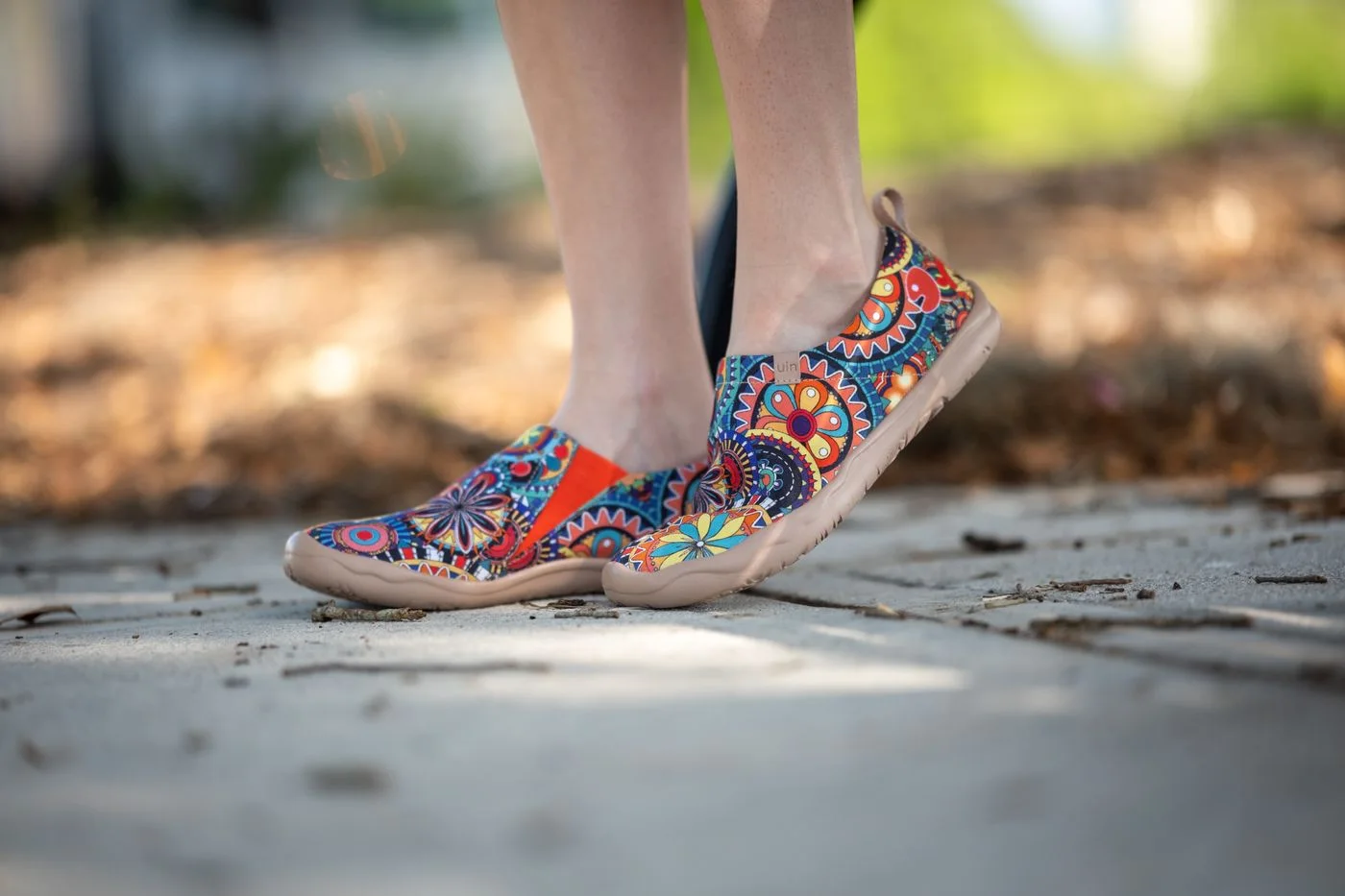
Colourful shoes can make familiar plain clothes feel different without asking every garment to become brighter. The difficulty often begins when you try to coordinate everything around them: one shoe contains several colours, so suddenly a bag, belt and jacket seem to need a separate matching task. Give the shoes a clearer role. Choose a practical plain outfit you already enjoy, put the complete combination on, and decide how much of the footwear you actually want to see before adding any new accents.
Choose the day before choosing the colours
Start with footwear that is appropriate and comfortable for the day's activities. A visually exciting pair is only a useful starting point when it suits the walking, surfaces and setting you expect. Keep that practical decision separate from the colour experiment. Once the shoes are suitable, choose the plain clothes you would otherwise wear for the same day. They provide a real base rather than an imagined outfit assembled around a photograph of the shoes alone.
Try the shoes with the intended socks or other normal wearing arrangement. Sock colour and visible length can become part of the outfit, especially with cropped trousers or a skirt. Use the version you will genuinely wear instead of hiding an ordinary sock choice during the mirror check and adding it back at the door. The complete lower half should make sense together, with enough room for movement and no garment requiring an impractical adjustment just to reveal a favourite part of the shoe.
Decide how much shoe should remain visible
Look at the hem first. A wide, longer trouser leg may show only the toe and the front edge of the sole. Cropped trousers or a skirt can reveal most of the patterned upper. These arrangements give the shoes different levels of attention. If you wanted a small flash of colour, the first may be enough. If you enjoy the full pattern, choose an existing garment that leaves it visible comfortably, rather than rolling or pulling a hem into an awkward position.
Walk a few steps and see where the fabric settles. A hem that covers the shoes at rest may move and reveal them as you walk, which can be part of the appeal. You do not have to maintain a constant display. Check for practical problems such as dragging or catching, and resolve them through an appropriate pairing or alteration decision. The visual goal should not depend on a trouser leg being held in place or on standing with the feet in one particular arrangement.
Compare a dark base with a light base
If you have suitable options, try a familiar dark outfit and a familiar lighter one. The same colourful shoe can look more concentrated against one and more conspicuous against the other. Notice the overall effect from an ordinary viewing distance rather than studying the print at close range. You may find that a shoe with a dark background connects easily to dark trousers even though its smaller details are bright. Another pattern may feel livelier when the clothing stays pale and simple.
Choose the version that suits your intended mood, then stop changing the entire outfit. A quiet base does not have to be black, white or an exact colour from the shoe. Plain navy, gray, cream or another colour you already wear may create a relationship you enjoy. The useful comparison is between actual garments, because their surface and shape contribute as well. Two plain pieces with similar colour names can still produce different effects when one is loose and textured and the other is smoother and more structured.
Give the bag its ordinary job
Add the bag you need and see whether the outfit still feels clear. A plain familiar bag can let the shoes remain the main patterned detail. A coloured bag can create a second point of interest when you want one. Neither needs to reproduce the full shoe palette. If the bag is practical but visually prominent, consider keeping the rest of the accessories simple instead of replacing a useful item solely because it refuses to disappear beside the footwear.
Try one small colour repetition only if it answers a preference you can name. A top that picks up a minor shoe colour might connect the upper and lower parts of the outfit. A scarf may be enjoyable when the weather and activity suit it. Compare the outfit without that repetition too. Sometimes the shoes look more interesting when they remain a separate detail. Matching is an available design choice, not a requirement that every colour appearing near the feet must reappear near the face.
Check the actual outer layer
Put on the jacket or coat you will wear. Its length and colour can change the amount of plain fabric between the shoes and the rest of the outfit. A long dark coat may create a clear continuous shape above bright footwear; a shorter layer may leave a stronger division at the waist. Look at both the open and normally fastened versions if you will use them. The shoes can remain useful even when their role changes slightly between the indoor and outdoor outfit.
Keep a note of the combination after wearing it, including the hem length and sock arrangement that worked. Those details are easier to forget than the obvious shoe colour. If the outfit felt too busy, identify the extra element you would remove next time rather than abandoning the shoes altogether. If it felt pleasingly simple, repeat it. Colourful footwear becomes easier to use when you understand one reliable base and can vary it gradually, instead of rebuilding the whole wardrobe around every colour in the print.
Related reading
Adding Color Without Replacing Your Wardrobe, A Better Fit Checklist for Shoe Shopping.
Editorial & photography notes
Practical editorial guidance for ordinary situations. This article does not claim product testing or report current offers. Follow the relevant maker’s instructions for the items you use.
Illustrative stock photograph by Connor Scott McManus: photo source. This scene does not identify our author or establish a product test.


