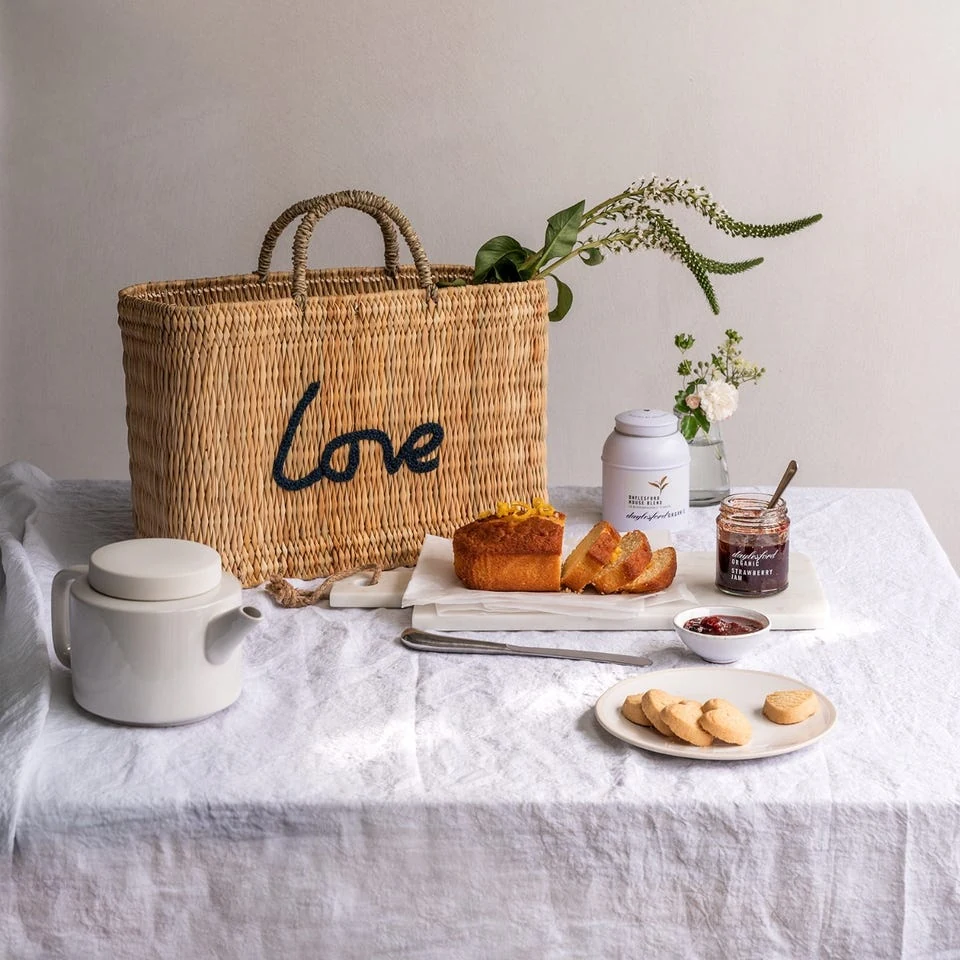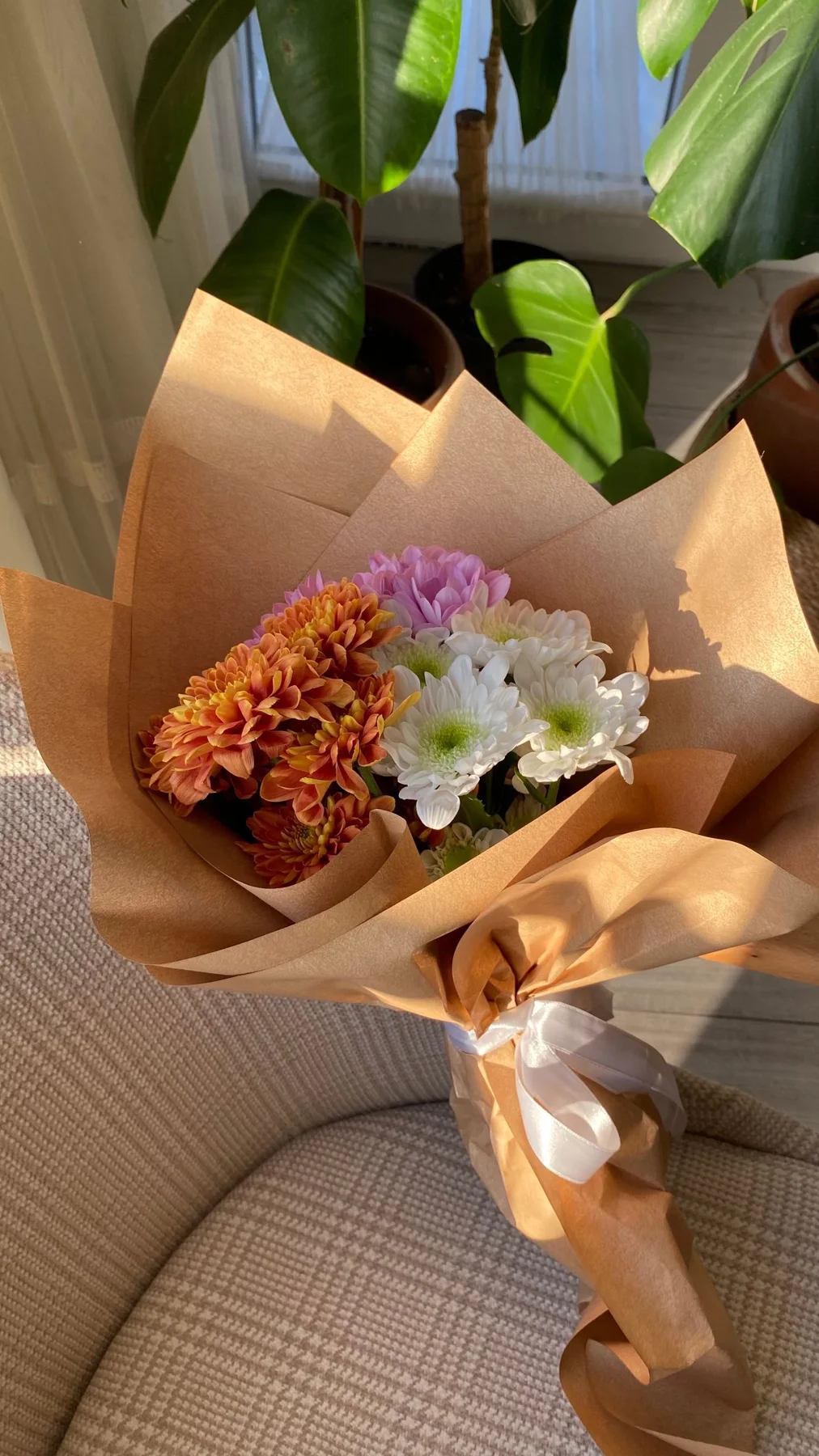
A bouquet can arrive beautifully wrapped and immediately create several small household tasks. The flowers need an appropriate destination, the care information may be tucked inside the paper, and the packaging occupies the only clear surface while guests are arriving. A simple handover keeps the gift enjoyable without turning its arrival into a rushed arrangement project. Begin with a suitable clear place and the instructions that belong to the actual flowers. The wrapping is part of the presentation, but the next stage should serve the flowers and the household receiving them.
Give the bouquet a clear arrival place
Choose a suitable surface where the flowers and packaging can be handled without competing with food preparation, paperwork or a crowded doorway. The right location depends on the actual bouquet and its supplied arrangement. Do not assume every wrapped bunch can be stood upright or set down in the same way.
If the bouquet is already arranged in a particular container or water system, follow the florist's instructions before removing components. Presentation features may have a practical purpose that is not obvious from the outside. Clarify an unfamiliar arrangement rather than dismantling it simply because the paper is the first visible part you want to remove.
Find the care information before sorting the wrapping
Look for the florist's note, plant information and any supplied care product. Keep them connected to the flowers while you establish the next step. A small sachet or label can be mistaken for loose packaging when the bouquet arrives during a busy visit.
Read the directions for the actual flowers and supplied products. If the species or requirements are uncertain, ask the florist or an appropriate reliable source. Do not apply an unfamiliar treatment because it was useful for a different bouquet. The practical handover begins with understanding what has arrived rather than assuming all cut flowers need an identical routine.
Prepare a suitable vessel and working area
Choose a vessel appropriate to the arrangement and follow relevant care guidance. The Royal Horticultural Society recommends clean vases and gives advice on preparing cut stems, including removing foliage that would sit below the water level. Use guidance suitable for the actual flowers rather than treating a decorative container as automatically ready for use.
Set out only the suitable equipment required for the task and handle it appropriately. A clear destination for the prepared stems makes the sequence easier. Avoid beginning an elaborate arrangement while still searching for a container, because the unfinished steps can spread across several surfaces before the flowers have a settled place.
Separate practical wrapping from keepsake details
Keep a gift message or other wanted paper detail aside before deciding what happens to the packaging. Check whether a tie or support belongs to the supplied arrangement and follow the florist's guidance before removing it. The purpose is to avoid losing something meaningful or disrupting a component whose role you have not yet understood.
Once the practical needs are clear, decide what packaging is actually worth retaining. A clean suitable sheet of paper may have another non-food use, while damp or damaged material may not. Follow relevant local disposal guidance for the actual materials instead of assuming that everything with a paper-like appearance belongs in the same waste stream.
Choose a display position for ordinary use
Consider the actual flowers, their guidance and the room's normal activities. The arrangement should have a suitable stable destination that does not need to be moved repeatedly for meals, work or opening a cupboard. A prominent centre position can be attractive while still being the wrong practical place for the household that day.
Think about the view from where people sit, not only from the doorway. A lower or simpler arrangement may be easier to enjoy during conversation, while another bouquet may suit a separate surface. Let the flowers' actual form and requirements lead rather than forcing every gift into a vase chosen for a different shape.
Leave the next care step understandable
Keep the relevant instructions available and establish who will manage the ordinary follow-up. The task does not require a complicated chart, but it should not depend on one person remembering a detail read quickly while the packaging was being removed. A short note about the florist's directions can be enough where several people share the home.
Use the appropriate care guidance over time rather than treating the arrival arrangement as finished permanently. The RHS provides further reading on conditioning and maintaining cut flowers. Its advice is a reference for suitable care, not a guarantee that every bouquet will last a particular number of days in every room.
Keep the gift's role proportionate
A bouquet does not need a new vessel, another decorative accessory and a redesigned tabletop to be appreciated. Use an appropriate item already available when it serves the flowers well. If a different vessel is genuinely needed, identify the practical reason before purchasing rather than buying a whole arrangement to reproduce the original presentation photograph.
Must every part of the wrapping come off immediately? Follow the actual arrangement's instructions. Should every bouquet be divided into several vases? Only if that is suitable and you prefer it. Does a gift card need to remain attached to the flowers? It can have another clear destination once the message has been enjoyed. A successful handover leaves the flowers appropriately settled, the useful information retained and the household free to enjoy the gift.
Continue the practical edit
Related reading: Daylesford Hampers: Thoughtful Gifts With a Life Beyond the Basket, A Small Dinner Party That Starts With What You Own.
Sources & further reading
Official information checked October 15, 2026. This guide presents research-based editorial advice, not a claim of hands-on product testing. Event details and stock information reflect that check date.
Illustrative stock photograph by Esra Karakulak: photo source. This scene does not identify our author or establish a product test.