
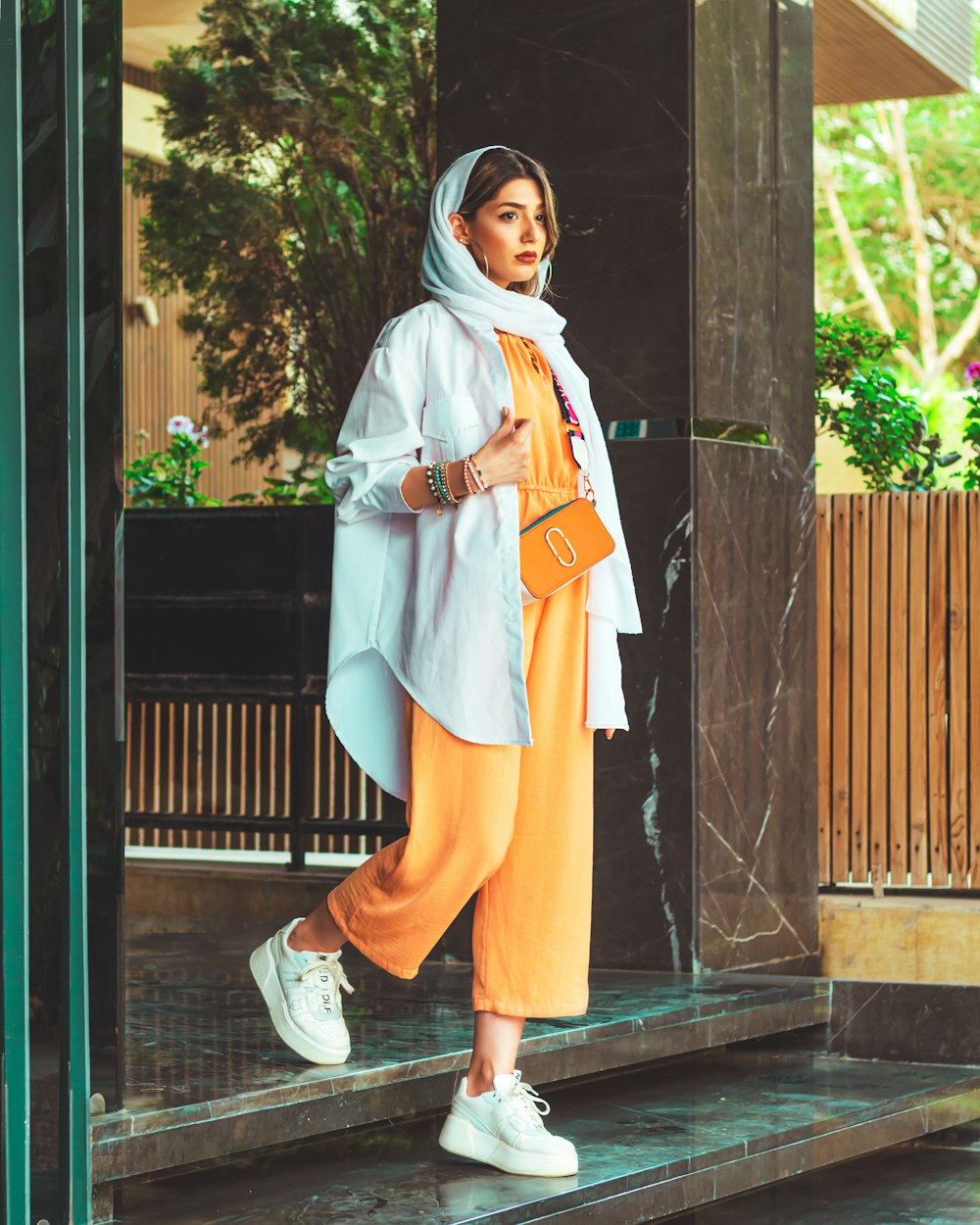
A blue shirt and warm-coloured trousers can make an ordinary outfit feel more deliberate without requiring a complicated collection of accessories. The challenge is that colour names are imprecise. One blue is pale and soft, another is deep and clear; trousers described as rust, orange or mustard can look different in the light at home. Begin with the garments themselves. You are choosing a combination you enjoy and can wear comfortably, rather than trying to reproduce a screen image or apply a fixed colour formula to every shade.
Compare the pieces in the same light
Place the shirt beside the trousers before adding other items. Use ordinary daylight where available and look again in the indoor light where you normally get dressed. This makes it easier to see the actual relationship than comparing photographs taken in different rooms or remembering the colour of a garment left in a wardrobe.
Notice what feels prominent to you. The trousers may carry most of the visible colour, or the blue may become the clearer part of the outfit. Neither result needs correction automatically. Your first decision is simply whether you like the two actual shades together, without a saved outfit photograph telling you what they ought to look like.
Give the shirt a clear wearing role
Decide whether the shirt will be worn fastened, partly open as intended or as an open layer over a complete base top. These arrangements show different amounts of blue and can change how the trouser colour reads. Try the version you expect to maintain during the day rather than arranging the shirt for a brief photograph.
If the shirt is open, choose the base layer before evaluating the whole colour combination. A base close to the trouser colour can create continuity, while a quieter contrasting top can make the separate layers more visible. Compare what you already own and stop when the arrangement feels clear enough for your purpose.
Check the proportions with the waistband
Put the outfit on with the trousers at their intended waistband position. A long shirt worn out can cover much of the trouser shape, while a tuck can reveal more of the waistband and pockets. Fabric weight matters here as a practical observation: a substantial shirt may create more bulk inside the waist than you want.
Sit and stand in the chosen arrangement. If a partial tuck needs continual rebuilding, a fully untucked or fully tucked version may be easier, provided the garment is suitable for it. There is no requirement to preserve a particular styling detail when it makes a comfortable combination inconvenient to wear.
Let the shoes solve the day's main task
Choose shoes appropriate for the planned activity before assessing their colour. A familiar comfortable pair is a useful starting point because it removes one uncertain part of the outfit. Compare how its visible shape meets the trouser hem, including whether the fabric falls where you expect when standing and walking.
The shoes can be visually quiet or intentionally contrasting. They do not have to repeat an exact colour from the clothes. If one pair seems to introduce more detail than you want, compare another suitable pair already available rather than assuming the outfit requires a new neutral shoe in a very specific shade.
Add a bag without building a matching set
Use a bag that carries the actual contents of the day. Put it on in its intended position and notice the area of the shirt or trousers it covers. A crossbody bag can add a line across the blue, while a bag carried lower may sit against the warmer colour. Evaluate that real position rather than judging the bag beside the outfit on a bed.
A familiar material or quiet finish can give the colours room to remain the main detail. If you prefer a more visible bag, make that choice deliberately. You are not obliged to match bag and shoes, or to add a third colour simply because a styling formula suggests one is missing.
Include the outside layer in the comparison
Choose the coat or jacket that belongs to the weather and setting. Look at the colour left visible when it is open and the practical shape when it is closed. A successful indoor combination may become a much quieter outfit under a coat, and that can be entirely useful for the journey.
If the outside layer competes with the combination in a way you dislike, compare another available option or save the shirt and trousers for a different day. Avoid turning a simple pairing into a shopping list of supporting items. The role of the extra layer should be clear before its colour becomes another problem to solve.
Keep a usable record of the combination
Once the outfit works, note the actual shirt, trousers, base layer and shoes. A photograph can help, but include the arrangement that made the clothes comfortable, such as whether the shirt was worn open or tucked. This is more useful than recording colour names alone when several garments share a similar description.
If you later shop for a replacement, check the exact selected variant and seller information rather than relying on a gallery that may show multiple colours. Must the trousers be orange? No; compare the warm-coloured piece you have. Does blue always need a warm contrast? No. Should the outfit imitate the photographed example precisely? It only needs to support your own preferences and day. Keep the pairing that remains practical after its colours have caught your attention.
Continue the practical edit
Related reading: Adding Color Without Replacing Your Wardrobe, Relaxed Tailoring for an Ordinary Weekend.
Sources & further reading
Official information checked October 15, 2026. This guide presents research-based editorial advice, not a claim of hands-on product testing. Event details and stock information reflect that check date.
Illustrative stock photograph by Ali Ahmadi: photo source. This scene does not identify our author or establish a product test.


