
A bedside clock is useful only if it can be read from the position where you normally look at it. A good-looking display on a crowded table may demand a raised head, a moved glass or a search behind a book. Before buying a clock or replacing one that seems inconvenient, separate the display itself from the way it has been positioned. A modest change to the arrangement may solve the problem without adding another bedside object.
Observe the ordinary viewing angle
Start with your usual sleeping side and the position of your head on the pillow. In ordinary room light, check whether the existing clock face is visible from there. Do not arrange yourself in a special pose simply to demonstrate that it can be read. The useful question is whether the clock works with an ordinary glance. Someone who wears glasses may also want to consider how they actually consult the time before putting them on.
If a clock is being considered in a shop, a product photograph will not reproduce your room's viewing angle. Look for relevant dimensions and display information, then compare those with the available place at home. Avoid treating a bright enlarged image on a screen as evidence of readability from bed. Where that detail matters and cannot be established, keep it as an unanswered question rather than assuming every display performs alike.
Give the face its own line of sight
Place the clock where books, a lamp base or a drinking vessel will not routinely hide it. This does not require the whole table to remain empty. It means the face has a predictable visible position after the table has been used. A book placed upright for decoration may obstruct more of the display than a book laid down for reading. Try the arrangement with the objects that are actually present at bedtime.
Our guide to a bedside table that serves your evening offers a broader starting point if the surface has become a collection of unrelated things. Keep this particular check focused on the clock. Moving every item into a new organiser can conceal whether the original problem was simply one blocked viewing angle.
Find the controls before relying on the alarm
Read the instructions for the actual model and identify the controls you expect to use. Setting the time, changing an alarm and stopping it may involve different buttons. Learn those functions while you can see the device clearly. Do not infer the process from a similar-looking clock, and do not rely on an unfamiliar alarm for an important commitment before you understand its operation.
Consider whether the controls remain accessible in the proposed position. A clock tucked tightly against a lamp or wall may be easy to see but awkward to adjust. Leave whatever space its own instructions require, and avoid balancing it on a stack that shifts when touched. If power or batteries are involved, follow the manufacturer's guidance rather than improvising a connection to make a particular position possible.
Include the other person in a shared room
A display that suits one person may shine directly towards someone else. Discuss what each person notices before replacing a clock with a larger or brighter one. Where the model offers supported display settings, consult its instructions and choose an arrangement both people can live with. A separate clock on each side may be appropriate, but adding a second device is a choice rather than an automatic solution.
Keep claims about sleep out of this ordinary layout decision. The aim is to make the time accessible in a way that fits the room's agreed use. If someone needs a specific accessibility feature, research that feature directly rather than assuming a decorative clock supplies it. Product styling and practical access are separate questions.
If the clock has travelled or its power arrangement changes, check its settings again using the supplied instructions. Keep any necessary reference with the device rather than relying on a remembered button sequence. A familiar position is useful, but it should not make you overlook a time or alarm setting that has changed.
Check the arrangement after a normal evening
Use the table for reading, putting down glasses or whatever belongs to your routine. Then see whether the clock can still be read without moving those things. A successful position should survive ordinary use. If it works only immediately after a careful tidy, identify the object that repeatedly enters its line of sight and change that relationship. There is no need to photograph or score the arrangement.
The evening reading guide can help connect the table to the activity beside it. Once the clock is readable and its controls make sense, stop adjusting the display for an imagined ideal room. The useful outcome is a familiar place that makes a simple glance possible, while leaving enough space for the rest of an ordinary evening.
Editorial & photography notes
Practical editorial guidance for ordinary situations. This article does not claim product testing or report current offers. Follow the relevant maker’s instructions for the items you use.
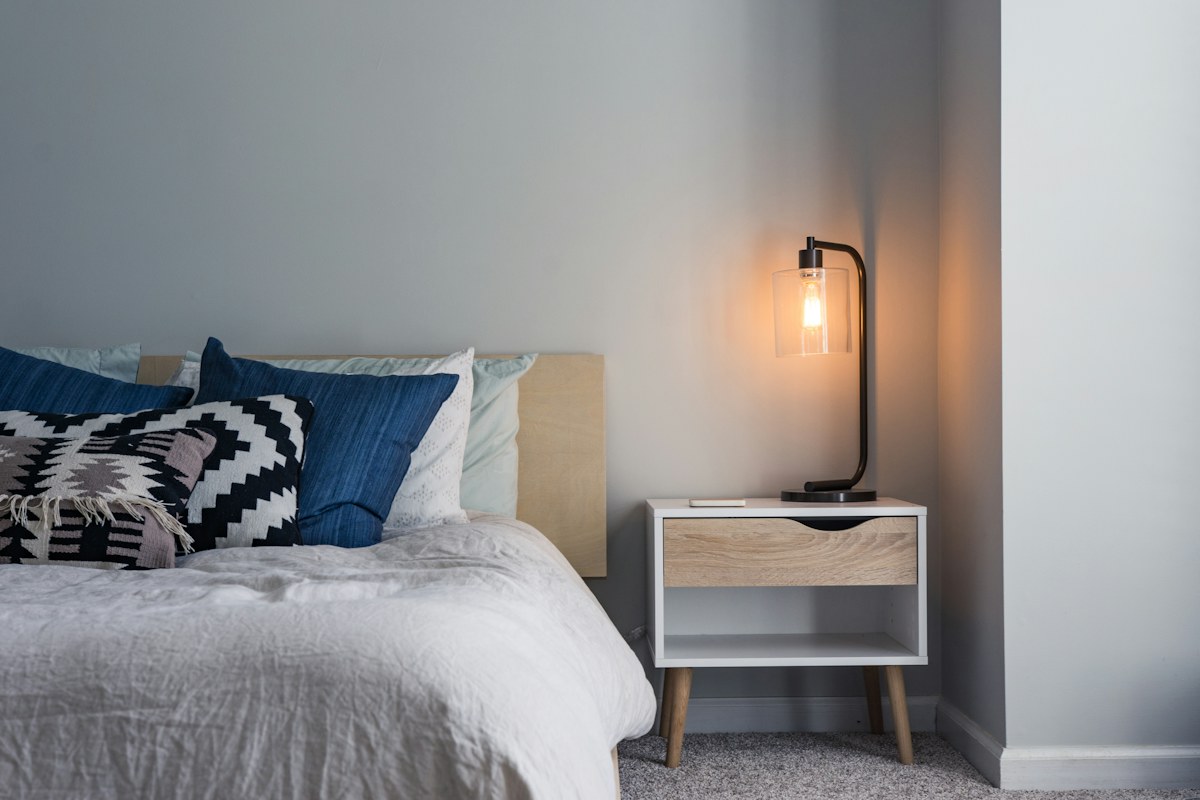
Illustrative stock photograph by Christopher Jolly: photo source. This scene does not identify our author or establish a product test.